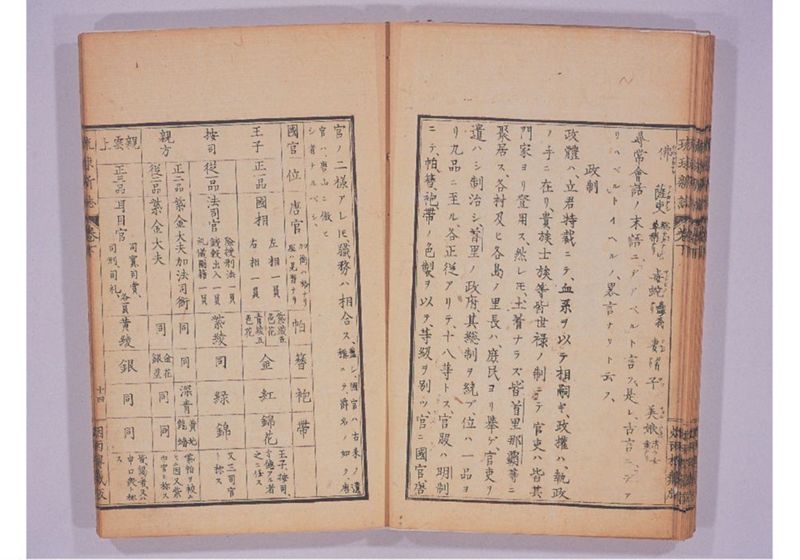
翻刻
仏(ホトケナカシ) 薩吏(トノカナシ) 《割書:総テ「カナシ」ハ|尊称ナリ》 毒蛇(マジモノ)《割書:蠱義|ナリ》 妻(トジ)《割書:刀自|ナリ》 子(クワ) 美娘(キヨラミワラハ)《割書:清ラ女|童ナリ》
尋常会話ノ末語ニ、「デアベル」ト言フ、是レ、古言ニ、「デア
リハベル」トイヘルノ、略言ナリト云フ、
政制
政体ハ、立君特裁ニテ、血系ヲ以テ相嗣ギ、政権ハ、執政
ノ手ニ在リ、貴族士族等皆世禄ノ制ニテ官吏ハ皆其
門家ヨリ登用ス、然レトモ、土着ナラズ、皆首里那覇等ニ
聚居ス、各村及ヒ各島ノ里長ハ、庶民ヨリ挙ゲ、官吏ヲ
遣ハシ制治シ、首里ノ政府、其総制ヲ統ブ、位ハ一品ヨ
リ九品ニ至ル、各正従アリテ、十八等トス、官服ハ明制
ニテ、帕、簪、袍、帯ノ色製ヲ以テ、等級ヲ別ツ、官ニ国官、唐
官ノ二様アレトモ、職務ハ相合ス、《割書:蓋シ、国官ハ古来ノ遺|称ニテ、爵名ノ如ク、唐》
《割書:官ハ、唐山ニ倣ヒ|シ者ナルベシ、》
【以降表形式】
国官 位 唐官《割書:加銜ハ格ナリ|座ハ見習ナリ》 帕 簪 袍 帯
王子 正一品 国相《割書:左相一員|右相一員》 《割書:紫綾五色花|青綾五色花》 金 紅 錦花 王子、按司、才徳アル者之ニ任ス
按司 従一品 法司官《割書:除授刑法一員|銭穀出入一員|礼儀図籍一員》 紫綾 同 緑 錦 又三司官ト称ス
親方 正ニ品 紫金大夫加法司銜 同 同 深青 黄地竜蟠
親方 従ニ品 紫金大夫 同 金花銀茎 同 同 紫帕ヲ被ムルニ因又紫巾官ト称ス
親雲上 正三品 耳目官《割書:司賓、司賞、|司刑、司礼、》各一員 黄綾 銀 同 同 皆、謁者、又ハ申口衆ト称ス
現代語訳
仏(ホトケナカシ) 薩吏(トノカナシ) 《総て「カナシ」は尊称である》 毒蛇(マジモノ)《蠱毒の意味》 妻(トジ)《刀自のこと》 子(クワ) 美娘(キヨラミワラハ)《清らかな女童のこと》
日常会話の語尾に、「デアベル」と言う。これは、古語で「デアリハベル」と言ったものの略語であると言う。
政制
政体は、君主専制で、血統によって相続し、政権は執政の手にある。貴族・士族等は皆世禄制で、官吏は皆その門閥から登用する。しかしながら、土着ではなく、皆首里・那覇等に集住している。各村及び各島の里長は、庶民から選出し、官吏を派遣して統治し、首里の政府が、その総制を統括している。位は一品から九品に至り、各々正従があって、十八等とする。官服は明朝の制度で、帽子、簪、袍、帯の色と製法によって、等級を区別する。官には国官、唐官の二種類があるが、職務は対応している。《おそらく、国官は古来の遺称で、爵名のようなもので、唐官は、中国に倣ったものであろう。》
【以下表形式】
国官 位 唐官《加銜は格式、座は見習い》 帽子 簪 袍 帯
王子 正一品 国相《左相一員、右相一員》 《紫綾五色花、青綾五色花》 金 紅 錦花 王子、按司で才徳のある者がこれに任じられる
按司 従一品 法司官《刑法担当一員、財政担当一員、礼儀図籍担当一員》 紫綾 同上 緑 錦 また三司官と称する
親方 正二品 紫金大夫加法司銜 同上 同上 深青 黄地竜蟠
親方 従二品 紫金大夫 同上 金花銀茎 同上 同上 紫帽子を被ることから また紫巾官と称する
親雲上 正三品 耳目官《司賓、司賞、司刑、司礼、各一員》 黄綾 銀 同上 同上 皆、謁者、または申口衆と称する
英語訳
Buddha (hotokenakashi), Satsuma official (tonokanaishi) [Note: "kanashi" is always an honorific suffix], poisonous snake (majimono) [meaning "bewitchment"], wife (toji) [meaning "toji" - lady of the house], child (kuwa), beautiful maiden (kiyoramiwaraha) [meaning "pure young girl"]
At the end of ordinary conversation, they say "deaberu." This is said to be an abbreviation of the ancient expression "dearibaberu."
Political System
The political system is autocratic monarchy, with succession by bloodline, and political power rests in the hands of the chief minister. Nobles and samurai class all follow the hereditary stipend system, and officials are all appointed from these noble families. However, they are not native residents but all live concentrated in Shuri, Naha, and other such places. The village heads of each village and each island are selected from commoners, officials are dispatched to govern them, and the government in Shuri oversees the entire system. Ranks range from first grade to ninth grade, each having senior and junior divisions, making eighteen grades total. Official robes follow the Ming system, with distinctions of rank made by the colors and construction of caps, hairpins, robes, and sashes. There are two types of officials: "national officials" and "Chinese-style officials," but their duties correspond to each other. [Presumably, "national officials" are remnants of ancient titles, like nobility titles, while "Chinese-style officials" are modeled after China.]
[Following in table format]
National Official Rank Chinese Official [Note: "kashō" indicates rank, "za" indicates apprentice] Cap Hairpin Robe Sash
Prince Senior First Grade National Chancellor [Left Chancellor one person, Right Chancellor one person] [Purple silk five-colored flower, blue silk five-colored flower] Gold Red Brocade flower Princes and lords with talent and virtue are appointed to this
Lord (aji) Junior First Grade Legal Officer [Criminal law one person, Finance one person, Ceremonies and records one person] Purple silk Same as above Green Brocade Also called "Three Ministers"
Foster Parent (oya-kata) Senior Second Grade Purple-Gold Master with Legal Officer rank Same as above Same as above Deep blue Yellow ground with coiling dragon
Foster Parent Junior Second Grade Purple-Gold Master Same as above Gold flower silver stem Same as above Same as above Called "Purple Headwrap Official" because they wear purple caps
Foster Parent of the Clouds (oya-kumo-ue) Senior Third Grade Supervision Officer [Master of Guests, Master of Rewards, Master of Punishments, Master of Ceremonies, one person each] Yellow silk Silver Same as above Same as above All called "Court Attendants" or "Spokesmen"