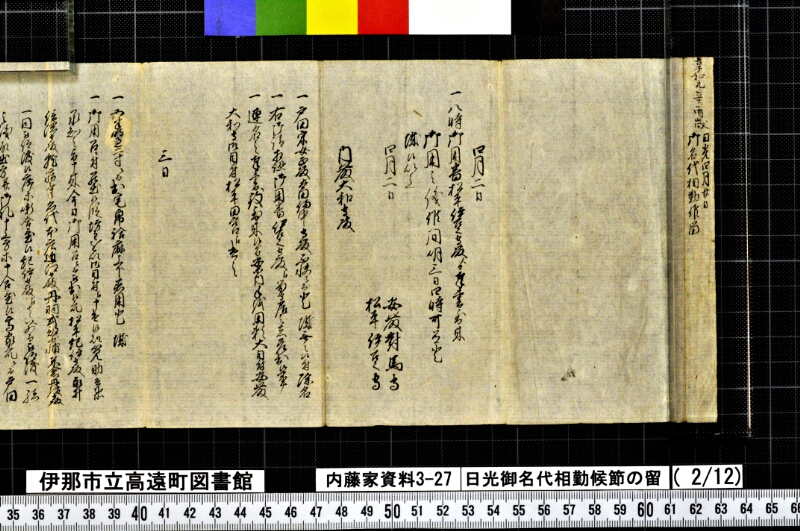
翻刻
四月二日
一八御用番松平伊豆守殿ゟ奉書到来
御用之儀候間明三日四時可有登
城候以上
四月二日 安藤対馬守
松平伊豆守
内藤大和守殿
一戸田采女正殿太田備中守殿不快二而登 城無之候二付除名
一右御請相役御用番伊豆守殿留守居之者差出候事
一連名之奉書致到来候間案内手紙用頼大目付安藤
大和守御目付松平田宮江遣之
三日
一五半時過二寸二而出宅帛袷麻着用登 城
一御用召二付罷出候段坊主を以御目付江申遣候処兌助兵衛
承知之旨申来今日御用召二而被出候衆松平紀伊守殿永井
信濃就病気名代本庄近江守殿丹羽式部少輔米倉丹波守殿
一同被仰渡候席抔含め合置紀伊守殿江者別而被仰渡一統
之儀□出方幷御礼申上方抔申合置候高家衆二而戸田
現代語訳
四月二日
一、御用番松平伊豆守殿から奉書が到来した。
「御用の儀があるので、明日三日の四時に登城するように」
以上
四月二日 安藤対馬守
松平伊豆守
内藤大和守殿
一、戸田采女正殿と太田備中守殿が体調不良のため登城しなかったので、除名された。
一、右の件について相役の御用番伊豆守殿の留守居の者を差し出した。
一、連名の奉書が到来したので、案内の手紙を用いて大目付安藤大和守、御目付松平田宮に遣わした。
三日
一、五時半過ぎ二寸(午前九時頃)に出宅し、帛袷麻の着用で登城した。
一、御用召しのため罷出した旨を坊主を通じて御目付に申し遣わしたところ、兌助兵衛が承知した旨を申してきた。今日御用召しで出仕した衆は、松平紀伊守殿、永井信濃(病気のため名代本庄近江守殿)、丹羽式部少輔、米倉丹波守殿で、一同に仰せ渡された。席順なども含めて相談し合い、紀伊守殿には別に仰せ渡しがあった。一統の出方並びに御礼申し上げ方なども申し合わせた。高家衆では戸田
英語訳
April 2nd
1. An official letter (hōsho) arrived from Matsudaira Izu-no-kami, who was on duty as goyōban (chief administrative officer).
"There is official business, so please attend the castle at 4 o'clock tomorrow, the 3rd."
The above
April 2nd Andō Tsushima-no-kami
Matsudaira Izu-no-kami
To Lord Naitō Yamato-no-kami
1. Lord Toda Uneme-no-shō and Lord Ōta Bitchū-no-kami were removed from the list due to illness preventing their castle attendance.
1. Regarding the above matter, the deputy of Lord Izu-no-kami, who serves as goyōban, was dispatched.
1. Since joint official letters arrived, using introductory letters, [messages were] sent to Ōmetsuke Andō Yamato-no-kami and Metsuke Matsudaira Tamiya.
3rd day
1. Left the residence a little past 5:30 (around 9 AM), wearing silk summer clothing, and attended the castle.
1. Regarding appearing due to an official summons, [I] sent word through a monk to the metsuke, whereupon Daijūkurōbei acknowledged the message. Those who appeared today for the official summons were Lord Matsudaira Kii-no-kami, Nagai Shinano (represented by Lord Honjō Ōmi-no-kami due to illness), Niwa Shikibu-shōyū, and Lord Yonekura Tamba-no-kami, all of whom received instructions together. Seating arrangements and such were discussed, and Lord Kii-no-kami received separate instructions. Matters of collective conduct and expressing gratitude were also coordinated. Among the Kōke families, Toda