翻刻
凡 ̄ソ石 ̄ノ大小皆極 ̄テ嵌空《割書:也》、大者如_レ樓 ̄ノ如_レ屋、玲瓏
明透、古藤營結 ̄シ、葱欎 ̄ス、即拳石、亦有_二竒致_一、山
崖海邉遍地多 ̄ク有、但質甚鬆利昜_二脆折_一、惟
磨刀石甚堅 ̄クシテ而膩、以為_レ礪、勝_二 中國 ̄ノ者_一、故 ̄ニ丗
以充_レ ̄ツ貢 ̄ニ、
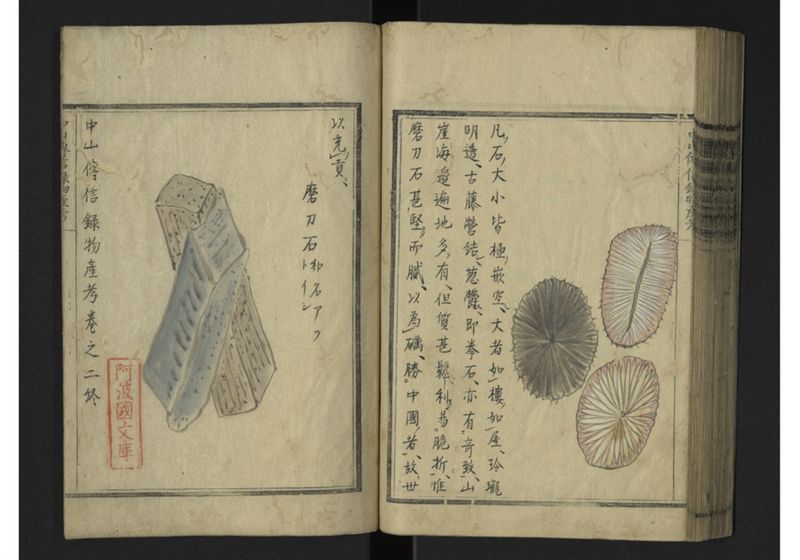
磨刀石《割書:和名アラ|トイシ》
中山伝傳録物産考巻之二終
現代語訳
およそ石の大小は皆極めて穴が空いている。大きなものは楼閣や屋敷のようで、玲瓏として明るく透けて見え、古い藤が絡み合って営巣し、青々と茂っている。すなわち拳石も、また奇致がある。山崖や海辺に遍く多くある。ただし質は甚だ粗鬆で鋭利であり、脆く折れやすい。ただし磨刀石は甚だ堅くして滑らかで、砥石として用いれば、中国のものに勝る。故に世々貢物として献上している。
磨刀石《和名:あらといし》
中山伝信録物産考巻之二 終
英語訳
Generally, stones of all sizes are extremely hollow and porous. Large ones are like towers or houses, crystal clear and transparent, with ancient vines intertwining and nesting, growing luxuriantly green. Even the fist-stones have remarkable characteristics. They are found abundantly throughout mountain cliffs and seashores. However, their material is very porous and sharp, easily brittle and breakable. Only the whetstone is extremely hard and smooth; when used as a grindstone, it surpasses those of China. Therefore, it has been offered as tribute for generations.
Whetstone《Japanese name: Aratoishi》
End of Volume Two of "Chuzan Denshin-roku Bussan-ko" (Record of Products from the Chuzan Mission)