翻刻
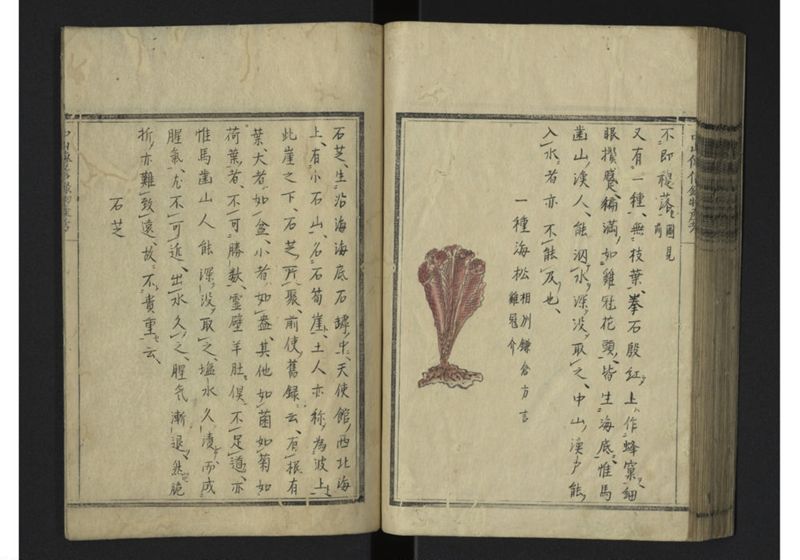
不_二即褪落_一 ̄セ《割書:圖見|前》
又有_二 一種_一、無_二枝葉_一、拳石殷紅 ̄ニシテ上 ̄ハ作_二蜂窠_一 ̄ヲ、細
眼攢蹙、編満 ̄シテ如_二雞冠花頭_一 ̄ノ、皆生_二海底_一 ̄ニ、惟馬
歯山 ̄ノ漁人、䏻泅_レ ̄テ水 ̄ヲ深 ̄ク没 ̄シテ取_レ之、中山 ̄ノ漁戸䏻 ̄ク
入_レ水 ̄ニ者亦不_レ䏻_レ及 ̄フ也、
一種海松《割書:相州鎌倉方言|雞冠介》
石芝、生_二沿海海底石罅 ̄ノ中_一 ̄ニ、天使館 ̄ノ西北海
上、有_二小石山_一、名_二石筍崖_一 ̄ト、土人亦称 ̄シテ為_二波上_一 ̄ト、
此崖之下、石芝所_レ《割書:也》聚前使 ̄ノ舊録 ̄ニ云、有_レ根有
葉、大者 ̄ハ如_レ盆、小者 ̄ハ如_レ盎、其他如_レ菌如_レ菊如_二
荷葉_一 ̄ノ者、不_レ可_二勝数_一、霊壁羊肚 ̄モ俱 ̄ニ不_レ足_レ道 ̄フ、亦
惟馬歯山人䏻深 ̄ク没 ̄シテ取_レ之、塩水久 ̄ク漬 ̄シテ、而成
腥氣_一、尤_レ不_レ可_レ近、出_レ水久_レ ̄シテ之、腥気漸退 ̄ク然 ̄レトモ脆
折 ̄シテ亦難_レ致_レ遠、故 ̄ニ不_二 ̄ト貴重_一 ̄セ云、
石芝
現代語訳
すぐには褪色して落ちない。《図は前を見よ》
また一種あり、枝葉がなく、拳のような石が殷紅色で、上部は蜂の巣を作ったようになっており、細かい穴が密集して、鶏冠花の頭のように編み込まれて満ちている。皆海底に生える。ただ馬歯山の漁人のみが、よく水に潜って深く沈んでこれを取る。中山の漁戸で水に入ることができる者も及ぶことができない。
一種の海松《相州鎌倉の方言では鶏冠介》
石芝は、沿海の海底の石の割れ目の中に生える。天使館の西北の海上に、小石山があり、石筍崖と名付けられ、土人もまた波上と称している。この崖の下が、石芝の集まる所である。前使の旧録に云う、根があり葉があり、大きいものは盆のようで、小さいものは甕のようである。その他、菌のような、菊のような、蓮の葉のようなものは、数え切れない。霊壁石や羊肚石も皆語るに足りない。これもただ馬歯山の人のみがよく深く潜ってこれを取る。塩水に久しく漬かって、腥気を生じ、尤も近づくことができない。水から出して久しくすると、腥気は漸く退くが、しかし脆くて折れやすく、また遠くに運ぶことが難しい。故に貴重とされない、という。
石芝
英語訳
do not immediately fade and fall off. 《See illustration above》
There is also another variety that has no branches or leaves, resembling fist-sized stones of deep red color, with the upper part forming honeycomb-like structures. Fine holes cluster together densely, packed full like the head of a cockscomb flower. All grow on the seabed. Only the fishermen of Bajishi Mountain are able to dive deep into the water and retrieve them. Even the fishing households of Zhongshan who can enter the water cannot match their ability.
One variety of sea pine 《In the dialect of Sagami Province, Kamakura, called "cockscomb shell"》
Stone fungus grows in the cracks of rocks on the seabed along the coast. To the northwest of the Tianshi Hall, on the sea, there is a small rocky mountain called Stone Bamboo Shoot Cliff, which the local people also call Naminoue. Below this cliff is where stone fungus gathers. The old records of previous envoys state: "It has roots and leaves; large ones are like basins, small ones like jars. Others resembling mushrooms, chrysanthemums, or lotus leaves are too numerous to count. Even Lingbi stones and sheep-belly stones are not worth mentioning in comparison." Only the people of Bajishi Mountain can dive deep to retrieve them. Having been long soaked in salt water, they develop a fishy odor and are especially unapproachable. After being out of water for a long time, the fishy smell gradually subsides, but they become brittle and break easily, making them difficult to transport far. Therefore, they are not considered precious.
Stone fungus