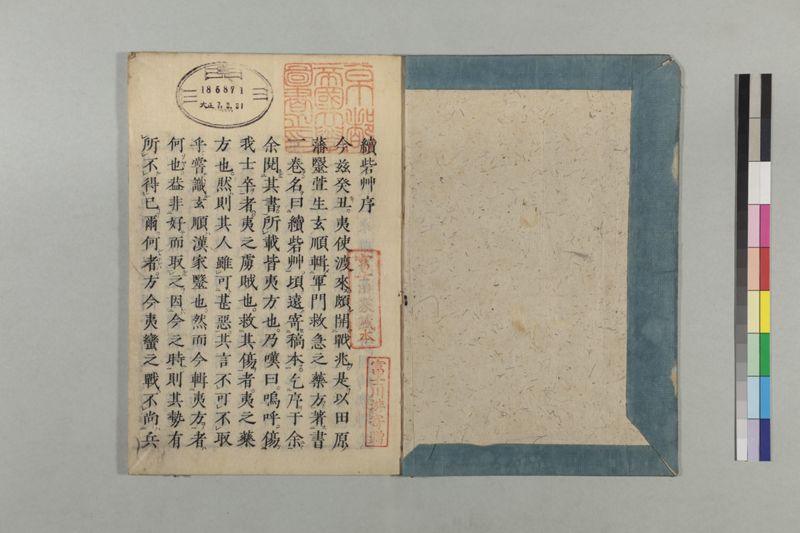
翻刻
【左丁】
續砦艸序
今兹癸丑。夷使渡来 ̄ス。頗 ̄ル開 ̄ク_二戰兆 ̄ヲ_一。是 ̄ヲ以田原 ̄ノ
藩毉萱生玄順輯 ̄メ_二軍門救急之藥方 ̄ヲ_一。著 ̄ス_二書
一巻 ̄ヲ_一。名 ̄テ曰_二續砦艸_一。頃。遠 ̄ク寄 ̄セ_二稿本 ̄ヲ_一。乞_二序 ̄ヲ于余 ̄ニ_一。
余閱 ̄スルニ_二其書 ̄ヲ_一。所_レ載皆夷方也。乃嘆曰。嗚呼。傷 ̄フ_二
武士卒 ̄ヲ_一者 ̄ハ。夷之虜賊也。救_二其傷 ̄ヲ_一者。夷之藥
方也。然 ̄ハ則其人雖_レ可 ̄ト_二甚惡_一。其言不_レ可_レ不_レ取
乎。嘗 ̄テ識 ̄ル玄順 ̄ハ漢家毉也。然而今輯_二夷方 ̄ヲ_一者 ̄ハ
何 ̄ソヤ也。葢非_二好 ̄テ而取 ̄ルニ_一レ之 ̄ヲ因 ̄レハ_二今之時 ̄ニ_一。則其勢有
_レ所_レ不 ̄ル_レ得_レ已 ̄コトヲ爾。何 ̄ントナレハ者。方今夷蠻之戰。不_レ尚 ̄ハ_二兵
【朱印】#1
【黒印】#2
【朱印】#3
【朱印】#4
現代語訳
【左丁】
続砦草序
今年癸丑年、異国の使者が渡来した。頗る戦いの兆しを開くことになった。これにより田原藩の医師萱生玄順は、軍門救急の薬方を輯め、一巻の書を著した。これを名付けて「続砦草」という。このたび、遠くから稿本を寄せて、私に序文を求めてきた。
私がその書を閲覧したところ、載せられているものは皆異国の処方であった。そこで嘆いて言った。ああ、武士や兵卒を傷つける者は、異国の虜賊である。その傷を救う者も、異国の薬方である。そうであるならば、その人は甚だ憎むべきであるが、その言葉は取らないわけにはいかないのではないか。かつて玄順を知っているが、漢方医である。しかし今異国の処方を輯めるのは何故であろうか。思うに、好んで取るのではなく、今の時勢によるものであり、その勢いにはやむを得ないところがあるのである。何故かと言えば、現今の異国との戦いでは、兵を尊ばず
英語訳
【Left page】
Preface to Continued Torite-gusa
In this year of Kinoto-ushi (1853), foreign envoys came to our shores, bringing considerable signs of impending warfare. Because of this, Kayū Genjun, a physician of the Tahara domain, compiled medicinal prescriptions for emergency treatment in military situations and authored a one-volume book, which he named "Continued Torite-gusa" (Continued Fortress Grass). Recently, he sent his manuscript from afar and requested that I write a preface.
When I examined his book, I found that all the prescriptions contained therein were foreign remedies. I sighed and said: "Alas! Those who wound our warriors and soldiers are foreign captives and bandits. Those who heal their wounds use foreign medicinal prescriptions. If this is so, then although such people may be greatly detestable, must we not still adopt their medical knowledge?" I have long known Genjun to be a practitioner of Chinese medicine. Yet why does he now compile foreign prescriptions? I believe it is not because he favors them, but because of the present circumstances—the situation makes it unavoidable. Why? Because in today's warfare with foreign barbarians, we do not rely solely on military