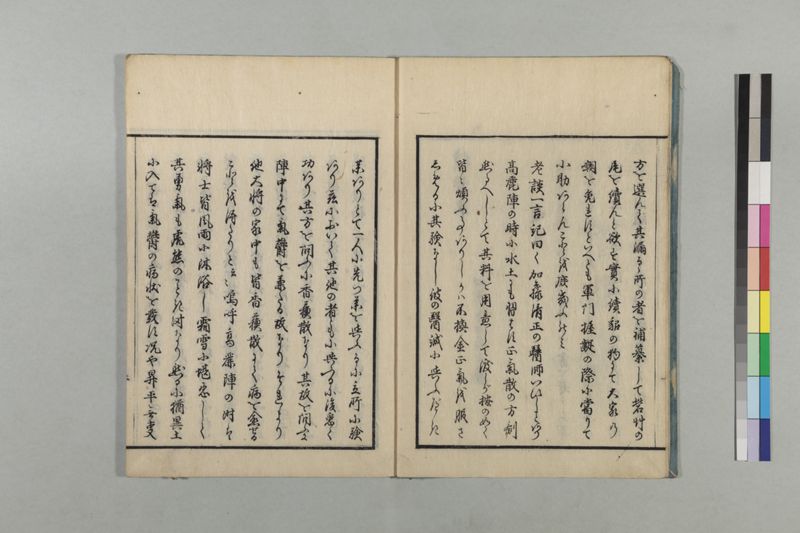
翻刻
【右丁】
方を選んて其漏るゝ所の者を補纂して砦艸の
尾を続んと欲す実に続貂の狗にて大家の
嘲を免れすといへとも軍門握齪の際に当りて
小助あらんことを庶幾ふのみ
老談一言記曰く加藤清正の医師いひしことあり
高麗陣の時に水土にも習はす正気散の方剤
然るへしとて其料を用意して渡しが按の如く
皆々煩ふ事ありしかは不換金正気を服さ
しめるに其験なし彼の医誠に与ふべき
【左丁】
薬ありとて一人に先つ薬を与ふるに立所に験
あり茲において其他の者ともに与ふるに後悉く
功あり其方を問ふに香蘇散なり其故を問ふに
陣中にて気鬱を兼たる故なりそれより
他大将の家中も皆香蘇散にて病を愈せる
ことを得たりと云々嗚呼高麗陣の時は
将士皆風雨に沐浴し霜雪に堪忍して
其勇気も虎熊のことき㳔なり然るに猶異土
に入ては気鬱の病状を発す況や昇平無事
現代語訳
【右丁】
方法を選んでその漏れている部分を補って編纂し、砦草の
続編を作ろうと思う。実に続貂の狗(劣ったものが良いものに続くこと)で、大家の
嘲笑を免れないとはいえ、軍陣での緊急時に
少しでも助けになることを願うばかりである。
老談一言記に曰く、加藤清正の医師が言ったことがある。
朝鮮出兵の時に水土にも慣れず、正気散の処方が
良いだろうということでその薬料を用意して渡海したが、案の通り
皆々病気になったので、不換金正気散を服用
させたが、その効験がない。彼の医師が、真に与えるべき
【左丁】
薬があるといって、一人にまず薬を与えると、たちどころに効験
があった。そこで他の者たちにも与えると、後に皆
効果があった。その処方を問うと香蘇散であった。その理由を問うと、
陣中にて気鬱を兼ねているためであるという。それより
他の大将の家中も皆香蘇散にて病を治すことが
できたという。ああ、朝鮮出兵の時は
将士皆が風雨に打たれ、霜雪に耐え忍んで
その勇気も虎熊のようなものであった。それなのに、なお異国
に入っては気鬱の病状を発する。まして昇平無事の
英語訳
【Right page】
methods and supplement what was missing to compile a continuation of Torite-gusa.
This is indeed like "a dog following a sable" (inferior work following superior work), and
I cannot escape ridicule from great scholars, but I only hope
that it may be of some assistance during military emergencies.
The "Rōdan Ichigon-ki" states that a physician of Katō Kiyomasa once said:
During the Korean campaign, being unaccustomed to the local climate and water, he thought the
Shōki-san prescription would be appropriate, so he prepared those medicines and crossed over, but as expected,
everyone fell ill, so he had them take
Fukankin-shōki-san, but it had no effect. That physician said there was truly a medicine that should be given
【Left page】
and first gave medicine to one person, whereupon there was immediate effect.
Then he gave it to the others, and later all
were cured. When asked about the prescription, it was Kōso-san. When asked for the reason,
he said it was because they also suffered from melancholy in the military camp. From then on,
the retainers of other generals were all able to cure their illnesses
with Kōso-san. Ah, during the Korean campaign,
all the officers and soldiers were exposed to wind and rain, enduring frost and snow,
and their courage was like that of tigers and bears. Yet still, when entering foreign
lands, they developed symptoms of melancholy. How much more so in times of peace