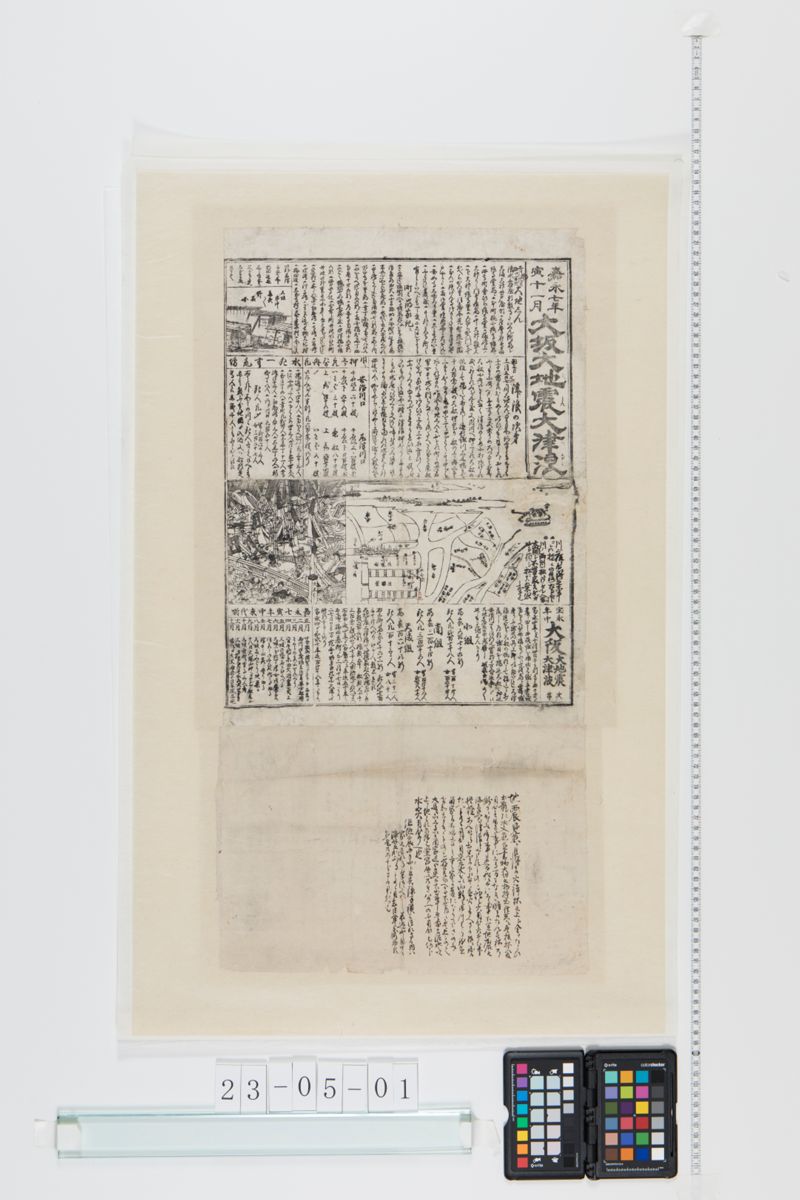
翻刻
《割書:嘉永七年|寅十一月》大坂大 地震(ぢしん)大 津浪(つなみ)
【紙面上から一段目】
《割書:十一月四日|五ツ半時》大地しん
清水舞台願教寺たいめん所崩レ
天満天神井戸屋形▲座摩石 ̄ノ鳥居
絵馬堂崩 ̄レ▲本町狐小路高塀崩 ̄レ
▲西寺町金ひら絵馬堂▲福島上ノ
天神うら門鳥居崩▲中ノ天神拝でん
▲下 ̄ノ天神絵馬堂▲五百らかん門そで
かべらかん堂同台所光智院玄関
▲なんば鉄げん寺つりかね堂▲御まへ井
戸やかた▲両御堂境内所々大 ̄ニそんじ
▲安如寺しゆろう堂#34▲天王寺たいこ堂
▲ふとうじ菱に成▲其外宮寺所々
有之といへども一々爰にしるしがたし
町々崩家記す
▲さのやばし塩町北入高塀崩死人 ̄アリはご板橋北
詰角崩出火▲小間物棚戸や町此辺多く崩
帯や町北がは土蔵崩▲永代はま大土蔵くづれ
▲堂島さくらばし南詰西へ七八軒崩 ̄レ▲あじ川
明正寺本堂崩▲幸町東樋より南へ七八けん
▲北ほりへ四丁目五六軒▲両国橋かくや町西
南角十四五軒▲常安寺南詰十六七軒
▲のばく#35蝋納や崩蝋黒土砂と成▲汐津橋北詰
五軒▲西口井戸辻▲北久太郎町丼池順けい町
丼池此外裏長や等多く有之筆につくしがたし
▲九条村▲前たれ辺▲勘助島▲寺島▲富島
▲戎島▲江ノ子島▲ざこば辺▲長柄大仁村
▲梅田辺▲天王寺村▲天下茶や村▲今宮
此外木津
なんば所々
新田近在
所々有之と
いへども事
しげき故
略之
【挿絵の文】
大坂市中
毎夜
〳〵
野宿
図
【二段目】
津浪の次第
翌五日
十一月五日昼#36七ツ時大地しん ̄トなり候所何方ともなく
千万の雷落かゝる如く鳴ひゞき皆々大 ̄ニおそれ
ふしきに思ふ内暮方より二丈余りの大つなみ打来り
大船小舟のきらいなく津浪のために打あげられ
或は打われみぢんと成又内川へ押上られ大船の
帆柱にて橋々を打落し道頓堀川大黒橋まで
千五百余艘の大船押登り船の上へ舟二重
三重にかさなり亀の甲を干 ̄スがごとく其中にも
あはれなるは昨今の地しんにおそれ町々の老若
男女貴賤の別ちなくうろたへさはぎて茶船
けん先 ̄キ家形舟あるひは上荷三十石おもひ〳〵に
乗りうつりゆりつぶされるうれひなしと悦ぶ
かいもあらかなしや一時に津浪押かゝり舟もろ
ともに水底へひつくりかへりし啼声は大坂中へひゞ
きわたり誠にあはれ至極目も当られぬ次第也其外
西辺の人々蜘の子ちらすか如く上町さして逃る人数しれず
【右から横書きの所】
川へ押上ヶられたる舟凡
安治川口 木津川口
千石以上 六十艘 千石以上 二百艘余
千石以下九十五艘 千石以下 四百艘余
いさば#37三十艘 茶 船 八十四艘
上荷 百十五艘 上荷 六百七十四艘
〆 いさば 五十艘
此外みぢん半割 ̄レ凡六百余艘あり
【右から横書きの所】
水死一寸荒増
▲橋通にて四十八人▲南ほりへ《割書:四丁メ|五丁メ》凡三十三人
▲よしや町二人▲下はくろ四十三人▲四郎兵衛町四十五人
▲玉手町九人▲幸町凡弐百人▲金や町十一人▲寺
島四十二人▲勘助島五十三人▲大国町六人▲新
戎町八人▲あじ川口凡百五十人
死人凡〆 《割書:男弐百六十三人|女三百八十七人》
右之外所々の川に死人有之候へとも
未其数不分他国より入込又は船頭是
等人には未幾千人とも相わからす候
【三段目 地図中の文】
川岸心得之事
▲コレハ橋々の落たる印ナリ
●川の両側船ニウタレ人家
大崩レ不当家スケガ
ナシ損シ船ニは乗ぬ
事也
【四段目】
《割書:宝永|年中》大阪《割書:大地震|大津波》 《割書:次|第》
宝永四年《割書:亥》十月四日午下刻南西の方より
震い出し西横堀を始伏見堀立売堀
南ほりへ心斎橋南より北へ不残崩 ̄レ西横堀
通り不残崩其上沖鳴動いたし大津
浪逆登り大船の帆柱にて橋々を打
落し道頓堀日本橋迄大船を#38押込
安治川口も同断也四日朝より廿五日迄毎日〳〵の#38
大地震故家蔵夥しく破損有誠に#38〳〵
恐しき大地しんなり
北組
潰家 五百七十九軒
死人凡二百七十八人 《割書:男百十四人|女百六十四人》
南組
潰家 三百十四軒
死人凡三百四十五人 《割書:男百四十八人|女弐百八十七人》#39
天満組
潰家 百六十八軒
死人凡百十壱人 《割書:男三十一人|女八十人》
右三郷崩家〆千六十一軒 死人〆7百
三十四人あり けが人数しれず
大地震大津浪にて破損家死人舟橋左之通
家数六百三軒 橋数五十 船数大小千
三百余艘水亡人#45七千人余洪水にて死人一万人
右宝永四年より宝暦六《割書:子》年迄五十年に
相当 ̄ル梅田墓所にて三月十七日より
二七日の間万燈会供養諸宗大法事
修行するとあり
宝永四より嘉永七年迄百四十八年になる
【右から横書きの所】
嘉永七寅年中末代噺
正月 中旬相州浦賀へアメリカ舟来る
二月 品川に御台場立同廿日異国船帰る
三月 さくらの宮正せんぐう
四月 六日午刻より京出火内裏炎上
五月 大坂御城石かけくづる
六月 大坂二本松町孝女御褒美
七月 同宮々御千度町々より出る
閏月 信貴山寅の守り出る
八月 大坂両みどう地築き
九月 十八日天保山沖へヲロシヤ船来る
十月 大坂長町男子三人産
十一月 大坂《振り仮名:下ばくろ||堀江 》#44にて水死大せがき
十二月 廿八日大火神田より日本橋辺迄
【欄外下部】
地震見懸ヶ候得は火鉢抔之上え金 ̄ナたらひ
土瓶に水入懸置書物大切之物持出往来え畳板抔敷
用心すへき事にくる間もなき時はたんす抔の
影ヶにかゝみ居候事決而船に而■#41くる事不宜地震之
跡は決而津浪となるもの也灯し火用心火打并
提灯あんとう#42土器は下に直し置火のきへさる様に致す
たてものゝ用心用意丸太を以向軒とつつはり致置
角家はあふなし中之家は菱になりてもさのみ
けかなきもの也崩候共外へは不出内へ畳込もの也
大道へにくるにも角家辺へは決而不出事畳敷は泥水吹
上け地われの為也堂宮へいのきは第一の不用心也何分
水出火用心第一也
但地震ゆり出し候共障子襖はつれさる内は
家くすれる気つかへなし表逃出し候はゝ
陣笠かぶりものゝ用意日傘手拭着類
多瓦のあたらさる用■#43也
現代語訳
# 嘉永七年(1854年)寅年十一月 大坂大地震・大津波
---
## 【第一段:地震被害】
**十一月四日 午前九時頃 大地震**
清水(寺)の舞台、願教寺の対面所が崩壊。天満天神の井戸屋形▲座摩(いかすり)神社の石鳥居・絵馬堂が崩壊▲本町・狐小路の高塀が崩壊▲西寺町・金平(こんぴら)の絵馬堂▲福島・上ノ天神の裏門鳥居崩壊▲中ノ天神の拝殿▲下ノ天神の絵馬堂▲五百羅漢の門袖の壁・羅漢堂・同台所・光智院玄関▲難波の鉄源寺の釣鐘堂▲御前の井戸屋形▲両御堂(本願寺)境内各所に大きな損傷▲安如寺の鐘楼堂▲天王寺の太鼓堂▲(某寺が)菱形になった▲その他、宮や寺の各所にも被害があったが、一々ここに記しきれない。
### 町々の崩壊家屋を記す
▲小野屋橋・塩町の北側、高塀が崩れ死者あり。羽子板橋北詰の角で崩壊・火災発生▲小間物棚・戸屋町この辺り多数崩壊。帯屋町北側の土蔵崩壊▲永代浜の大土蔵崩壊▲堂島・桜橋の南詰から西へ七、八軒崩壊▲味鋺川(あじ川)・明正寺の本堂崩壊▲幸町の東樋から南へ七、八軒▲北堀江四丁目、五、六軒▲両国橋・角屋町の西南角、十四、五軒▲常安寺の南詰、十六、七軒▲野積みの蝋燭倉庫崩壊、蝋が黒土・砂と混じった▲汐津橋の北詰、五軒▲西口・井戸辻▲北久太郎町・丼池・順慶町・丼池(など)、その他、裏長屋等も多数あり、筆に尽くしがたい。
▲九条村▲前垂辺▲勘助島▲寺島▲富島▲戎島▲江ノ子島▲雑喉場(ざこば)辺▲長柄・大仁村▲梅田辺▲天王寺村▲天下茶屋村▲今宮、その他、木津・難波の各所、新田・近在の各所にも被害があったが、事が多岐にわたるため略す。
---
**【挿絵の説明】**
「大坂市中、毎夜毎夜、野宿の図」
(大坂の街中で、毎晩人々が野宿している様子の図)
---
## 【第二段:津波の経緯】
### 津波の次第
翌五日
十一月五日、昼の四時頃(午後二時頃)、大地震が起こったところ、どこからともなく無数の雷が落ちるような鳴り響きで、人々は大いに恐れ、不思議に思っていたところ、夕暮れ時より二丈(約六メートル)余りの大津波が押し寄せてきた。大船・小舟の区別なく津波のために打ち上げられ、あるいは打ち砕かれてこなごなになり、また内川へ押し上げられ、大船の帆柱で橋々を打ち落とし、道頓堀川・大黒橋まで千五百余艘の大船が押し上がり、船の上へ舟が二重三重に重なり、まるで亀の甲羅を干しているようであった。その中でも哀れなのは、前日・当日の地震に恐れた町々の老若男女・貴賤の別なく、うろたえ騒いで、茶船・剣先(けんさき)船・家形船、あるいは上荷・三十石船などに思い思いに乗り移り、「揺れで潰される心配がない」と喜んだ甲斐もなく、あわれや、一時に津波が押し掛かり、舟ともども水底へひっくり返り、その泣き叫ぶ声は大坂中に響き渡り、誠に哀れ極まりなく、目も当てられない有様であった。その他、西の方面の人々は、蜘蛛の子を散らすように、上町(うえまち)を目指して逃げる人数は知れず。
---
### 【川へ押し上げられた舟の概数】
**安治川口**
- 千石以上:六十艘
- 千石以下:九十五艘
- 伊佐場(いさば)船:三十艘
- 上荷船:百十五艘
**木津川口**
- 千石以上:二百艘余
- 千石以下:四百艘余
- 茶船:八十四艘
- 上荷船:六百七十四艘
- 伊佐場(いさば)船:五十艘
このほか、粉微塵・半割れの(船)、およそ六百余艘あり。
---
### 【水死者の概数】
▲橋通にて四十八人▲南堀江(四丁目・五丁目)凡そ三十三人▲吉屋町二人▲下博労(しもばくろ)四十三人▲四郎兵衛町四十五人▲玉手町九人▲幸町凡そ二百人▲金屋町十一人▲寺島四十二人▲勘助島五十三人▲大国町六人▲新戎町八人▲味鋺川口(あじ川口)凡そ百五十人
**死者概数合計:男二百六十三人・女三百八十七人**
右のほか、各所の川に死者がいるが、未だその数は不明。他国より来た者、あるいは船頭など、それらの人については未だ何千人とも分からない。
---
## 【第三段:地図中の文】
### 川岸の心得
▲これは橋々が落ちた印である。
●川の両側は船に打たれ、人家が大崩れして、無事な家がなく損じた。船には乗らぬこと。
---
## 【第四段:宝永年間の大地震・大津波の記録】
### 宝永年間 大阪大地震・大津波の次第
宝永四年(1707年)亥年、十月四日、午後の未刻頃、南西の方角から震え出し、西横堀をはじめ、伏見堀・立売堀・南堀江・心斎橋(南から北まで)が残らず崩れ、西横堀通りも残らず崩れ、その上、沖で大きく鳴動して大津波が逆流し、大船の帆柱で橋々を打ち落とし、道頓堀・日本橋まで大船を押し込んだ。安治川口も同様であった。四日の朝から二十五日まで毎日毎日大地震が続いたため、家や蔵が夥しく破損した。誠に誠に恐ろしい大地震であった。
**北組**
- 潰れた家:五百七十九軒
- 死者 凡そ二百七十八人(男百十四人・女百六十四人)
**南組**
- 潰れた家:三百十四軒
- 死者 凡そ三百四十五人(男百四十八人・女二百八十七人)
**天満組**
- 潰れた家:百六十八軒
- 死者 凡そ百十一人(男三十一人・女八十人)
右、三郷(さんごう)合計の崩れ家:千六十一軒、死者:七百三十四人。怪我人は数知れず。
大地震・大津波による破損家屋・死者・舟・橋の被害は以下の通り。
- 家数:六百三軒
- 橋数:五十(橋)
- 船数:大小千三百余艘
- 水死者:七千人余
- 洪水による死者:一万人
宝永四年から宝暦六年(1756年・子年)まで五十年に当たり、梅田の墓所にて三月十七日から二七日(十四日)の間、万燈会の供養・諸宗の大法事を修行したとある。
宝永四年(1707年)から嘉永七年(1854年)まで、百四十八年になる。
---
## 【右側横書き:嘉永七年寅年中の末代語り草】
- 正月 中旬、相州(相模国)浦賀にアメリカ船来航
- 二月 品川に御台場(砲台)建設。同二十日、異国船帰る
- 三月 桜ノ宮の正遷宮
- 四月 六日、昼頃から京都で出火、内裏が炎上
- 五月 大坂御城の石垣が崩れる
- 六月 大坂・二本松町の孝行娘がお褒美を受ける
- 七月 同(大坂の)宮々でお千度参り、町々より人が出る
- 閏月 信貴山の寅の守り(護符)が出回る
- 八月 大坂・両御堂(本願寺)の地築き(地鎮)
- 九月 十八日、天保山沖にロシア船来航
- 十月 大坂・長町で男子三人(の多胎児)誕生
- 十一月 大坂の下博労・堀江にて水死(者多数)、大施餓鬼(法要)
- 十二月 二十八日、大火。神田から日本橋辺りまで(焼ける)
---
## 【欄外下部:地震の心得】
地震が来たと気づいたら、火鉢などの上に金盥(かなだらい)・土瓶に水を入れて乗せておくこと。書物・大切なものを持ち出し、往来に畳・板などを敷くこと。用心すべきであるが、出る間もない時は、箪笥(たんす)などの陰にかがんでいること。決して船には乗らぬこと。地震の後は必ず津波になるものである。灯し火の用心をし、火打ち(石)と提灯・行灯(あんどん)・土器(かわらけ)は下に直接置き、火が消えないようにすること。建物の用心・用意として、丸太をもって向かいの軒へ突っ張り支えとして置くこと。角家(かどや)は危険である。中ほどの家は菱形になっても、さほど怪我はないものである。崩れたとしても外へは出ず、内側に畳を引き込むものである。大道へ逃げる時も、角家の辺りへは決して出ないこと。畳敷きは泥水が噴き上がり、地割れのもととなる。堂や宮へ逃げ込むのは最も不用心である。何分にも、水・出火の用心が第一である。
ただし、地震で揺れ出しても、障子・襖が外れない間は家が崩れる心配はない。表へ逃げ出すならば、陣笠・被り物の用意、日傘・手拭い・着類を多く(身につけ)、瓦に当たらないための用意が必要である。
英語訳
# Kaei 7 (1854), Year of the Tiger, November: The Great Osaka Earthquake and Tsunami
---
## [Section 1: Earthquake Damage]
**November 4th, around 9:00 a.m. — Great Earthquake**
The stage of Kiyomizudera, and the reception hall of Gankyōji Temple, collapsed. The well-canopy shrine at Tenma Tenjin Shrine ▲ The stone torii gate and votive picture hall of Ikasuri Shrine ▲ High walls on Honmachi and Kitsune-kōji collapsed ▲ The votive picture hall at Nishi-teramachi Konpira Shrine ▲ The back-gate torii of Kami-no-Tenjin at Fukushima collapsed ▲ The worship hall of Naka-no-Tenjin ▲ The votive picture hall of Shimo-no-Tenjin ▲ The gate side walls, Rakan-dō hall, kitchen, and the entranceway of Kōchi-in at the Five Hundred Rakan temple ▲ The bell tower of Tetsugenji Temple in Namba ▲ The well canopy at Omae ▲ Significant damage at various locations within the precinct of both Honganji temples ▲ The bell tower of Anyūji ▲ The drum hall of Tennōji ▲ (A certain temple) became rhombus-shaped ▲ There were also damages at various other shrines and temples, but it is impossible to record them all here.
### Record of collapsed buildings by neighborhood:
▲ High walls collapsed on the north side of Sanoya-bashi Shiomachi; deaths reported. A fire broke out at the north end of the Hagoita-bashi bridge corner ▲ Many collapses in the Komanomono-tana and Toya-machi area. A storehouse wall on the north side of Obiya-machi collapsed ▲ A large storehouse at Eidai-hama collapsed ▲ Seven or eight buildings from the south end of Dōjima Sakura-bashi bridge westward collapsed ▲ The main hall of Meishōji Temple on the Ajigawa River collapsed ▲ Seven or eight buildings south of the east conduit at Yukimachi ▲ Five or six buildings in Kita-horie 4-chōme ▲ Fourteen or fifteen buildings at the southwest corner of Ryōgoku-bashi and Kakuya-machi ▲ Sixteen or seventeen buildings at the south end of Jōan-ji Temple ▲ A wax storage warehouse collapsed; the wax became mixed with dark soil and sand ▲ Five buildings at the north end of Shiomitsu-bashi bridge ▲ Nishiguchi Ido-tsuji ▲ Kita-Kutarō-machi, Dombori, Jukkei-machi, Dombori. In addition, there were many collapsed tenement houses, too numerous to write down.
▲ Kujō Village ▲ Maedare area ▲ Kansuké-jima ▲ Tera-jima ▲ Tomi-jima ▲ Ebisu-jima ▲ Enoko-jima ▲ Zakobaarea ▲ Nagara and Ōnin Village ▲ Umeda area ▲ Tennōji Village ▲ Tenka-chaya Village ▲ Imamiya, as well as Kizu, Namba, the new reclaimed lands, and surrounding areas — damages were reported in many places, but due to the great number of incidents, details are omitted.
---
**[Illustration caption]**
*"A scene of people sleeping outdoors in the streets of Osaka every night."*
---
## [Section 2: The Tsunami]
### Account of the Tsunami
The following day, the 5th:
On November 5th, around 2:00 p.m. (the Hour of the Rooster, seven o'clock in the traditional system), a great earthquake struck. From all directions came a roaring sound like ten thousand thunderbolts falling, causing everyone great fear and bewilderment. Then, toward evening, a great tsunami of over two jō (approximately 6 meters) in height surged in. Without distinction between large vessels and small boats, all were tossed up by the tsunami; some were smashed to splinters, while others were driven up into the inner waterways. The masts of large ships knocked down bridge after bridge, and over 1,500 large ships were driven up as far as Dōtonbori and Daikoku-bashi, piling up two and three layers high like turtle shells laid out to dry in the sun.
Most pitiable of all: frightened by the previous day's and that day's earthquakes, people of all ages and classes throughout the city — the old and young, men and women, high and low — rushed in panic to board tea boats, kensaki boats, cabin boats, cargo boats, and thirty-koku vessels, each choosing whatever was at hand. Rejoicing that they would be safe from being crushed by the shaking, their relief was in vain — alas! — for in an instant the tsunami surged over them, capsizing boats and passengers alike to the bottom of the waters. The screams and cries echoed throughout all of Osaka, and it was truly a scene of utmost heartbreak, impossible to witness. Furthermore, people in the western districts scattered like baby spiders in the wind, fleeing toward Uemachi in numbers beyond counting.
---
### [Approximate count of boats driven onto land]
**Ajigawa River mouth:**
- 1,000-koku class and above: 60 vessels
- Below 1,000-koku: 95 vessels
- Isaba (fish transport) boats: 30 vessels
- Upper-cargo boats: 115 vessels
**Kizu River mouth:**
- 1,000-koku class and above: over 200 vessels
- Below 1,000-koku: over 400 vessels
- Tea boats: 84 vessels
- Upper-cargo boats: 674 vessels
- Isaba boats: 50 vessels
In addition, approximately 600 or more vessels were completely shattered or split in half.
---
### [Rough count of drowning deaths]
▲ Hashi-dōri: 48 persons ▲ Minami-horie (4th and 5th districts): approximately 33 persons ▲ Yoshiya-machi: 2 persons ▲ Shimo-Bakurō: 43 persons ▲ Shirōbyōe-machi: 45 persons ▲ Tamate-machi: 9 persons ▲ Yukimachi: approximately 200 persons ▲ Kanaya-machi: 11 persons ▲ Tera-jima: 42 persons ▲ Kansuke-jima: 53 persons ▲ Ōkuni-machi: 6 persons ▲ Shin-Ebisu-machi: 8 persons ▲ Ajigawa River mouth: approximately 150 persons
**Total estimated deaths: 263 men, 387 women**
In addition to the above, there were bodies found in rivers throughout the city, but the numbers remain unknown. The count of outsiders who had come from other provinces, as well as boatmen and similar persons, remains uncertain and may number in the thousands.
---
## [Section 3: Notes on the River Map]
### Cautions Regarding Riverbanks
▲ These marks indicate bridges that have fallen.
● Both banks of the rivers were struck by boats, causing massive collapse of homes with no buildings left undamaged. **Do not board boats.**
---
## [Section 4: Record of the Hōei Earthquake and Tsunami]
### Account of the Great Osaka Earthquake and Tsunami of the Hōei Era
On the 4th day of the 10th month of Hōei 4 (1707), the Year of the Boar, in the early afternoon (the lower part of the Hour of the Horse), the earthquake began from the southwest direction. Starting with Nishi-yokobori, the canals of Fushimi-bori, Tatsuri-bori, Minami-horie, and the entirety of Shinsaibashi from south to north all collapsed. Nishi-yokobori-dōri was completely destroyed. The sea then roared and surged, and a great tsunami rushed upstream. The masts of large ships knocked down bridge after bridge, and large ships were driven all the way into Dōtonbori and Nipponbashi. The same occurred at the Ajigawa River mouth. From the morning of the 4th to the 25th, great earthquakes struck every single day, causing enormous damage to houses and storehouses. It was truly a most terrifying earthquake.
**Kita-gumi (North District):**
- Destroyed houses: 579
- Deaths: approximately 278 (114 men, 164 women)
**Minami-gumi (South District):**
- Destroyed houses: 314
- Deaths: approximately 345 (148 men, 287 women)
**Tenma-gumi (Tenma District):**
- Destroyed houses: 168
- Deaths: approximately 111 (31 men, 80 women)
**Total for the Three Districts (sangō):**
- Collapsed houses: 1,061
- Deaths: 734 persons
- Injured: innumerable
Damage from the earthquake and tsunami (total figures):
- Houses: 603
- Bridges: 50
- Vessels (large and small): over 1,300
- Deaths by drowning: over 7,000 persons
- Deaths by flood: 10,000 persons
From Hōei 4, fifty years passed to Hōreki 6 (1756, Year of the Rat), and at the Umeda cemetery, from the 17th day of the 3rd month over a fourteen-day period, a Mandō-e (ten thousand lanterns) memorial service and great Buddhist ceremonies of all sects were held.
From Hōei 4 to Kaei 7 amounts to one hundred and forty-eight years.
---
## [Right column, horizontal text: Notable Events of Kaei 7 (1854) — Stories for Posterity]
- **1st Month (January):** Around mid-month, American ships arrived at Uraga in Sagami Province.
- **2nd Month (February):** The Odaiba (cannon battery) was constructed at Shinagawa. On the 20th, the foreign ships departed.
- **3rd Month (March):** The formal re-enshrinement at Sakuranomiya Shrine.
- **4th Month (April):** Starting on the 6th at noon, a fire broke out in Kyoto; the Imperial Palace was engulfed in flames.
- **5th Month (May):** The stone walls of Osaka Castle crumbled.
- **6th Month (June):** A filially pious young woman of Nihonmatsu-machi, Osaka, received an official commendation.
- **7th Month (July):** Thousand-time pilgrimages (sendo-mairi) were performed at various shrines in Osaka, with people coming from all neighborhoods.
- **Intercalary Month:** Tiger amulets from Mt. Shigi were distributed.
- **8th Month (August):** Ground-tamping ceremonies held at both Honganji temples in Osaka.
- **9th Month (September):** On the 18th, a Russian ship appeared off Tenpozan.
- **10th Month (October):** Three boys (triplets) were born in Naganomachi, Osaka.
- **11th Month (November):** Many drowned in Shimo-Bakurō and Horie in Osaka; a great Segaki (memorial for the dead) ceremony was held.
- **12th Month (December):** On the 28th, a great fire spread from Kanda to the Nihonbashi area.
---
## [Bottom margin: Earthquake Preparedness Instructions]
When an earthquake is detected, place a metal washbasin or water-filled earthen kettle on top of the brazier. Carry out books and important belongings, and spread tatami mats or boards in the street. This is something to be cautious about; when there is no time to get out, crouch in the shadow of a chest of drawers or similar furniture. **Under no circumstances board a boat.** After an earthquake, a tsunami will surely follow. Be careful with fire — keep flint strikers, lanterns, paper lanterns (andon), and earthenware vessels placed directly on the ground so that fire does not go out. As a precaution for buildings, prop large logs against the eaves of the opposite building as supports. Corner houses are dangerous. Houses in the middle of a block may become rhombus-shaped but are unlikely to cause serious injury. If a building collapses, do not go outside — pull tatami mats over yourself inside. When fleeing to the main road, never go near corner houses. Tatami floors cause muddy water to spurt up and lead to ground cracks. Fleeing into halls or shrines is most dangerous. Above all, protecting against water and fire is the top priority.
*Note: Even if an earthquake begins to shake, as long as the shoji screens and fusuma sliding doors do not come off their tracks, there is no need to fear the house collapsing. If you are going to flee outside, prepare a jinbachi (helmet), head covering, parasol, and tenugui (hand towel), and wear multiple layers of clothing as protection against falling roof tiles.*