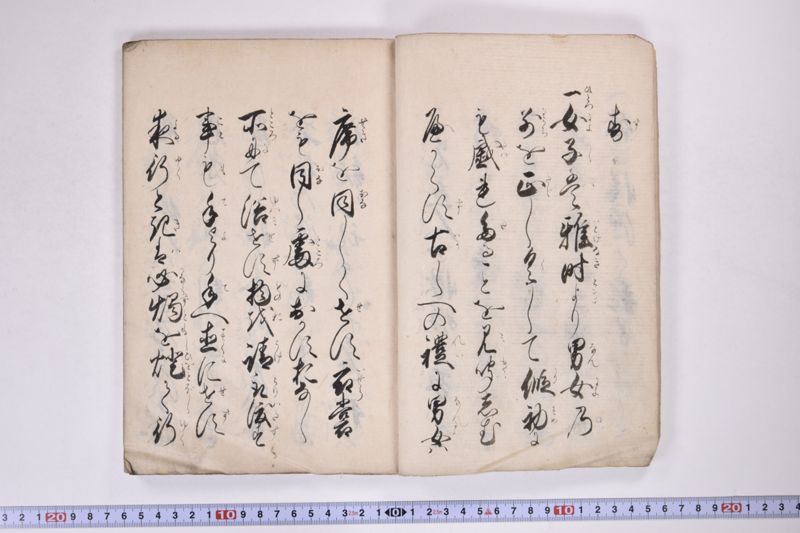
翻刻
【右丁】
寿(す)
一(ひとつ)女子(によし)は稚(いとけなき)時(とき)より男女(なんによ)乃(の)
別(わかち)を正(たゞ)し具(く)して仮初(かりそめ)に
も戯(たは)れ多(た)ることを見聞(みきゝ)しむ
遍(へ)から須(ず)古(いに)しへの礼(れい)に男女(なんによ)は
【左丁】
席(せき)を同(おな)しく世(せ)す衣裳(いせう)
をも同(おな)し処(ところ)におかすおなし
所(ところ)丹(に)て浴(ゆはみ)世(せ)須(ず)物(もの)越(お)請(うけ)取(とり)渡春(はたす)
事(こと)毛(も)手(て)与(よ)り手(て)へ直(すくに)に【衍】世須(せず)
夜(よる)行(ゆく)と起(き)盤(は)必(かならず)燭(ともしひを)を【衍】灯(とぼし)て行(ゆく)
現代語訳
【右丁】
寿
一つ、女子は幼い時から男女の区別を正しく教え込んで、たとえ軽い気持ちであっても戯れが過ぎることを見聞きさせてはならない。昔の礼法では男女は
【左丁】
席を同じくせず、衣装も同じ場所に置かず、同じ場所で入浴せず、物の受け渡しも手から手へ直接渡さず、夜に外出する時は必ず灯火を点けて行く
英語訳
【Right Page】
Longevity
First, girls should be properly taught the distinction between men and women from a young age, and should not be allowed to witness or hear of excessive frivolity, even if done in jest. According to ancient etiquette, men and women do not
【Left Page】
share the same seats, do not place their clothing in the same location, do not bathe in the same place, do not pass objects directly from hand to hand, and when going out at night, always carry a light.