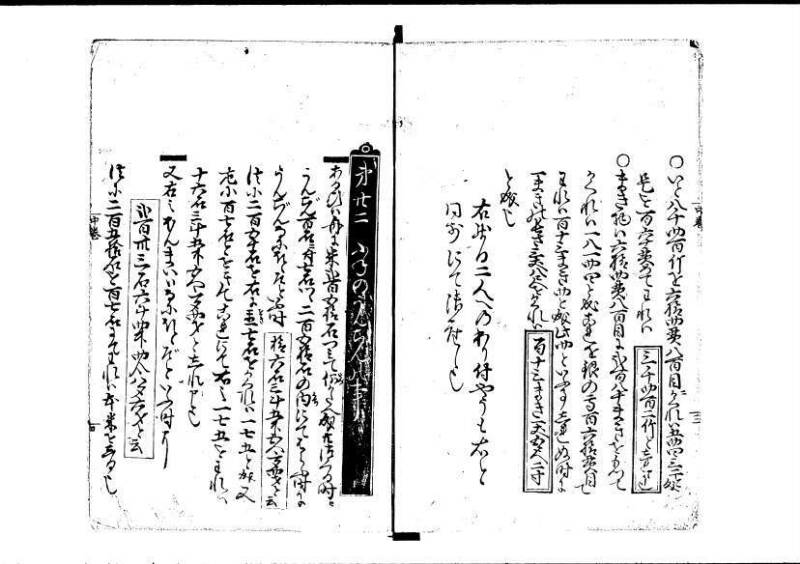
翻刻
【中巻三丁裏】
○いと八千四百斤を六拾四貫八首目 ̄ニかくれは五四四三二と成
是を百六十貫めてわれは [三千四百二竹とし□□也]
○まき物は六拾四貫八百目に弐百八十まきをもつて
かくれは一八一四四と成これを銀の高百六拾貫目て
われは百十三まき四と成此四といふ事しれぬ時に
一まきの長さ三丈八尺をかくれは [百十三まき一丈五尺二寸]
と成也
右残る二人へのわり付やうも右と
同前にて御座候也
【中巻四丁表】
《題:第廿二 ふねのうんちんの事》
┃あるひは舟に米弐百五拾石つみて何(いか)かたへ成共御くる時 ̄ニ
うんぢん百石 ̄ニ付七石ツゝ二百五拾石の内(うち)にてはらふ時に
うんぢんなにほとそといふ時 [拾六石三斗五升五合一勺四才と云]
法に二百五十石を右に置(をき)七石をかつれは一七五と成又
左に百七石とをきてこれにて右之一七五をわれは
十六石三斗五升五合一勺四才としれ申也
┃又右之ほんまいはなにほとぞといふ時に
[弐百卅三石六斗四升四合八勺六才と云]
法に二百五拾石を百七石にてわれは本米をしる也
現代語訳
【中巻 第三丁(裏)】
○糸八千四百斤を六十四貫八百目にかければ五四四三二(=五万四千四百三十二)となる。これを百六十貫目で割れば、〔三千四百二斤となり申すなり。〕
○巻き物は、六十四貫八百目に二百八十まきをもってかければ一八一四四(=一万八千百四十四)となる。これを銀の高百六十貫目にて割れば、百十三まき四(=四・○)となる。この「四」という端数が何を意味するかわからない時は、一まきの長さ三丈八尺をかければ、〔百十三まき一丈五尺二寸〕となるなり。
右の残る二人への割り付けようも、右と同前にて御座候なり。
---
【中巻 第四丁(表)】
《第二十二 船の運賃のこと》
ある人が、船に米二百五十石を積んで、いずこへなりとも運ぶとき、運賃を百石につき七石ずつ、二百五十石の内にて払うとき、運賃はいかほどかといえば、〔十六石三斗五升五合一勺四才という。〕
法(ほう):二百五十石を右に置いて七石をかければ一七五(=一七五)となる。また左に百七石を置いて、これにて右の一七五を割れば、十六石三斗五升五合一勺四才と知れ申すなり。
又、右の本米はいかほどかといえば、
〔二百三十三石六斗四升四合八勺六才という。〕
法:二百五十石を百七石にて割れば、本米を知るなり。
英語訳
[Middle Volume, Third Folio (Verso)]
○ Multiply 8,400 kin of silk thread by 64 kan 800 monme, giving 54,432 (「五四四三二」). Divide this by 160 kan, and [the result is 3,402 kin].
○ For the scroll goods: multiply 64 kan 800 monme by 280 rolls, giving 18,144 (「一八一四四」). Divide this by the total silver of 160 kan, and you get 113 rolls and 4.0 (「四」). When the meaning of this "4" is unclear, multiply by the length of one roll, which is 3 jō 8 shaku, and [the result is 113 rolls and 1 jō 5 shaku 2 sun].
The method of allocation to the remaining two merchants is exactly the same as described above.
---
[Middle Volume, Fourth Folio (Recto)]
《Section 22: On Ship Freight Charges》
Suppose someone loads 250 koku of rice onto a ship and is to transport it to some destination. The freight charge is to be paid at the rate of 7 koku per 100 koku, taken from within the 250 koku itself. What is the freight charge? [The answer is: 16 koku, 3 to, 5 shō, 5 gō, 1 shaku, 4 sai.]
Method: Place 250 koku to the right and multiply by 7 koku, giving 175 (「一七五」). Then place 107 koku to the left, and divide 175 by this figure, giving 16 koku, 3 to, 5 shō, 5 gō, 1 shaku, 4 sai, as can be found.
Furthermore, what is the amount of the original rice (net of freight)?
[The answer is: 233 koku, 6 to, 4 shō, 4 gō, 8 shaku, 6 sai.]
Method: Divide 250 koku by 107 koku, and you will find the original rice amount.