翻刻
【右丁】
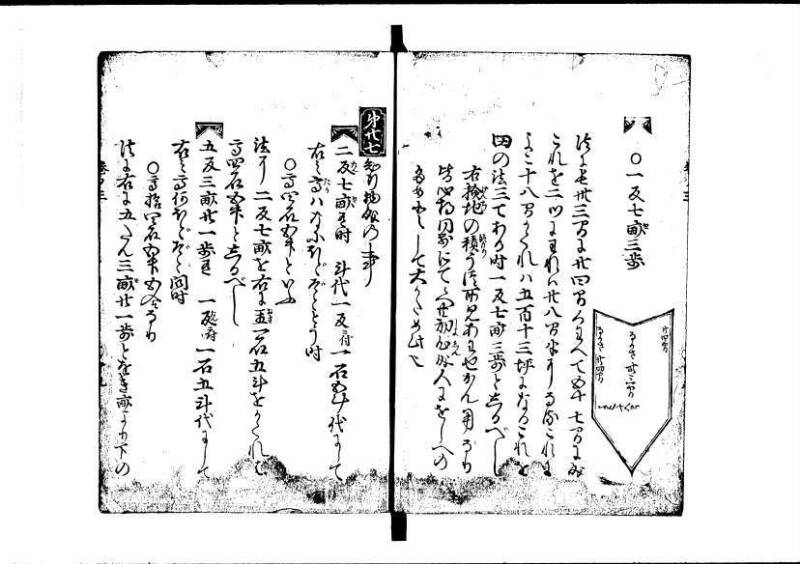
※〇一反七/畝(せ)三歩
【右の図形】
【左辺】なかさ廿四間 【真ん中縦に】なかさ丗三間 【右辺】廿四間
【横向きに】よこ十八間
法に、長丗三間に廿四間くわへて、五十七間に成。
これを二ツにわれは、廿八間半になる。これに
十八間かくれは、五百十三坪になる#1。これを
田の法三てわる時、一反七畝三歩としるべし。
右/検地(けんち)の/積(つもり)うつ所、見あわせかん用なり。
皆心持同前にて候へ共、/初心(しよしん)成人にをしへの
ためとして大かた如此也。
【左丁】
《箱:第廿七》 知行物成乃事
※二/反(たん)七/畝(せ)有時、斗代一反に付一石五斗代にして、
右之/高(たか)はなにほどぞと、とう時、
〇高四石五升といふ。
法に、二反七畝を右に/置(おき)、一石五斗をかくれは、
高四石五升としるべし#2。
※九反三畝廿一歩有。一/反(たん)に付一石五斗代にして、
右之高何ほどぞと問時、
〇高拾四石五升五合なり。
法に、九たん三/畝(せ)廿一歩とをき、畝より下の
現代語訳
【右丁】
※○一反七畝三歩
【右の図形】
【左辺】長さ二十四間 【真ん中縦に】長さ三十三間 【右辺】二十四間
【横向きに】横十八間
計算法に、長三十三間に二十四間を加えて、五十七間になる。
これを二つに割れば、二十八間半になる。これに
十八間をかければ、五百十三坪になる。これを
田の法三で割る時、一反七畝三歩と知るべし。
右、検地の積を写した所、見合わせて参考にするに便利である。
皆、心得は同様であるが、初心の人に教える
ためとして、おおよそこのようにした。
【左丁】
《第二十七》 知行物成のこと
※二反七畝ある時、斗代一反につき一石五斗代として、
右の高はいかほどかと問う時、
○高四石五升という。
計算法に、二反七畝を右に置き、一石五斗をかければ、
高四石五升と知るべし。
※九反三畝二十一歩あり。一反につき一石五斗代として、
右の高はいかほどかと問う時、
○高十四石五升五合なり。
計算法に、九反三畝二十一歩と置き、畝より下の
英語訳
[Right page]
※○1 tan 7 se 3 bu
[Right figure]
[Left side] Length 24 ken [Middle vertical] Length 33 ken [Right side] 24 ken
[Horizontal] Width 18 ken
By the calculation method, adding 24 ken to the length of 33 ken gives 57 ken.
Dividing this by two gives 28 ken and a half. Multiplying this by
18 ken gives 513 tsubo. When dividing this
by the field method of 3, it should be known as 1 tan 7 se 3 bu.
The above is a transcription of the land survey calculations, provided here for reference and convenience.
The underlying principles are all the same, but this has been presented
in this manner as a teaching aid for beginners.
[Left page]
《Section 27》 On the yield of landholdings (chigyo monari)
※When there are 2 tan 7 se, and the assessed rice yield rate (tokudai) is 1 koku 5 to per tan,
when asked how much the total assessed yield (taka) is for the above,
○The total assessed yield (taka) is 4 koku 5 sho.
By the calculation method, place 2 tan 7 se to the right, and multiply by 1 koku 5 to,
and the assessed yield (taka) should be known as 4 koku 5 sho.
※There are 9 tan 3 se 21 bu. With an assessed yield rate of 1 koku 5 to per tan,
when asked how much the total assessed yield is for the above,
○The total assessed yield is 14 koku 5 sho 5 go.
By the calculation method, place 9 tan 3 se 21 bu, and [continuing on the next page] from se downward...