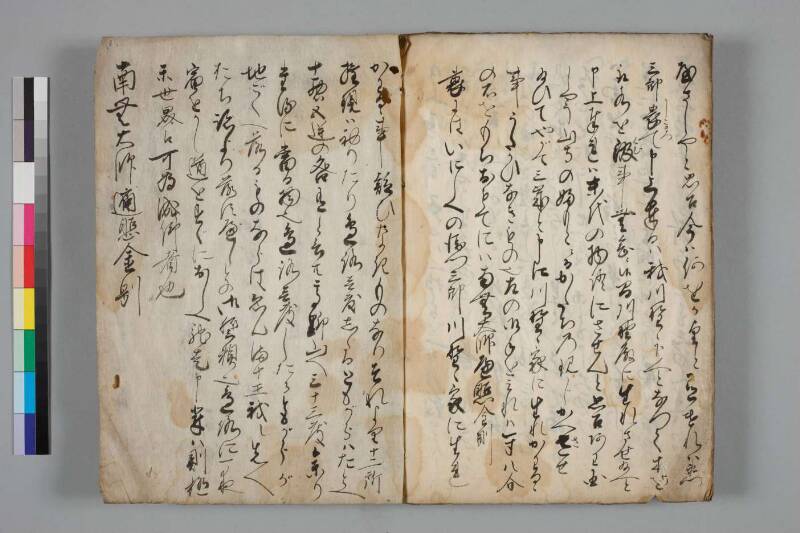
翻刻
やさしやと思召今は何をか望と有けれは衛門
三郎畏(かしこまつ)て申上奉るは我川野ゝ下人となつて木を
取水を汲(くむ)事無念に候間川野殿に生れさせ給へと
申上奉れは末代の物語にさせんと思召あわ国
しやう山寺のふもとにてかたちの現じかへさせ
給ひてやがて三歳と申に川野ゝ家に生れかわるゝ
事うたかひなきもの也左の御手をみれは一寸八分
の石をもちおもてには南無大師通照金剛
裏にはいにしへの衛門三郎川野ゝ家に生れ
かわるゝ事疑ひなきものなりそれより十二所
権現は初りたり遍路壱度したるともがらはたとへ
十悪五逆の咎有と言共高野山へ三十三度参り
たるに当る物也遍路壱度したるともがらが
地ごくへ落るものならはゑんま十王我れ先へ
おち跡より落すべしとの御請願也遍路に一夜
宿をかし道をすぐにおしへ馳走申輩は則極
楽世界え可為成仏者也
南無大師通照金則
現代語訳
「やさしい(慈悲深い)ことよ」と思召され、「今は何を望むか」とおっしゃったので、衛門三郎は恐れ多くも申し上げたのは「私が河野の下人となって木を取り水を汲むことは無念でございますので、河野殿に生まれさせてください」と申し上げた。末代までの物語にしようと思召され、阿波国焼山寺の麓にてお姿を現じ変えさせになって、やがて三歳と申す時に河野の家に生まれ変わることは疑いないものである。左の御手を見ると一寸八分の石を持ち、表には「南無大師遍照金剛」、裏には「いにしえの衛門三郎、河野の家に生まれ変わる」ことは疑いないものである。
それより十二所権現は始まった。遍路を一度したる者たちは、たとえ十悪五逆の罪があると言っても、高野山へ三十三度参ったのに当たるものである。遍路を一度した者たちが地獄へ落ちるものならば、閻魔十王が我々より先に落ち、後より落とすべしとの御誓願である。遍路に一夜の宿を貸し、道を正しく教え、もてなし申す輩は、すなわち極楽世界で成仏するべき者である。
南無大師遍照金剛
英語訳
"How compassionate," the Master thought, and asked "What do you wish for now?" Emon Saburō humbly replied: "It is unbearable for me to become a servant of the Kōno clan, fetching wood and drawing water, so please let me be born as Lord Kōno himself." Thinking to make this a story for future generations, the Master transformed his appearance at the foot of Mount Shōsan Temple in Awa Province, and at the age of three, was reborn into the Kōno family without doubt. Looking at his left hand, he held a stone one sun and eight bu in size, with "Namu Daishi Henjō Kongō" on the front, and on the back "The former Emon Saburō reborn into the Kōno family" - this was undoubtedly true.
From this began the Twelve Shrine Manifestations. Those who complete the pilgrimage once, even if they have committed the ten evils and five grave sins, are equivalent to those who have visited Mount Kōya thirty-three times. If those who complete the pilgrimage once were to fall into hell, then King Enma and the Ten Kings would fall first before us and drop them afterward - such is his sacred vow. Those who provide lodging for one night to pilgrims, correctly show them the way, and offer hospitality shall surely attain Buddhahood in the Pure Land.
Namu Daishi Henjō Kongō