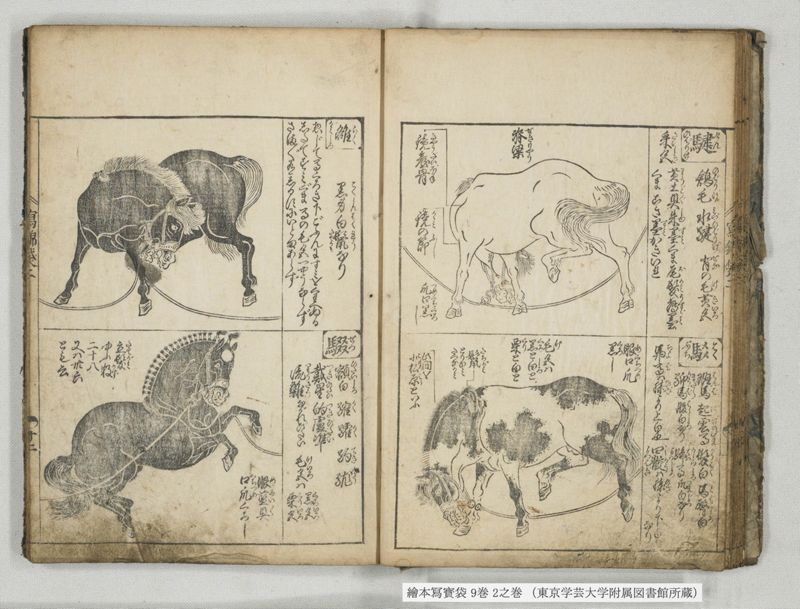
翻刻
【右丁】
【上段】
騝(けん)【左ルビ:ひばりけ】【隅切囲みの見出し】鶬毛(ひばりけ) 水騝(みづひばりげ) 背(せな)の毛(け)黄色(きいろ)
采色(さいしき)《割書:黄土(わうど)具(ぐ)朱(しゆ)墨(すみ)くま尾(お)髪(かみ)薄墨(うすゞみ)|くま こき墨(すみ)かきいれ》
ーーーーーーーーーーーーーーーーーーーーーーーーーーーーーーーーーーー
脊梁(せきりやう) 【馬の絵】
鏡台骨(きやうだいほね) 鏡(かゝみ)の節(ふし) 爪(つめ)口(くち)黒(くろ)し
【下段】
駁(はく)【左ルビ:ぶち】【隅切囲みの見出し】斑馬(はんば)【左ルビ:まだら】 起雲馬(にげのむま) 髪白(かうはく)【左ルビ:かしらしろ】 馬臀白(ともしろ)
䭹(かう)馬(ば)《割書:腹(はら)白(しろ)なり》 蹄(てい)馬【左ルビ:よつじろ】《割書:爪白(つまじろ)なり》
馵馬(ちよば)は膝より上白也 四骹(しかう)【左ルビ:よつはぎ】は膝より下白なり
ーーーーーーーーーーーーーーーーーーーーーーーーーーーーーーーーーーーー
眼(め)口(くち)爪(つめ)
黒(くろ)し
毛(け)色は
黒(くろ)と白(しろ)と
栗(くり)と白と 【馬の絵】
鬣(たちがみ)
とりかみ
たつなかみ
此間を
小松原(こまつはら)といふ
【左丁】
【上段】
雒(らく)【左ルビ:かみしろ】【隅切囲みの見出し】 黒身白(こくしんはく)鬣(れう)【左ルビ:たてかみ】なり
総【惣】じて馬くろき下ごふんにすみをくわへぬる
したてすみぐま馬の毛色一やうならず
さま〴〵有しるすにいとまあらず
ーーーーーーーーーーーーーーーーーーーーーーーーーーーーーーーーーーー
【馬の絵】
【下段】
䮕(せつ)【隅切囲みの見出し】 額(ひたい)白(しろ) 䮤(かく) 𩧏(かく) 馰(てき) 駹(ほう)
戴星(つきひたい) 的盧準(つきひたい)
流顙(りうさう)《割書:ながれびたい》【桑+隹は誤】 毛色(けいろ)は《割書:黒色(くろいろ)|栗色(くりいろ)》
ーーーーーーーーーーーーーーーーーーーーーーーーーーーーーーーーーーーー
眼(め)藍(あい)具(く)
口(くち)爪(つめ)くろし
【馬の絵】
立髪(たてがみ)
ゆふ数(かず)
二十八
又は卅六
とも云
現代語訳
【右丁】
【上段】
騝(けん)【雲雀毛】 雲雀毛、水雲雀毛 背の毛は黄色
彩色:黄土を用い、朱・墨で隈取り、尾・鬣は薄墨で隈取りし、濃い墨で描き入れる
脊梁(背骨)
鏡台骨 鏡の節 爪・口は黒い
【下段】
駁(はく)【ぶち】 斑馬(まだら)、起雲馬(逃げ馬)、髪白(頭白)、馬臀白(尻白)
䭹(こう)馬は腹が白い。蹄馬(四つ白)は爪が白い
馵馬(ちょば)は膝より上が白い。四骹(四つはぎ)は膝より下が白い
目・口・爪は黒い
毛色は黒と白、栗と白がある
鬣(たてがみ)・とりがみ・たつながみ
この間を小松原という
【左丁】
【上段】
雒(らく)【頭白】 黒い体に白いたてがみ
総じて馬の黒い部分は胡粉に墨を加えて塗る
仕上げは墨で隈取り。馬の毛色は一様でなく、様々あるが、記すには暇がない
【下段】
䮕(せつ) 額白、䮤(かく)、𩧏(かく)、馰(てき)、駹(ほう)
戴星(月額)、的盧準(月額)
流顙(流れ額) 毛色は黒色または栗色
目は藍で彩色
口・爪は黒い
立髪(たてがみ)を結う数は二十八、または三十六とも言う
英語訳
【Right Page】
【Upper Section】
Ken (騝) [Hibari-ke - Skylark Coat]: Skylark coat, water skylark coat. Back hair is yellow.
Coloring: Using yellow ochre, shading with vermillion and ink, tail and mane shaded with light ink, drawn in with dark ink.
Backbone (spine)
Mirror stand bone, mirror joint. Hooves and mouth are black.
【Lower Section】
Haku (駁) [Buchi - Spotted]: Spotted horse (mottled), escaping cloud horse, white-headed, white-rumped horse.
Kou horse has a white belly. Hoof horse (four whites) has white hooves.
Chouba horse is white above the knees. Four-hagi is white below the knees.
Eyes, mouth, and hooves are black.
Coat colors include black and white, chestnut and white.
Mane (tategami), torigami, tatsunagami
The space between these is called Komatsuhara.
【Left Page】
【Upper Section】
Raku (雒) [Kami-shiro - Head White]: Black body with white mane.
Generally, for black parts of horses, ink is added to white pigment for painting.
Finishing with ink shading. Horse coat colors are not uniform and vary greatly, but there is no time to record all variations.
【Lower Section】
Setsu (䮕): White forehead, kaku, kaku, teki, hou
Taisei (moon forehead), Tekirojun (moon forehead)
Ryusou (flowing forehead). Coat color is black or chestnut.
Eyes colored with indigo
Mouth and hooves are black
The number of braids for the standing mane is twenty-eight, or sometimes said to be thirty-six.