翻刻
【右丁 上段】
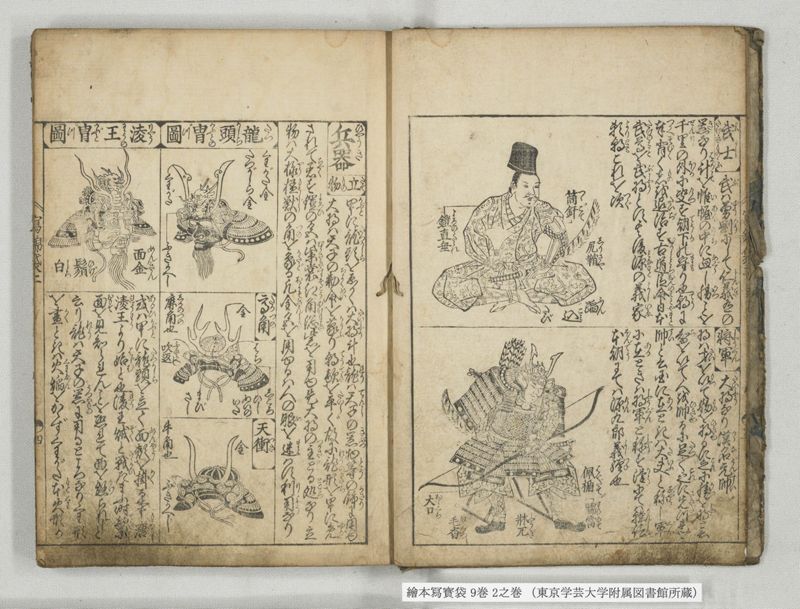
武士(ぶし)【左ルビ:、たけきものゝふ】【枠内】
武(ぶ)は勇剛(ゆうかう)にして仁義(じんぎ)有の
器(き)なり計(はかりこと)を帷幄(いあく)の中(うち)に廻(めぐら)し勝(かつ)ことを
千里(せんり)の外(ほか)に決(けつ)す朝下(てうか)の守(まも)り也/朝(てう)に
奉(つかへ)背(そむく)く者(もの)を退治(たいぢ)す古(むかし)道臣命(みちおんのみこと)日本(やまと)
武尊(たけのみこと)を武将(ぶしやう)とす其後/源(みなもと)の義家(よしいゑ)
頼朝(よりとも)これを次(つぐ)
【絵に対する注記、時計回りに】
筒釬(つゝごて)
尻鞘(しりさや)
踏込(ふんこみ)たび
鎧直垂(よろひゝたゝれ)
【同 下段】
将軍(しやうぐん)【枠内】大将(たいしやう)なり漢名(からな)元帥(げんすい)
将は才(さい)を以(もつ)て物(もの)を将(ひきゐ)るに之(これ)に勝(かつ)を将(しやう)と云
智(ち)を以て人を帥(ひきゐ)るに足(たつ)て之(これ)に先(さきだ)つ是を
帥(すい)と云国に在(ある)ときは大夫(たいふ)と称(しやう)じ軍(ぐん)
に在(ある)ときは将軍(しやうぐん)と称(しやう)ず漢(から)にては韓信(かんしん)
本朝にては源(けん)九郎/義経(よしつね)也
【絵に対する注記、右から】
佩盾(はいだて)
臑当(すねあて)
牀兀(しやうぎ)
毛沓(けぐつ)
大口(おゝくち)
兵器(ひやうき)立物(たてもの)【枠内】
甲(かぶと)に龍頭(たつかしら)をゑかくは大将(たいしやう)斗也/龍(れう)は天子(てんし)の器物(きぶつ)等(とう)の飾(かさり)に用ゆ
大将は天子の勅命(ちよくめい)を蒙(かうふ)り朝敵(てうてき)を平(たいら)ぐ故に龍形(れうのかたち)を甲に免(ゆる)
されて着(ちやく)す鎧(よろひ)の色は紫(むらさき)裳(すそ)紅(こう)角総(あけまき)紫を用ゆ是大将の主(つかさ)どる処(ところ)なり立
物は大/様(やう)猛獣(もうじう)の角(つの)を象(かたど)る凡(およそ)金色(きんしき)を用ゆるは人の眼(め)を迷(まよ)はす利用(りよう)なり
【枠内】龍頭冑図(たつかしらかふとのづ)
くわがた金【図注右から】
たつがしら金
くわがた
ふきかへし
【下へ】
【枠内】高角(たかつの)
金【右上から時計回り】
はち
しころ
ひしぬいのいた
まびさし
吹返(ふきかへし)
鹿角(しかのつの)也
【下へ】
【枠内】天衝(つき)
金【右上から時計回り】
ふきかへし
牛角也
【左上へ】
淩王冑図(りやうわうのかぶとづ)
面金(めんきん)
髭(ひげ)
白(しろ)
或(あるひ)は甲に龍頭(たつかしら)を立て面彭(めんほう)を掛(かく)る事唐(もろこし)
淩王(れうわう)より始(はじむ)と也/淩(れい)王/賊(ぞく)と戦(たゝかひ)たまふ時/敵(てき)に
面(おもて)を見知られんことを恐れて面を懸(かけ)られしと
云り龍(れう)は天子の器(うつはもの)に用るところなりくわ形
を書(かく)ときは火焔(くわゑん)をかゝずくわがた本(もと)火(くわ)形か
現代語訳
【右丁 上段】
武士【たけきものの夫】【枠内】
武とは勇敢で剛毅であり、仁義を備えた人物である。作戦を本営の中で練り、勝利を千里の彼方で決する。朝廷の守護者であり、朝廷に背く者を討伐する。古くは道臣命、日本武尊を武将とした。その後、源義家、頼朝がこれを継いだ。
【装身具の説明、時計回りに】
筒籠手
尻鞘
踏込足袋
鎧直垂
【同 下段】
将軍【枠内】大将のことである。漢名では元帥という。
将とは才能をもって物事を率いることに長けている者を将という。知恵をもって人を率いることに長けており、それに先立つ者を帥という。国にいる時は大夫と称し、軍にいる時は将軍と称する。中国では韓信、我が国では源九郎義経がその代表である。
【装身具の説明、右から】
佩楯
脛当
床几
毛沓
大口
兵器立物【枠内】
兜に龍頭を描くのは大将のみである。龍は天子の器物等の装飾に用いる。大将は天子の勅命を受けて朝敵を平定するため、龍形を兜に付けることを許されて着用する。鎧の色は紫、裳は紅、総は紫を用いる。これが大将の司るところである。立物は大体猛獣の角を象る。およそ金色を用いるのは人の目を惑わす効用があるからである。
【枠内】龍頭兜図
鍬形金
龍頭金
鍬形
吹返
【下へ】
【枠内】高角
金
鉢
錣
菱縫の板
眉庇
吹返
鹿角である
【下へ】
【枠内】天衝
金
吹返
牛角である
【左上へ】
陵王兜図
面金
髭
白
あるいは兜に龍頭を立てて面頬を掛けることは中国の陵王より始まるという。陵王が賊と戦われた時、敵に顔を見知られることを恐れて面を掛けられたと言われている。龍は天子の器に用いるところである。火形を書く時は火焔を描かず、鍬形本来は火形か
英語訳
【Right page, upper section】
Warrior【valiant warrior】【in frame】
"Bu" (martial) refers to one who is brave and resolute, possessing benevolence and righteousness. They devise strategies within military headquarters and determine victory thousands of miles away. They are protectors of the imperial court, subduing those who rebel against it. In ancient times, Michi-omi-no-mikoto and Yamato Takeru-no-mikoto served as military commanders. Later, Minamoto no Yoshiie and Yoritomo continued this tradition.
【Equipment descriptions, clockwise】
Tube gauntlets
Scabbard end
Stepping tabi (split-toe socks)
Armored court dress
【Same page, lower section】
Shogun【in frame】This refers to a supreme commander. The Chinese name is "gensui" (marshal).
A "sho" (general) is one who excels at leading things with talent. One who excels at leading people with wisdom and takes the lead is called "sui" (commander). When in the capital, they are called "taifu" (high official); when with the army, they are called "shogun" (general). In China, this was Han Xin; in our country, it was Minamoto no Kuro Yoshitsune.
【Equipment descriptions, from right】
Hip guards
Shin guards
Folding stool
Fur boots
Wide hakama trousers
Military Equipment and Crests【in frame】
Only supreme commanders may depict dragon heads on their helmets. Dragons are used for decorations on the emperor's implements. Since supreme commanders receive imperial edicts to pacify enemies of the court, they are permitted to wear dragon forms on their helmets. The armor color is purple, the hem is crimson, and purple cords are used. This is what the supreme commander oversees. Crests generally represent the horns of fierce beasts. Gold color is generally used because it has the utility of dazzling the enemy's eyes.
【in frame】Dragon-head helmet diagram
Golden antler ornament
Golden dragon head
Antler ornament
Turn-back plates
【Below】
【in frame】High horns
Gold
Bowl
Neck guard
Diamond-stitched plates
Brow visor
Turn-back plates
These are deer antlers
【Below】
【in frame】Heaven-piercing
Gold
Turn-back plates
These are bull horns
【Upper left】
Prince Lanling helmet diagram
Face mask
Whiskers
White
Alternatively, mounting dragon heads on helmets and wearing face masks began with Prince Lanling of China. It is said that when Prince Lanling fought against rebels, he wore a mask for fear that enemies might recognize his face. Dragons are used on the emperor's vessels. When drawing fire forms, flames are not depicted; the original antler ornament form may be fire-shaped...