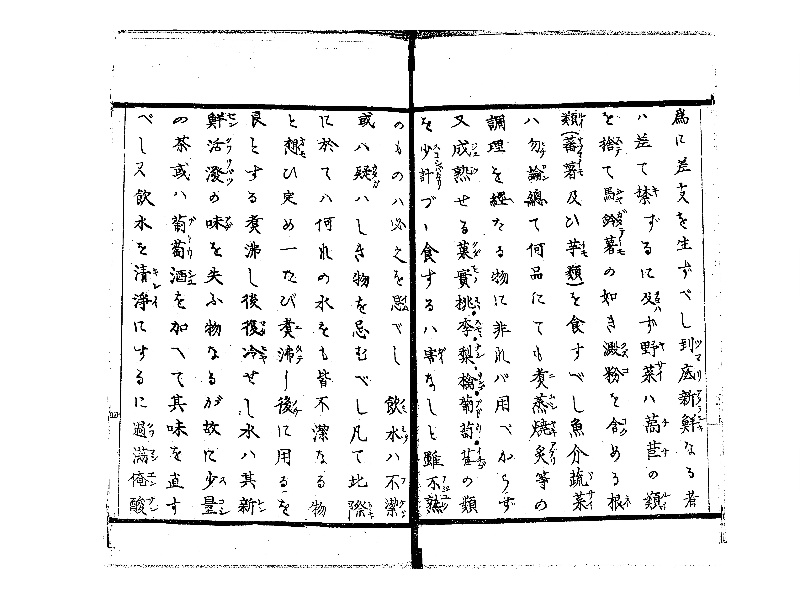
翻刻
【右】
為に差支を生ずべし到底新鮮(ツマリアタラシキ)なる者
は差て禁(キ)ずるに及(ヲヨハ)ず野菜(ヤサイ)は萵苣(チサ)の類(ルイ)
を捨(ステ)て馬鈴薯(ジヤガタライモ)の如き澱粉(クズコ)を含(フク)める根(ネ)
類(ルイ)[蕃薯(サツマイモ)及ひ芋(イモ)類]を食すべし魚介/蔬菜(リサイ)
は勿論(モチロン)總て何品にても煑蒸焼炙(ニ ムシ ヤキ アブリ)等の
調理を経(ヘ)たる物に非れば用べからず
又成熟(ジユク)せる菓實桃(クダモノモゝ)、李(スモゝ)、梨(ナシ)、檎(リンゴ)、葡萄(ブドウ)、苺(イチゴ)の類
を少計(スコシバカリ)づゝ食するは害(ガイ)なしと雖/不熟(ヒジユク)
【左】
のものは必之を忌(イム)べし 飲水(ノミミヅ)は不潔(フケツ)
或は疑(ウタガ)はしき物を忌むべし凡て此/際(トキ)
に於ては何れの水をも皆不潔なる物
と想(オモ)ひ定め一たび煑沸(ニタテ)し後(ノチ)に用るを
良とする煑沸し後/復冷(マタヒヤ)せし水は其/新(シン)
鮮活潑(センクワツパツ)の味(アヂ)を失ふ物なるが故に少量(スコシ)
の茶或は葡萄酒(ブトウシユ)を加へて其味を直す
べし又飲水を清浄(キレイ)にするに過満俺酸(クワマンエンサン)
現代語訳
【右】
ために差し支えを生じるであろう。結局、新鮮なもの
は特に禁じるには及ばない。野菜はレタスの類
を避けて、じゃがいもなどのでんぷんを含む根
菜類[さつまいもおよびいも類]を食べるべきである。魚介類や
野菜はもちろん、すべて何の品物でも煮る、蒸す、焼く、炙る等の
調理を経たものでなければ用いてはならない。
また熟したくだもの-桃、すもも、梨、りんご、ぶどう、いちごの類
を少しずつ食するのは害がないといえども、未熟
【左】
なものは必ずこれを忌むべきである。 飲み水は不潔
あるいは疑わしいものを忌むべきである。すべてこの
際においてはいずれの水もみな不潔なもの
と思い定め、一度煮沸した後に用いるのを
良しとする。煮沸した後また冷ました水はその新
鮮で活発な味を失うものであるが故に、少量
の茶あるいはぶどう酒を加えてその味を正す
べきである。また飲み水を清浄にするのに過マンガン酸
英語訳
【Right page】
this would cause difficulties. Ultimately, fresh items
need not be particularly forbidden. For vegetables, avoid lettuce-type
plants and eat starchy root
vegetables [sweet potatoes and other tuber types] like potatoes. Fish, shellfish, and
vegetables, of course—indeed, any food items whatsoever—must not be used
unless they have undergone cooking processes such as boiling, steaming, roasting, or grilling.
Also, while eating small amounts of ripe fruits—peaches, plums, pears, apples, grapes, strawberries, and the like—
causes no harm, unripe
【Left page】
items must definitely be avoided. Drinking water that is unclean
or suspicious should be avoided. In general, during this
time, one should consider all water to be unclean
and, having decided this, use it only after boiling it once,
which is good practice. Water that has been boiled and then cooled again loses its fresh
and lively taste, so one should add small amounts
of tea or wine to correct the taste.
Also, to purify drinking water, potassium permanganate