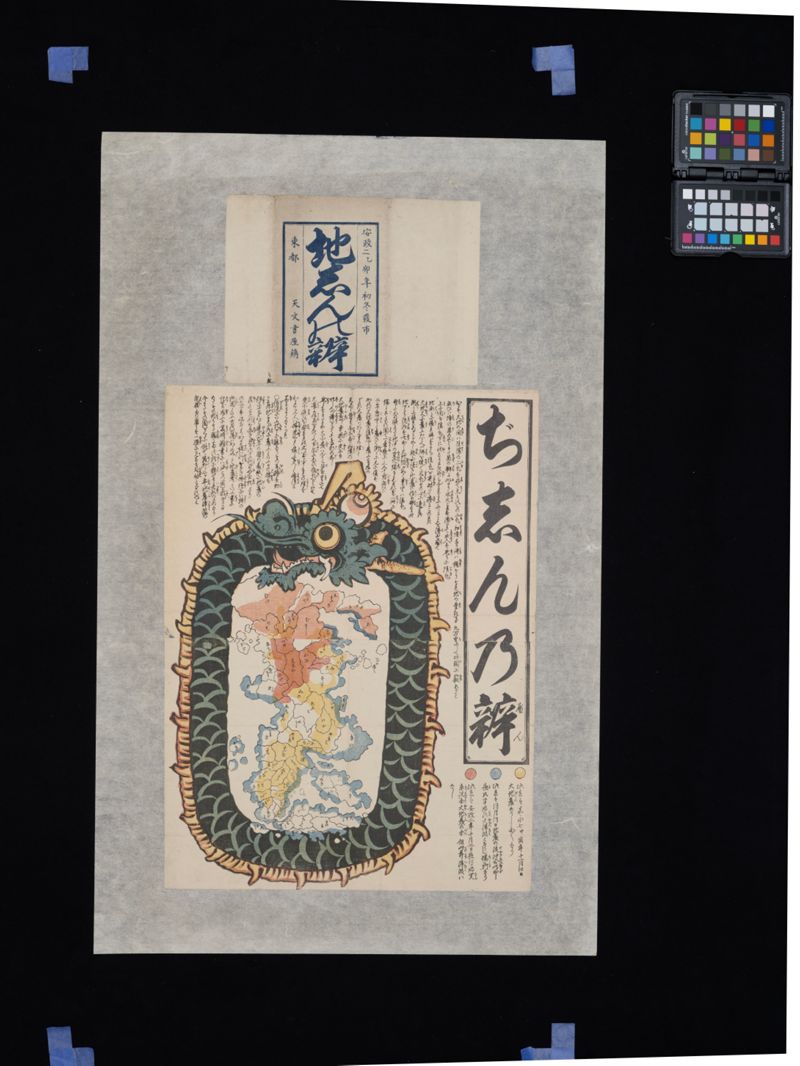
翻刻
【頭部】
安政二《割書:乙》卯年初冬発市
【縦の仕切り線有り】
《題:地しんの弁》
【縦の仕切り線有り】
東都 天文書屋鐫
【本文】
《題:ぢしんの弁(べん)》
【題字の下部の色分け索引】
「黄色い○」此色は嘉永七《割書:甲》寅年十一月四日
大 地震(ぢしん)ありし国〳〵なり
「青い○」 此色は同月同日地震の後(ご)沖合(おきあひ)鳴出(なりだ)し
夜(よ)五半時 頃(ころ)大津波(おほつなみ)となりし場所(ばしよ)なり
「赤い○」 此色は安政二年十月二日夜四ッ時 関(くわん)
東(とう)諸国(しよこく)大地震(おほぢしん)の分(ぶん) 但 此節(このとき)津波(つなみ)は
なし
およそ天地(てんち)の間(あひだ)は陰陽(いんやう)の二気(にき)を以(もつ)て元(もと)とすこの二気(にき)和順(くわじゆん)なる時(とき)は穏(おだやか)なりそれ地(ち)の厚(あつ)き事九万 里(り)にして四囲(しゐ)に竅(あな)あること
或(ある)ひは蜂(はち)の巣(す)の如(ごと)くまた菌(くさびら)の弁(すぢ)【瓣】に似(に)たり水火(すゐくわ)これを潜(くゞ)りて出入(しゆつにふ)す然(しか)るに陰気(いんき)
上(かみ)に閉(と)ぢ陽気 下(しも)に伏(ふく)するとき升(のぼ)らんとするに升ることを得(え)ず因(よつ)て
地 漸々(だん〳〵)【ママ】に脹(ふく)れ時をまち陰気を突破(つきやぶ)つて騰(のぼ)るこのとき
大地(たいち)大(おほい)に震(ふる)ふたとへば餅(もち)を焼(やき)て火気(くわき)その心(しん)に透(とほ)れば
漸々(だん〳〵)【ママ】に脹れあがるが如し故(ゆゑ)に強(つよ)き地 震(しん)は始(はじ)め発(はつ)する時
地 下(か)より泥(どろ)沙(すな)を吹(ふき)出し大地 陥(おちいる)が如く覚(おぼ)ゆるは陽気
発(はつ)してかの脹れたる地中の空穴(くうけつ)縮(しゞ)まる也されども一時(いちじ)に
縮み尽(つく)さず因(よつ)て一昼夜(いつちうや)に三五十 度(ど)或(ある)ひは
二三十 度(ど)少(すこ)しく震(ふる)ひて漸々(ぜん〴〵)に元に復す
かゝれば大地震の後(のち)度々震ふとも始の
ごとき大震はあらざるの理(り)と
しるべし昔(むかし)より今(いま)に至(いた)り和漢(わかん)の
大 地震(ぢしん)度々(たび〳〵)にて既(すで)に史(ふみ)にも
記(しる)し人(ひと)の譚(ものがたり)をきくにみな斯(かく)の如(ごと)し
然(しか)るをまたもや大に震(ふる)はんかと日(ひ)を重(かさ)ねて
大 道(だう)に仮家(かりや)をしつらへ寒風(かんふう)にあひ夜気(やき)をうけて
竟(つひ)に疾(やま)ひを発(はつ)するを思はず少しもこの理(ことわり)を
知れらん人は婦(をんな)児(こども)によく諭(さと)して久(ひさ)しく路傍(みちはた)に
宿(しゆく)することなかれ
○俗説(ぞくせつ)にいふ地下(ちか)に鯰(なまづ)ありその尾鰭(をひれ)を動(うご)
かす時(とき)地(ち)これが為(ため)に震(ふる)ふといふその拠(よりところ)を
詳(つばら)にせざれど建久(けんきう)九年の暦(こよみ)の表紙(へうし)に地震(ぢしん)の
虫(むし)とてその形(かたち)を画(ゑが)き日本(にほん)六十六 州(しう)の名(な)を記(しる)したり
六七百年以前よりかゝる説(せつ)は行(おこな)はれき仏経(ぶつきやう)には竜(りう)【龍】の
所為(わざ)といふ古代の説(せつ)はかくの如(ごと)しと地震考(ぢしんかう)といふ書(しよ)に
記(しる)せり思(おも)ふに当時(たうじ)雑書(ざつしよ)には必(かならず)この図を載(のせ)ざる事
なくその形(かたち)もまた鯰(なまづ)にあらず竜(りゆう)【龍】に類(るい)せる異形(いぎやう)のものなり
今またその図(づ)をこゝに仮(かり)て寅卯(とらう)二ヶ 年(ねん)地震(ぢしん)津波(つなみ)の
災異(さいい)ありし国々を一眼(ひとめ)に見(み)する目的(めあて)となすのみ
現代語訳
【表紙】
安政2年(1855年)初冬発行
地震の弁
東都 天文書屋刊
【本文】
地震の弁
【凡例】
「黄色い○」この色は嘉永7年(1854年)11月4日に大地震があった国々である
「青い○」この色は同月同日、地震の後に沖合いで鳴り出し、夜の11時頃に大津波となった場所である
「赤い○」この色は安政2年10月2日夜10時に関東諸国で起きた大地震の分である。ただし、この時は津波はなかった。
およそ天地の間は陰陽の二つの気を基本とする。この二つの気が調和している時は穏やかである。地の厚さは9万里で、四方に穴があることは、蜂の巣のようであり、また茸の弁のようでもある。水と火がこれを潜って出入りする。しかし陰の気が上で閉じ、陽の気が下に潜伏する時、上昇しようとするが上昇することができず、そのため地が次第に膨れ、時を待って陰の気を突き破って上昇する。この時大地が大いに震う。例えば餅を焼いて火の気がその中心に透れば、次第に膨れ上がるようなものである。故に強い地震は最初に発生する時、地下より泥や砂を吹き出し、大地が陥るように感じるのは、陽の気が発して、その膨れた地中の空洞が縮むからである。しかし一度に縮み尽くすことはなく、そのため一昼夜に30~50回、あるいは20~30回少しずつ震えて、次第に元に戻る。このように大地震の後に度々震えても、最初のような大震はないという道理を知るべきである。昔から今に至るまで、日本と中国の大地震は度々起こり、既に史書にも記され、人の語り継ぐところを聞くに、みなこのようである。
それなのに、またもや大きく震えるのではないかと日を重ねて大道に仮小屋を設け、寒風に当たり夜気を受けて、ついに病気になることを考えもしない。少しでもこの道理を知った人は、女性や子供によく説明して、長く路傍に宿泊することのないようにせよ。
○俗説では地下に鯰がいて、その尾びれを動かす時に地がそのために震うという。その根拠を詳しく調べてはいないが、建久9年(1198年)の暦の表紙に地震の虫として、その形を描き、日本66州の名を記している。6~700年以前からこのような説が行われていた。仏教経典では龍の仕業という。古代の説はこのようであると「地震考」という書に記されている。思うに当時の雑書には必ずこの図を載せないことはなく、その形もまた鯰ではなく、龍に類する異形のものである。今またその図をここに借りて、寅年・卯年(1854-1855年)の地震・津波の災害があった国々を一目で見る目安とするのみである。
英語訳
【Cover】
Published in early winter of Ansei 2 (1855)
Discourse on Earthquakes
Edo, published by Tenmon Bookstore
【Main Text】
Discourse on Earthquakes
【Legend】
"Yellow circles" - These colors indicate the provinces where great earthquakes occurred on the 4th day of the 11th month of Kaei 7 (1854)
"Blue circles" - These colors indicate places where, after the earthquake on the same month and day, rumbling began offshore and became a great tsunami around 11 o'clock at night
"Red circles" - These colors indicate the great earthquake that struck the Kanto provinces at 10 o'clock on the night of the 2nd day of the 10th month of Ansei 2. However, there was no tsunami at this time.
Generally, the space between heaven and earth is based on the two forces of yin and yang. When these two forces are in harmony, all is peaceful. The earth is 90,000 ri thick and has holes in all four directions, like a beehive or resembling the gills of mushrooms. Water and fire pass through these, entering and exiting. However, when yin energy is blocked above and yang energy lurks below, it tries to rise but cannot ascend. Therefore, the earth gradually swells, and when the time comes, it breaks through the yin energy and rises. At this time, the great earth trembles greatly. For example, when baking rice cakes, if fire penetrates to their center, they gradually swell up. Therefore, when strong earthquakes first occur, they blow mud and sand up from underground, and the earth feels as if it's sinking because yang energy is released and the swollen cavities in the earth contract. However, they do not contract all at once, so in one day and night there are 30 to 50 tremors, or 20 to 30 tremors, shaking little by little until gradually returning to normal.
Thus one should understand the principle that even if there are frequent tremors after a great earthquake, there will not be great shaking like the initial one. From ancient times to now, great earthquakes in Japan and China have occurred repeatedly, already recorded in historical documents, and from listening to people's stories, all are like this.
Yet people spend days setting up temporary shelters on main roads, worrying that there might be another great tremor, exposing themselves to cold winds and night air, eventually becoming ill without thinking. Anyone who knows even a little of this principle should explain well to women and children that they should not lodge by roadsides for long periods.
○Popular belief says there is a catfish underground, and when it moves its tail fin, the earth shakes because of it. While I have not investigated the basis for this in detail, on the cover of a calendar from Kenkyu 9 (1198), an "earthquake insect" is drawn with the names of Japan's 66 provinces recorded. Such theories have been current for 6-700 years. Buddhist scriptures attribute it to dragons. A book called "Earthquake Studies" records that ancient theories were like this. I think that popular publications of that time invariably included this illustration, and its form was not actually a catfish but something of strange shape resembling a dragon. Now I borrow that illustration here merely as a reference to see at a glance the provinces that suffered earthquake and tsunami disasters in the years of the Tiger and Rabbit (1854-1855).