翻刻
【右丁 上段】
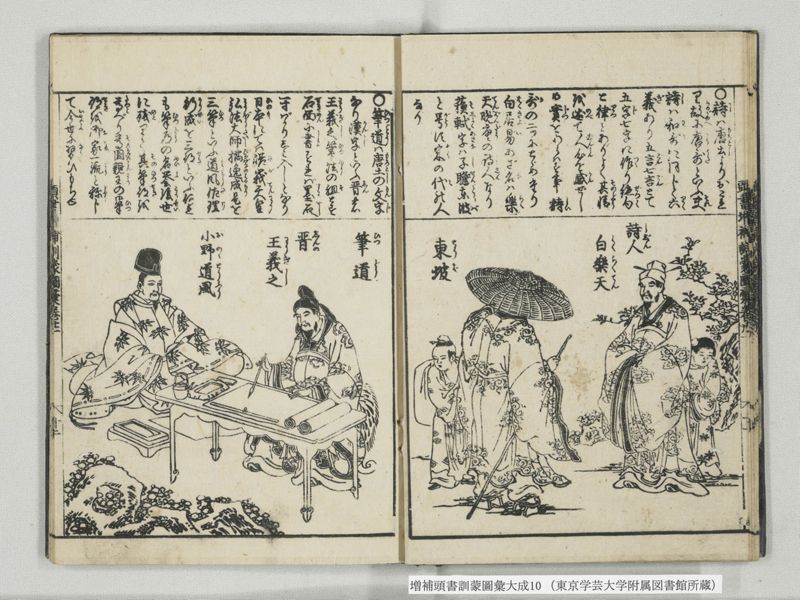
○詩(し)は唐土(もろこし)よりおこれ
り故(かるがゆへ)に唐哥(からうた)といふ夫(それ)
詩(し)は和哥(わか)に同じく六(りく)
義(ぎ)あり五 言(ごん)七 言(ごん)とて
五 字(じ)七字に作(つく)り絶句(ぜつく)
と律(りつ)とありよく其(その)情(じやう)
を述(のべ)て人心(じんしん)を感(かん)ぜし
め実(じつ)をあらはす事 詩(しい)
哥(か)の二ツにとゞめたり
白居易(はくきよい)のあざ名(な)は楽(らく)
天(てん)晩唐(ばんだう)の詩人(ししん)なり
蘇軾(そしよく)字(あざな)は子瞻(しせん)東坡(とうば)
と号(がう)す宋(そう)の代(よ)の人
なり
【左丁 上段】
○筆道(ひつどう)は唐土(もろこし)の文字(もんじ)
なり漢字(かんじ)といふ晋(しん)の
王義之(わうぎし)筆法(ひつほう)の祖(そ)とす
石面(せきめん)に書(しよ)すれば墨石(すみいし)
一寸ばかりしみ入しとなり
日本(ひのもと)にては嵯峨天皇(さがてんわう)
弘法大師(こうぼうたいし)橘逸成(たちばなのはやなり)是を
三 筆(ひつ)といふ道風(とうふう)佐理(さり)
行成(かうぜい)を三 蹟(せき)といふ何れ
も筆道(ひつどう)の名誉(めいよ)後世(こうせい)
に残(のこ)りて其(その)筆跡(ひつせき)を
尊(たつと)べり尊円(そんえん)親王(しんわう)の御 筆(ひつ)
跡(せき)を御家(おいゑ)一 流(りう)と称(しやう)じ
て今世(いまよ)に習(なら)ひもちゆ
【右丁 下段挿絵】
詩人(しじん)
白楽天(はくらくてん)
東坡(とうば)
【左丁 下段挿絵】
筆道(ひつどう)
晋(しんの)
王義之(わうぎし)
小野道風(おのゝとうふう)
現代語訳
【右丁 上段】
○詩は中国から起こったので、唐歌という。その詩は和歌と同じく六義がある。五言・七言といって、五字・七字で作り、絶句と律詩がある。よくその情を述べて人心を感動させ、真実を表すことは、詩歌の二つに限られる。
白居易のあざ名は楽天、晩唐の詩人である。
蘇軾の字は子瞻、東坡と号す。宋の時代の人である。
【左丁 上段】
○筆道は中国の文字である。漢字という。晋の王義之を筆法の祖とする。石の表面に書けば墨が石に一寸ほど染み入ったという。
日本では嵯峨天皇・弘法大師・橘逸勢を三筆という。道風・佐理・行成を三蹟という。いずれも筆道の名誉が後世に残って、その筆跡を尊んでいる。尊円親王の御筆跡を御家一流と称して、現在でも習い用いている。
【右丁 下段挿絵】
詩人
白楽天
東坡
【左丁 下段挿絵】
筆道
晋の
王義之
小野道風
英語訳
【Right Page Upper Section】
○Poetry originated in China, so it is called "Chinese poetry" (karauta). Poetry, like waka, has six principles. There are five-character and seven-character forms, composed of five or seven characters respectively, with regulated verse (zekku) and regulated poetry (ritsu). The ability to express emotions well, move human hearts, and reveal truth is limited to these two forms of poetry and song.
Bai Juyi's courtesy name was Letian, and he was a poet of the late Tang period.
Su Shi's courtesy name was Zizhan, and he took the pen name Dongpo. He was a person of the Song dynasty.
【Left Page Upper Section】
○The way of the brush (calligraphy) uses Chinese characters, called kanji. Wang Xizhi of the Jin dynasty is regarded as the patriarch of brush techniques. It is said that when he wrote on stone surfaces, the ink would penetrate about one inch into the stone.
In Japan, Emperor Saga, Kōbō Daishi, and Tachibana no Hayanari are called the "Three Brushes" (Sanpitsu). Dōfū, Sari, and Kōsei are called the "Three Traces" (Sanseki). All of them left their reputations in the way of the brush for posterity, and their handwriting is revered. Prince Son'en's calligraphy is called the "Imperial House School," and it is still studied and used today.
【Right Page Lower Section Illustrations】
Poet
Bai Letian
Dongpo
【Left Page Lower Section Illustrations】
Way of the Brush (Calligraphy)
Wang Xizhi of Jin
Ono no Dōfū