翻刻
【右丁 上段】
○能(のふ)はむかしよりある
事なれども其 伝(でん)たし
かならず後小松院(ごこまつのいん)の
御宇(ぎよう)に観世(くわんぜ)世 阿弥(あみ)と
いふ者(もの)公方家(くばうけ)の能(のふ)太(た)
夫(いふ)にてさかんに翫(もてあそび)ぬ後(のち)
に金春(こんはる)保生(ほうしやう)金剛(こんがう)と別(わかれ)
て四 座(ざ)といへり又 猿楽(さるがく)
といふ事は猿田彦(さるたひこ)の余(よ)
流(りう)のいひなりとかや謡(うたひ)は
日本(ひのもと)遊興(ゆうけう)の随一(すいいち)にして
神祇(じんぎ)釈教(しやくきやう)恋(こひ)無常(むじやう)故(こ)
事(じ)世(よ)の諺(ことわざ)まて悉(こと〴〵く)集(あつ)
むるものなり
【左丁 上段】
○笛(ふえ)小鼓(こつゞみ)大鼓(おゝつゞみ)太鼓(たいこ)
是を四 拍子(ひやうし)といふなり
笛(ふえ)は漢(かんの)武帝(ぶてい)の時(とき)丘仲(きうちう)作(つく)る
とかや鼓(つゞみ)は秦(しん)の穆王(ぼくわう)の
作(さく)なり大鼓(おゝつゞみ)は陽(やう)にして
呂(りよ)なり小鼓(こつゞみ)は陰(いん)にして
律(りつ)なりこれ陰陽(いんやう)和(わ)
合(がう)の器(き)なり又 太鼓(たいこ)は
黄帝(くはうてい)の時(とき)䕫(き)を煞(ころ)し
其皮(そのかは)をもつて作(つく)れり
とかや或(あるひ)は云 黄帝(くはうてい)蚩(し)
尤(ゆう)とたゝかふ玄女(げんじよ)帝(みかど)
のために䕫牛(きぎう)の鼓(こ)
を作(つく)れりと云々
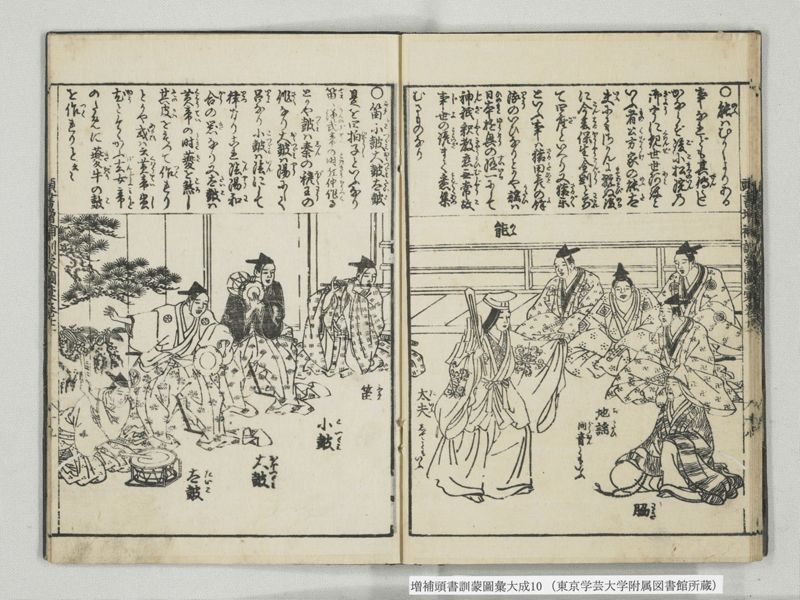
【右丁 下段挿絵】
脇(わき)
地謡(ぢうたひ)
《割書:同音(どうおん)ともいふ》
能(のふ)
太夫(たいふ)《割書:してともいふ》
【左丁 下段挿絵】
笛(ふえ)
小鼓(こつゞみ)
大鼓(おほつゞみ)
太鼓(たいこ)
現代語訳
【右丁 上段】
○能は昔からある芸能だが、その伝承は定かではない。後小松天皇の治世に観世世阿弥という者が将軍家の能太夫として盛んに演じた。後に金春・保生・金剛と分かれて四座となった。また猿楽というのは猿田彦の流れを汲む名称だという。謡は日本の芸能の第一であり、神道・仏教・恋愛・無常・故事・世間の諺まで、すべてを集めたものである。
【左丁 上段】
○笛・小鼓・大鼓・太鼓、これを四拍子という。笛は漢の武帝の時代に丘仲が作ったという。鼓は秦の穆王の作である。大鼓は陽で呂調であり、小鼓は陰で律調である。これは陰陽が調和した楽器である。また太鼓は黄帝の時代に夔という獣を殺し、その皮で作ったという。あるいは、黄帝が蚩尤と戦った際、玄女が帝のために夔牛の鼓を作ったともいう。
【右丁 下段挿絵】
脇役
地謡(同音ともいう)
能太夫(シテともいう)
【左丁 下段挿絵】
笛
小鼓
大鼓
太鼓
英語訳
【Right Page Upper Section】
○Noh theater has existed since ancient times, but its transmission is not certain. During the reign of Emperor Go-Komatsu, a person called Kan'ami Zeami served as a noh master for the shogun's family and performed vigorously. Later it split into the four schools of Konparu, Hōshō, and Kongō. The term "sarugaku" is said to derive from the lineage of Sarutahiko. Utai (noh chanting) is the premier performing art of Japan, encompassing everything from Shinto, Buddhism, love, impermanence, historical tales, to common proverbs.
【Left Page Upper Section】
○The flute, kotsuzumi (small drum), ōtsuzumi (large drum), and taiko (drum) are called the four rhythmic instruments. The flute was created by Qiu Zhong during the time of Emperor Wu of Han. The drum was created by King Mu of Qin. The large drum represents yang and the ryo mode, while the small drum represents yin and the ritsu mode. These are instruments of yin-yang harmony. The taiko drum was made from the skin of a beast called Kui that was killed during the time of the Yellow Emperor. Alternatively, it is said that when the Yellow Emperor fought against Chi You, the Dark Lady created a drum from Kui cattle for the emperor.
【Right Page Lower Section Illustrations】
Supporting actor (waki)
Chorus (also called dōon)
Noh master (also called shite)
【Left Page Lower Section Illustrations】
Flute
Small drum
Large drum
Taiko drum