翻刻
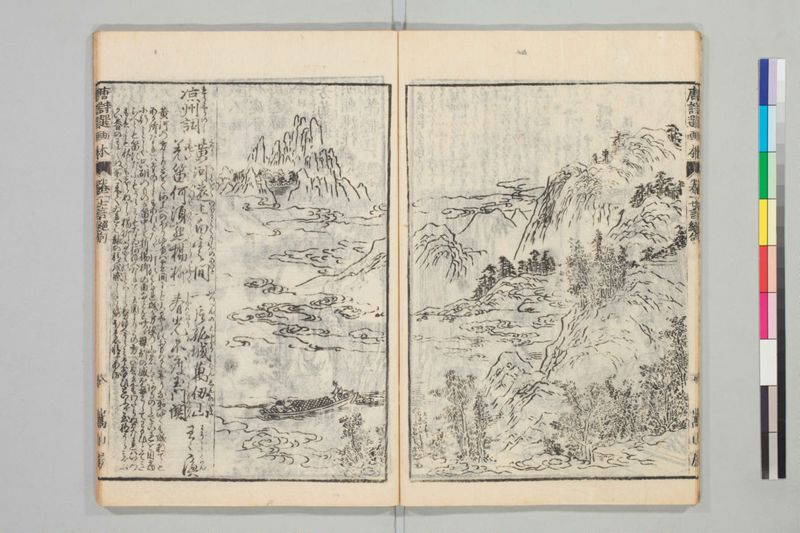
【挿絵】
涼州詞(れうしうのし)《割書:黃河遠上白雲間(くはうがとをくのぼるはくうんのあいた) 一片孤城万仞山(いつへんのこじやうばんしんのやま)|羌笛何(きやうてきいづくんぞ)須(べけん)_レ怨(うらむ)_二楊柳(ようりうを)_一 春光(しゆんくはう)不(ず)_レ度(わたら)玉門関(きよくもんくはん)》王之渙(わうしくはん)
《割書:黄河の方よりとをく河上へのぼりゆけば雲間にも上るやうにおもはるゝかやうな所へゆくも城数でも|ある所なればたのしみもあれどたゞ一片のはなれ城が万仞の山の上にあるのみでこれを目当|に行ことじや只胡のものが笛中で折楊柳の曲などを吹が離別の感をおこしてわるひとてき|らへども笛になにもうらみもなゐ何ゆへなれば玉関よりこの方へは春光もわたらぬがなれはいつ|も春とも秋ともしらぬから楊柳なとのことはしらぬゆへうらみもなひといふが至極うらみがふ|かい春のわたらぬ所へ来てゐれば旅の情を感しこゝろほそい情がある》
現代語訳
【挿絵】
涼州詞(りょうしゅうのし)《割書:黄河遠上白雲間(黄河は遠く上って白雲の間) 一片孤城万仞山(一片の孤城万仞の山)|羌笛何須怨楊柳(羌笛なんぞ楊柳を怨むを須いん) 春光不度玉門関(春光玉門関を度らず)》王之渙(おうしかん)
《解説:黄河の方からはるか河上へ上っていけば雲間にも上るように思われる。このような所へ行くのも城が数多くある所なら楽しみもあるだろうが、ただ一片の離れ城が万仞の山の上にあるのみで、これを目当てに行くことだ。ただ胡人が笛で折楊柳の曲などを吹くが、離別の感を起こして悪いと嫌がっても、笛に何も怨みはない。なぜかというと玉門関よりこちらの方へは春光も渡らないからで、いつも春とも秋ともわからないから、楊柳などのことは知らないゆえ怨みもないというが、至極怨みが深い。春の渡らない所へ来ているので、旅の情を感じ心細い情がある》
英語訳
[Illustration]
A Song of Liangzhou: "The Yellow River ascends far into white clouds, a solitary fortress on a ten-thousand-foot mountain | Why should the Qiang flute blame the willow? Spring's light does not cross Jade Gate Pass" by Wang Zhihuan
[Commentary: From the direction of the Yellow River, going far up the river, it seems to ascend even into the clouds. If one were going to such a place where there were many castles, there might be some pleasure, but there is only a single isolated fortress on top of a ten-thousand-foot mountain, and this is the destination. The barbarians play tunes like "Breaking Willow Branches" on their flutes, and though one might dislike this for stirring feelings of separation, there is no reason to resent the flute. This is because spring's light does not reach beyond Jade Gate Pass to this side, so one never knows whether it is spring or autumn, and since they know nothing of willows and such, there is no resentment - yet this actually makes the resentment profound. Being in a place where spring does not reach, one feels the emotions of travel and a sense of loneliness.]