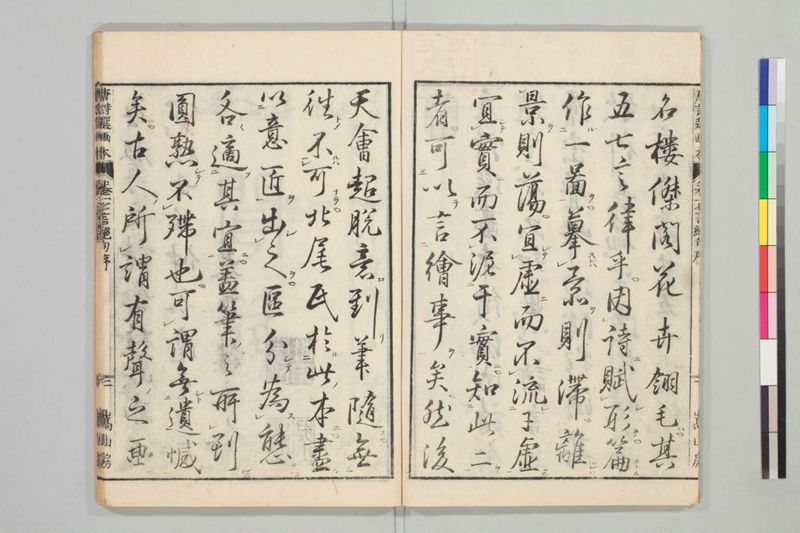
翻刻
名楼傑閣花卉翎毛 ̄ハ。其
五七言律乎。因_レ詩 ̄ニ賦_レ ̄シ形 ̄ヲ。篇 ̄コトニ
作_二 ̄ル一図_一 ̄ヲ。摹_レ ̄スレハ景 ̄ヲ則滞。離 ̄ルレハ
_レ景 ̄ヲ則蕩。宜_レ ̄シテ虚 ̄ニ而不_レ流_二 ̄レ于虚_一 ̄ニ。
宜_レ ̄シテ実 ̄ニ而不_レ泥_二于実_一 ̄ニ。知_二此 ̄ノ二_一 ̄ヲ
者。可_三以 ̄テ言_二絵事_一 ̄ヲ矣。然後
天会超脱意 ̄ロ到 ̄リ筆随 ̄フ。無_二
往 ̄トシテ不_一レ ̄ルハ可 ̄ナラ。北尾氏於_二 ̄ル此 ̄ノ本_一 ̄ニ。尽 ̄ク
以_二意匠_一 ̄ヲ出_レ ̄シ之 ̄ヲ。区分 ̄シテ為_レ ̄ス態 ̄ヲ。
各《割書:々》【〳〵ヵクヵ】適_二 ̄フ其宜_一 ̄ニ。蓋筆 ̄ノ之所_レ到 ̄ル。
円熟 ̄シテ不_レ殢也。可_レ謂無_二 ̄シト遺憾_一
矣。古人 ̄ノ所_レ謂有声 ̄ノ之画。
現代語訳
名楼や素晴らしい楼閣、花卉や翎毛は、
その五言・七言の律詩であろうか。詩に因んで形を賦し、詩篇ごとに
一つの図を作る。景色を模写すれば則ち滞り、
景色から離れれば則ち蕩々となる。虚に宜しくして
虚に流れず、実に宜しくして
実に泥まない。この二つを知る
者は、絵事を言うことができるであろう。然る後に
天会が超脱し意が到り筆が随う。行く所として
不可なるものなし。北尾氏はこの本において、尽く
意匠を以てこれを出だし、区分してそれぞれの態を為し、
各々その宜しきに適う。蓋し筆の到る所、
円熟して殢らざるなり。遺憾なしと
謂うべし。古人の所謂有声の画である。
英語訳
The famous towers and magnificent pavilions, the flowers and feathers—
are these not the five- and seven-character regulated verse? Following the poetry to give form, creating
one illustration for each poem. If one copies the scenery too closely, it becomes stagnant;
if one departs too far from the scenery, it becomes dissolute. One should be appropriate to the abstract without
flowing into pure abstraction, appropriate to the concrete without
being mired in mere reality. Those who understand
these two principles can speak of the art of painting. Only then
does heavenly inspiration achieve transcendence, intention arrives and the brush follows. There is no place one goes
that is not suitable. Mr. Kitao, in this book, has exhaustively
brought forth his artistic conception, dividing and creating various forms,
each appropriately suited to its purpose. Indeed, wherever his brush reaches,
it is mature and never tedious. One can say there are no
regrets. This is what the ancients called "painting with sound."