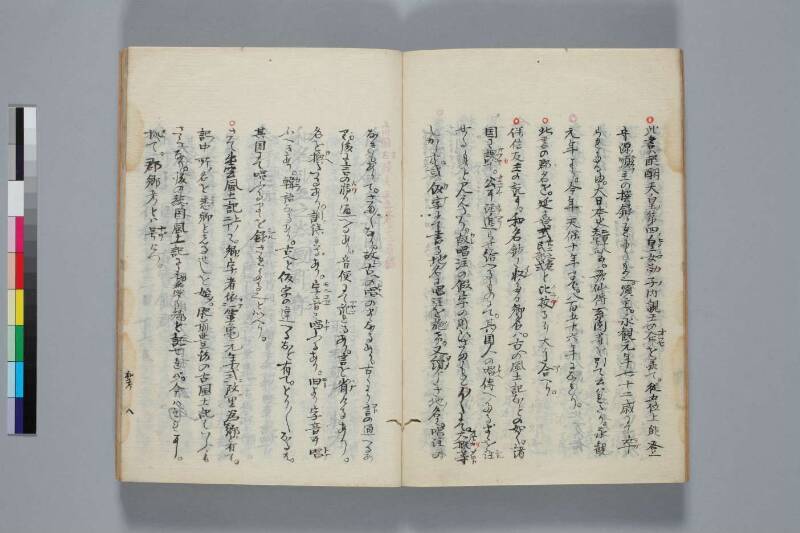
翻刻
【右丁】
【行頭の〇は朱書き】
〇此書は醍醐天皇 ̄ノ第四 ̄ノ 皇女(ヒメミコ)勤子 ̄ノ内親王の命(オフセ)を承て。従五位上能登
守源 ̄ノ順(シタカフ)主の撰録されたるもの也。順主は。永観元年七十二歳にて卒(マガ)
られたる由。大日本史《割書:二百十八|文学 ̄ノ五》に。歌仙伝【傳】系図等を引て云はれたり。永観
元年より。今年天保十年まで。八百五十六年になれり。
〇此書の郡名を。延喜式《割書:廿二之巻|民部式》と比挍(クラブ)るに大かた合(ア)へり。
〇伴信友主の説に。和名鈔に収(イレ)たる郷名は。古への風土記などの如く。諸
国に課(オフセ)て。公(オホヤケ)に注進(タテマツ)らせ給へるものにて。其 ̄ノ国人の唱(トナヘ)伝【傳】へたるまゝを注(シル)
せるものと見えたり。故(カレ)唱注の仮【假】字の用ひさまもとり〳〵にて。大概等(オホクノヒト)
しからず。或は仮字(カナ)にて書る地 ̄ノ名に唱注を施(ツ)け。又 読(ヨメ)【讀】がたき地 ̄ノ名に。唱注の
【左丁】
なきもありて。さま〴〵なり。故 ̄レ古 ̄ヘの唱(トナへ)のまゝなるあり。古くより言(コト)の通へるあ
り。後に言の転(ウツ)【轉】り通へるあり。音便にて訛(アヤマ)れるあり。言を省(ハブ)けるあり。
名を換(カヘ)たるあり。訓 ̄ミ誤れるあり。字(モジ)音(コヱ)て唱(トナ)ふるあり。旧(モト)より字音に唱(トナ)
ふへきあり。韓(カラ)語なるあり。古へと仮字の違へるなど有て。とり〳〵なるは。
其国にて唱ふるまゝを録(シル)されたる也といへり。
〇さて出雲風土記《割書:上ノ|二丁》に。郷 ̄ノ字 ̄ノ者依 ̄リテ_二霊亀元年 ̄ノ式 ̄ニ_一改 ̄ニ_レ里為_レ郷 ̄ト と有て。
記 ̄ノ中所 ̄ノ名を悉(ミナ)郷としるせしを始 ̄メ。肥前豊後の古風土記はいふも
さらなり。後の総国風土記にも。悉く郷と記(シル)せれば。今はそれに。
拠(ヨリ)て。郡郷考とは号(ナヅ)けつ。
和考 八
現代語訳
【右丁】
○この書(『常陸国風土記』)は醍醐天皇の第四皇女である勤子内親王の命を受けて、従五位上能登守源順が撰録したものである。源順は永観元年に七十二歳で亡くなったという。『大日本史』《巻二百十八 文学五》に、『歌仙伝』や系図等を引用して述べられている。永観元年から今年天保十年まで、八百五十六年になる。
○この書の郡名を『延喜式』《巻二十二 民部式》と比較すると、大体一致している。
○伴信友の説によると、『和名抄』に収められた郷名は、古の風土記などのように、諸国に命じて公に注進させたもので、その国の人々が唱え伝えたままを記録したものと思われる。そのため唱注の仮名の用い方も様々で、大概の人には理解しがたい。或いは仮名で書かれた地名に唱注を付け、また読みがたい地名に唱注が
【左丁】
ないものもあって、様々である。そのため古の唱え方のままのものあり、古くから言葉の通じるものあり、後に言葉が転じて通じるようになったものあり、音便で訛ったものあり、言葉を省いたものあり、名を換えたものあり、読みを誤ったものあり、字音で唱えるものあり、元より字音で唱えるべきものあり、韓語であるものあり、古と仮名の違うものなどがあって、様々であるのは、その国で唱えるままを記録したものであるという。
○さて『出雲風土記』《上の二丁》に「郷の字は霊亀元年の式によって、里を改めて郷とす」とあって、記中の地名をすべて郷と記したのを始めとして、『肥前風土記』『豊後風土記』の古風土記は言うまでもなく、後の諸国風土記にも、すべて郷と記されているので、今はそれに拠って、郡郷考と名付けるのである。
和考 八
英語訳
【Right Page】
○This book (the Hitachi-no-kuni Fudoki) was compiled by Minamoto no Shitagō, Junior Fifth Rank Upper Grade and Governor of Noto Province, under the command of Imperial Princess Kinshi, the fourth daughter of Emperor Daigo. Minamoto no Shitagō died at the age of seventy-two in the first year of Eikan (983). This is stated in the Dai Nihon-shi 《Volume 218, Literature 5》, citing the Kasen-den (Biographies of Poet Sages) and genealogies. From the first year of Eikan to this year, Tenpō 10, it has been 856 years.
○When comparing the district names in this book with those in the Engi-shiki 《Volume 22, Ministry of Popular Affairs》, they largely correspond.
○According to Ban Nobutomo's theory, the village names recorded in the Wamyō-shō were compiled by ordering various provinces to officially report them, similar to ancient provincial gazetteers, recording exactly what the people of each province traditionally pronounced. Therefore, the usage of phonetic characters (kana) for pronunciation guides varies greatly and is generally difficult for most people to understand. Some place names written in kana have pronunciation guides attached, while other difficult-to-read place names lack pronunciation guides.
【Left Page】
There are various types: some retain ancient pronunciations as they were, some have been commonly used since ancient times, some have become current through later phonetic changes, some have become corrupted through euphonic changes, some have abbreviated words, some have changed names, some have incorrect readings, some are pronounced with Chinese readings, some should originally be pronounced with Chinese readings, some are Korean words, some differ from ancient kana usage, etc. This diversity exists because they recorded exactly how people in each province pronounced them.
○Now, in the Izumo-no-kuni Fudoki 《Upper section, second page》, it states: "The character for 'gō' (village) was changed from 'ri' to 'gō' according to the regulations of the first year of Reiki." Beginning with recording all place names in that gazetteer as 'gō', not only the ancient Hizen and Bungo provincial gazetteers, but also later provincial gazetteers from various countries all recorded them as 'gō'. Therefore, based on this precedent, I title this work "District and Village Investigation" (Gun-gō-kō).
Wakō [Section] 8