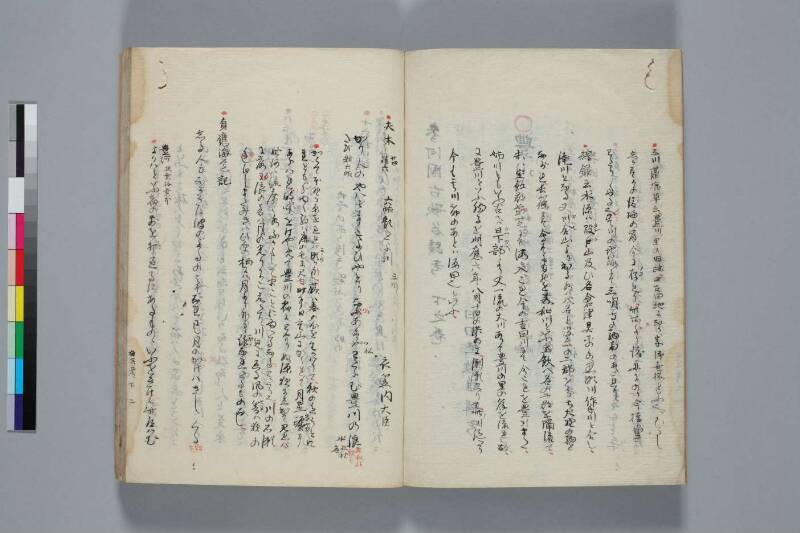
翻刻
●三川藻塩草云、豊川ノ里の旧跡、中古田地になり、字御世板といふ也、むかし
しかすかの渡場の岸今に存(ノコ)れり、此所より渡舟にのり今橋の里へ
わたりたる也、豊川の地縁【脈?】にて三明寺の西南のあたれり、
●綜録云、水源は段戸(タンド)山及ひ名倉津具等の水、黒瀬川作手川と合し、
滝川となる又/川合(カハヒ)山より出る水は、八名と設楽の二郡を分ち、大野の西を
ながれ、長篠にて会するものを美和川といふ、宝飫八名の二郡を隔流て、
末は宝飯郡前芝にて海に、入、これ今の吉田川にて今これを豊川また、
姉川ともいふ、古へは日下部(クサカベ)より、又一流の大川ありて豊川の里の岸を流れし故、
又豊川といふ然るを明応六年八月十日の洪水に、渕瀬かはりて、此 ̄ノ川絶たり
今も其川筋のあとは深田也といふ、
●夫木《割書:廿四|雑六》 六帖題とよ川 《割書:三川|》 衣笠内大臣
かり人のやはぎにこよひやどりなば【「ぶ」を見せ消ち、右に朱字「バ」に】あす/や(ハ松)わたらむ豊川の浪《割書:名松外|秋モ》【「名松外秋モ」は朱字】
《割書:たび新六帖|》 水《割書:松秋|名》
●かくて本野か原を過れば懶(モノウ)かり【「う?」を見せ消ち、朱字「り」に】し、蕨は春の心を生かはりて、秋の色うとけ
れども、分ゆく駒は鹿の毛に見ゆ、時に日重山にかくれて月星/躔(コマヤカ)に
あらはれ、時【明?】暁をはやめて豊川の宿にとまりぬ、深夜に立出て見れば、
此河は流広く水ふかくして、まことにゆたかなる【「る」を見せ消ち、朱字「か?」に】わたり也、川の石瀬
に落る【「に」見せ消ち、朱字「る」に】浪の音は、月の光りにこえたり、川辺に過る風の響(ヒヾキ)は夜の
色【「辺」を見せ消ち、朱字「色」に】白しまたみきはひなの栖には、月より外に詠(ナガメ)なれたるものなし、
●貞応海道記
しる人もなぎさに波のよるのみぞなれにし月のかげはさしくる《割書:白|モ》【「白モ」は朱字】
豊河《割書:扶桑拾葉本|》
●よかはといふ宿の前を打過るに、あるものゝいふをきけば、此道はむ
【「○」「●」「、」は朱】
古歌考 下 二
現代語訳
●三河藻塩草に言う、豊川の里の旧跡は、中世に田地となり、字を御世板という。昔
しかすがの渡場の岸が今も残っている。この所より渡舟に乗り今橋の里へ
渡ったのである。豊川の地脈にて三明寺の西南のあたりである。
●綜録に言う、水源は段戸山および名倉津具等の水が、黒瀬川作手川と合し、
滝川となる。また川合山より出る水は、八名と設楽の二郡を分かち、大野の西を
流れ、長篠にて会するものを美和川という。宝飫八名の二郡を隔て流れて、
末は宝飯郡前芝にて海に入る。これは今の吉田川にて、今これを豊川また
姉川ともいう。古くは日下部より、また一流の大川があって豊川の里の岸を流れていた故、
また豊川という。しかるを明応六年八月十日の洪水に、淵瀬が変わって、この川は絶えた。
今もその川筋の跡は深田であるという。
●夫木(二十四雑六) 六帖題とよ川(三河) 衣笠内大臣
狩人の矢作に今夜宿りなば明日は渡らむ豊川の浪
●かくて本野が原を過ぎれば物憂かりし、蕨は春の心を生き変わりて、秋の色薄けれども、分け行く駒は鹿の毛に見ゆ。時に日重山に隠れて月星細やかに
現れ、時明暁を早めて豊川の宿に泊まりぬ。深夜に立ち出でて見れば、
この河は流れ広く水深くして、まことに豊かな渡りである。川の石瀬
に落ちる浪の音は、月の光りに冴えたり。川辺に過ぎる風の響きは夜の
色白し。また水際の栖には、月より外に眺めなれたるものなし。
●貞応海道記
知る人もなぎさに波の寄るのみぞなれにし月の影は差し来る
豊河(扶桑拾葉集)
●よ川という宿の前を打ち過ぎるに、ある者の言うを聞けば、この道はむ
古歌考 下 二
英語訳
●The Mikawa Moshiogusa states: The old site of Toyokawa village became farmland in medieval times, and the area is called Miyoita. The banks of the old Shikasuga ferry crossing still remain today. From this place, people took ferry boats to cross to Imabashi village. It is in the geographical line of Toyokawa, around the southwest of Sanmyōji Temple.
●The Sōroku states: The water source comes from Mount Dando and the waters of Nagura and Tsugu, which merge with the Kurose and Sakute rivers to become the Taki River. Also, water flowing from Mount Kawai divides Yana and Shitara districts, flows west of Ōno, and what meets at Nagashino is called the Miwa River. It flows between Hōi and Yana districts, and finally enters the sea at Maeshiba in Hōi District. This is today's Yoshida River, which is now also called Toyokawa or Ane River. In ancient times, from Kusakabe there was another major river that flowed along the banks of Toyokawa village, hence also called Toyokawa. However, due to the great flood on the 10th day of the 8th month of Meiō 6 (1497), the depths and shallows changed and this river was cut off. It is said that even now the traces of that riverbed remain as deep fields.
●Fuboku (Volume 24, Miscellaneous 6) Six-Book Topic: Toyo River (Mikawa) Minister Kinugasa
If the hunter lodges tonight at Yahagi, tomorrow he shall cross the waves of Toyokawa
●Thus passing Honno Plain, the weariness that had been troubling [the traveler], the bracken renewed its spring spirit, and though the autumn colors were faint, the horse pushing through appeared deer-colored. When the sun hid behind Mount Shigeyama and the moon and stars appeared faintly,
hastening the dawn, [the traveler] stayed at Toyokawa inn. Going out to look in the deep of night,
this river flows wide and deep, truly an abundant crossing. The sound of waves falling on the stone rapids of the river was clear in the moonlight. The sound of wind passing by the riverside was white in the night colors. And in the dwellings by the water's edge, there was nothing familiar to contemplate other than the moon.
●Jōō Kaidōki
No one knows, only the waves come to the shore, while the familiar moon's light comes streaming in
Toyo River (Fusō Shūyōshū)
●Passing in front of the inn called Yo River, hearing what someone said, this road is...
Ancient Poem Study, Volume Two, Part Two