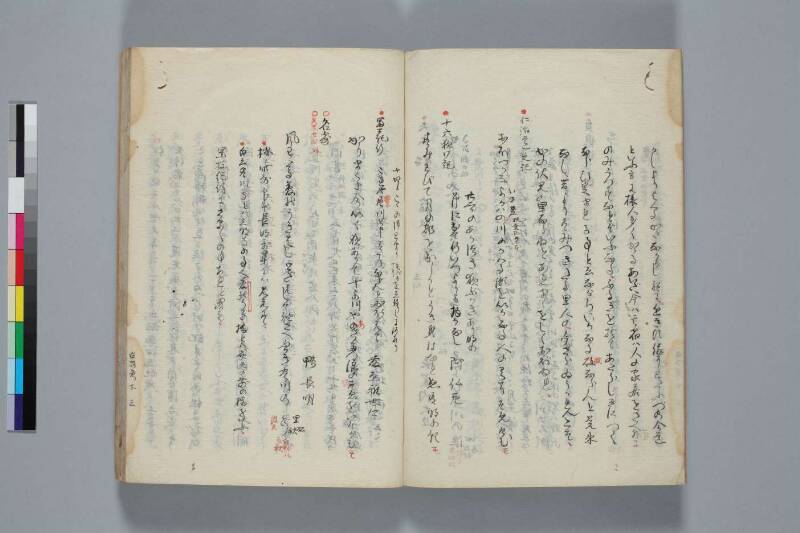
翻刻
かしよりよくるかたなかりし程に、近き頃俄にわたふづの今道
といふ方に、旅人多くかゝるあいだ、今は其宿は人の家居をさへ外(ホカ)に
のみうつすなどぞいふなる、ふるきを捨てあたらしきにつく
ならひ、定まれる事と云ながら、いかなる故【「故」見せ消ち、朱字「故」に】ならんと覚束
なし、昔よりすみつきたる里人の、今さらゐうかれんこそ、
かの伏見の里ならねとあれまくをしくおぼゆれ、
●仁治道之記
おぼつかなよかはの【「よかはの」の右に「いさ豊 扶桑拾葉本」】川のかはる瀬をいかなる人のわたりそめけむ《割書:モ|》【「モ」朱字】
廿ニ日のあかつき夜ぶかきあり明の
かげに出て行いつよりも物かなし 阿仏尼
●十六夜日記
すみわびて月の都を出しかどうき身はなれぬ有明の影《割書:モ|》【「モ」朱字】
十四日こゝの御とまり《割書:矢バキ|ナリ》【「バ」の濁点「〟」は朱字】を立侍りしに河あり
●富士紀行 これや豊【「尽?」を見せ消ち朱字「豊」に】川と申わたりならんとおぼえて 藤原雅世卿
かりまくら今いく夜ありて十よ川やあ【「の」を見せ消ち、朱字「あ」に】さたつ浪のすゑをいそがむ《割書:モ|》【「モ」朱字】
○名寄
○夫木廿四外【「○夫木廿四外」朱字】 鴨長明
里《割書:松|秋》
風わたる夢のうきはしとだえして袖さへふかき豊川の 水《割書:白松外|モ秋》【「白松外モ秋」朱字】
波《割書:夫|》【「波夫」朱字】
●按ニ此歌印本長明歌集には見えず、
●白云豊川寺とは三明寺の事也、夢のう【「夢のう」の右横に朱の二重線あり】き橋とは、弁天の前の端をいふ、
宗牧紀行にさま〳〵の事あれど略之、
【「○」「●」「、」は朱】
古歌考 下 三
現代語訳
かしこよりよくる方法がない程に、近頃俄に渡津の今道
という方に、旅人が多く通るので、今はその宿は人の家居さえ他に
ばかり移すなどと言うそうである。古いものを捨てて新しいものにつく
習わしは、定まったことと言いながら、いかなる理由であろうかと心許
ない。昔より住み続けた里人が、今更居を移すことこそ、
あの伏見の里ではないけれども惜しく思われる。
●仁治道之記
心許ないよ川の(豊川の)川の変わる瀬をいかなる人が渡り始めたのであろうか
二十二日の暁、夜深き有明の
影に出て行くいつよりも物悲し 阿仏尼
●十六夜日記
住み疲れて月の都を出たけれど憂き身は馴れぬ有明の影
十四日ここの御泊り(矢作なり)を立ち候いしに河あり
●富士紀行 これや豊川と申す渡りであろうかと思われて 藤原雅世卿
仮枕今いく夜ありて豊川やあさ立つ浪の末を急がん
○名寄
○夫木二十四外 鴨長明
風渡る夢の浮橋途絶えして袖さえ深き豊川の水
●按ずるにこの歌印本長明歌集には見えず、
●白によると豊川寺とは三明寺のことである。夢の浮き橋とは、弁天の前の橋をいう。
宗牧紀行にさまざまなことがあるがこれを略す。
古歌考 下 三
英語訳
Since there was no good way to come from there, recently many travelers suddenly began taking the route called the new road of Watazu, so now it is said that the inn has moved even people's residences elsewhere. The custom of abandoning the old and adopting the new is said to be a fixed principle, but I wonder what the reason could be - it seems uncertain. That the village people who have lived there since ancient times should now move their dwellings is regrettable, though this is not Fushimi village.
●Jinji Michi no Ki (Record of the Jinji Road)
How uncertain - what kind of person first began crossing these changing shallows of Yo River (Toyokawa)?
On the dawn of the 22nd day, going out in the deep night's
lingering moon's shadow, more sorrowful than ever Abutsu-ni
●Izayoi Nikki (Diary of the Sixteenth Night)
Weary of dwelling, I left the moon capital, but my melancholy body cannot become accustomed to the lingering moon's shadow
On the 14th day, departing from this lodging (which is Yahagi), there was a river
●Fuji Kikō Wondering if this might be the crossing called Toyokawa Minister Fujiwara no Masayo
Temporary pillow - how many more nights, and at Toyokawa, shall I hasten toward the end of the morning-rising waves?
○Nayose
○Fuboku Volume 24, External Kamo no Chōmei
The wind crosses, the floating bridge of dreams is severed, and even my sleeves are deep with Toyokawa's waters
●Upon examination, this poem does not appear in printed editions of Chōmei's poetry collections.
●According to Haku, Toyokawa-dera refers to Sanmyōji Temple. The "floating bridge of dreams" refers to the bridge in front of Benzaiten.
The Sōgi Kikō contains various matters, but I omit them here.
Ancient Poem Study, Volume Two, Part Three