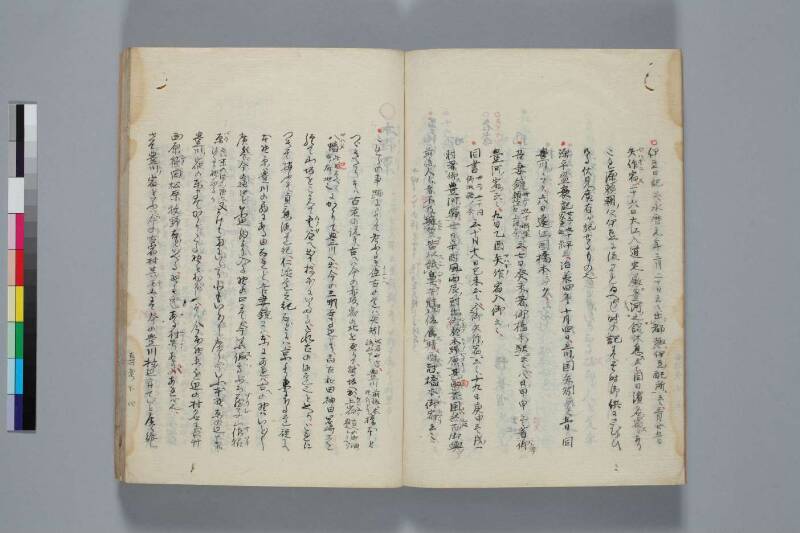
翻刻
○伊豆日記云、永暦元年三月二十日云々、出_レ ̄テ都趣_二 ̄ク伊豆 ̄ノ配所_一 ̄ニ云々、三月廿五日
矢作(ヤハギニ)宿 ̄ス、二十六日大江 ̄ノ入道定厳 ̄カ豊河 ̄ノ館 ̄ニ休息 ̄ス云々、同日浜名 ̄ニ宿 ̄スとあり、
これ源頼朝 ̄ノ卿、伊豆に流され給へりし時の記にて其時御供にさむらひ
ける伏見 ̄ノ廣有が記せるもの也、
●源平盛衰記《割書:廿三ノ九丁平|家東征ノ条》云、治承四年十月四日、三川 ̄ノ国矢矧ニツク、五日 同
豊川ニツク、六日遠江 ̄ノ国橋本ニツク、
●吾妻鏡《割書:卅二ノ五丁将軍|頼経卿上洛ノ条》云、癸未著⁻御橋本 ̄ノ駅_一 ̄ニ云々、八日甲申云々、著_二-御《割書:シ玉フ》
豊河 ̄ノ宿_一 ̄ニ云々、九日乙酉/矢作(ヤハギノ)宿入御云々、
●同書《割書:卅二ノ卅一丁|御帰路ノ条》云、十月十八日己未云々、入_二-御矢作 ̄ノ宿_一 ̄ニ云々、十九日庚申云々、戌 ̄ノ一
尅著_二‾御 ̄ス豊河 ̄ノ駅_一 ̄ニ、廿日辛酉風雨辰 ̄ノ尅出_二‾御《割書:シ玉フ|》於/本野原(モトノハラニ)_一甚雨【「両?」を見せ消ち、右に朱字「雨」】暴風、然 ̄シトモ【レトモ?】而御輿 ̄ノ
前後 ̄ノ人々 ̄ハ者不_レ及_レ擁_レ ̄スルニ笠 ̄ヲ、皆以/舐(スヽル)_レ鼻(ハナヲ)、午 ̄ノ尅 ̄ヨリ以後属_レ ̄ス晴 ̄ニ、酉 ̄ノ尅 ̄ニ橋本 ̄ニ御/宿(トマリ)云々、
●これらの事跡によりて考ふるに、往古(イニシヘ)の道は、矢矧《割書:此間に宮|路山アリ》、豊川《割書:前後ニ本|野原アリ、》橋本と
つゞきたりそは古老の説に、古へは今の赤坂 ̄ノ宿の北を廻りて、鷺坂へ出、上宿(ウハジユク)《割書:古への御油ノ|宿也トイヘリ》
八幡(ヤハタ)《割書:此辺【■を見せ消ち、朱字「辺」に】すべて|古ノ府ノ地也》にかゝりて豊川へ出、今の三明寺の辺より、当古和田神田岩崎等を
経て山坂をこえて雲谷(ウノヤ)へ出て、橋本にいたる、これ古の海道也といへり、これに
つきて按ふに、貞応海道記、仁治道之記などには、京より東に下る道程に、
本野原は豊川の西にある由【「田」を朱で「由」に】なれど吾妻鏡には、東にあれば、古への野はいと〳〵
広くて、今の野口といふ辺西より入る野の口にて、今いふ諏方(スハ)ぶろ蔵子(ゾウシ)山/佐脇(サワキ)
原(バラ)《割書:こは末のはら野か|ひくま野なるか》又かけて南にいたり、北もいと〳〵広く今いふ本野原の辺より、
豊川 ̄ノ宿の東までかゝりたる野とおぼし、そは今本野原近辺の村名に、長艸
西原/篠(シノ)田松原牧野などいへる、野によしある村号(ムラノナ)あまた【「ふ」を見せ消ち、朱字で「た」に】あれば也、
さて、豊川 ̄ノ宿といふは、今の古宿村其 ̄ノ本土(モト)にて今の豊川村 ̄ノ辺かけて、いと広く賑し
【「○」「●」「、」は朱】
古歌考 下 四
現代語訳
○伊豆日記によると、永暦元年三月二十日云々、都を出て伊豆の配所に向かう云々、三月二十五日矢作に宿泊、二十六日大江入道定厳の豊川の館で休息する云々、同日浜名に宿泊するとある。これは源頼朝卿が伊豆に流された時の記録で、その時お供に仕えていた伏見広有が記したものである。
●源平盛衰記(巻二十三の九丁、平家東征の条)によると、治承四年十月四日、三河国矢作に着く、五日豊川に着く、六日遠江国橋本に着く。
●吾妻鏡(巻三十二の五丁、将軍頼経卿上洛の条)によると、癸未の日に橋本駅に到着された云々、八日甲申云々、豊川宿に到着された云々、九日乙酉、矢作宿に入御された云々。
●同書(巻三十二の三十一丁、御帰路の条)によると、十月十八日己未云々、矢作宿に入御された云々、十九日庚申云々、戌の一刻に豊川駅に到着され、二十日辛酉風雨、辰の刻に本野原を出御されたが甚だしい雨と暴風であった。しかしながら御輿の前後の人々は笠を差すに及ばず、皆鼻水をすすり、午の刻より以後晴天に属し、酉の刻に橋本に御宿泊された云々。
●これらの事跡によって考えるに、往古の道は、矢作(この間に宮路山がある)、豊川(前後に本野原がある)、橋本と続いていた。古老の説によると、昔は今の赤坂宿の北を回って、鷺坂へ出て、上宿(古の御油宿であるという)、八幡(この辺一帯すべて古の国府の地である)にかかって豊川へ出て、今の三明寺の辺より、当古、和田、神田、岩崎等を経て山坂を越えて雲谷へ出て、橋本に至る。これが古の海道であるという。これについて考えるに、貞応海道記、仁治道之記などには、京より東に下る道程に、本野原は豊川の西にあるとなっているが、吾妻鏡には東にあるので、古の野は非常に広くて、今の野口という辺りの西より入る野の口で、今いう諏訪、風呂、蔵子、山佐脇原(これは末の原野かひくま野であろうか)にまでかかって南に至り、北も非常に広く今いう本野原の辺りより豊川宿の東までかかった野と思われる。それは今本野原近辺の村名に、長草、西原、篠田、松原、牧野などという、野にちなんだ村号が多くあるからである。さて、豊川宿というのは、今の古宿村がその本土で、今の豊川村の辺りにかけて、非常に広く賑やかであった。
古歌考 下 四
英語訳
○According to the Izu Diary, on the 20th day of the 3rd month of Eiryaku 1 (1160), departing the capital for the place of exile in Izu, on the 25th day of the 3rd month lodging at Yahagi, on the 26th day resting at the mansion of Ōe Nyūdō Jōgon in Toyokawa, and on the same day lodging at Hamana. This is a record from when Lord Minamoto no Yoritomo was exiled to Izu, written by Fushimi Hiroyuki who served in his retinue at that time.
●The Genpei Jōsuiki (Volume 23, folio 9, section on the Taira clan's eastern expedition) states: On the 4th day of the 10th month of Jishō 4 (1180), arriving at Yahagi in Mikawa Province; on the 5th day arriving at Toyokawa; on the 6th day arriving at Hashimoto in Tōtōmi Province.
●The Azuma Kagami (Volume 32, folio 5, section on Shogun Lord Yoritsune's journey to the capital) states: On the day Mizunoto-Hitsuji arriving at Hashimoto station; on the 8th day Kinoe-Saru, arriving at Toyokawa lodging; on the 9th day Kinoto-Tori, entering Yahagi lodging.
●The same work (Volume 32, folio 31, section on the return journey) states: On the 18th day of the 10th month, Tsuchinoto-Hitsuji, entering Yahagi lodging; on the 19th day Kanoe-Saru, at the first hour of Inu arriving at Toyokawa station; on the 20th day Kanoto-Tori, wind and rain, at the hour of Tatsu departing from Motono-hara with severe rain and violent wind. Nevertheless, the people before and after the palanquin did not need to hold up umbrellas, all wiping their noses; from the hour of Uma onward it cleared up, and at the hour of Tori lodged at Hashimoto.
●Considering these historical traces, the ancient road connected Yahagi (with Miyaji-yama in between), Toyokawa (with Motono-hara before and after), and Hashimoto. According to the accounts of elders, in ancient times the road went around the north of present-day Akasaka lodging, exited at Sagi-saka, passed through Uwa-juku (said to be the ancient Goyu lodging), Yahata (this entire area was ancient provincial government land), emerged at Toyokawa, and from the vicinity of present-day Sanmyōji Temple, passed through Tōko, Wada, Kanda, Iwasaki and others, crossed mountain slopes, emerged at Unoya, and reached Hashimoto. This is said to be the ancient Tōkaidō. Considering this, in works like the Jōō Kaidō-ki and Jinji Michi no Ki, in the route descending eastward from the capital, Motono-hara is said to be west of Toyokawa, but in the Azuma Kagami it is to the east, so the ancient plain was extremely vast, with the present area called Noguchi being the entrance to the plain from the west, extending to what are now called Suwa, Furo, Zōshi, Yamasawaki-bara (perhaps these are Sue-no-hara-no or Hikuma-no), reaching south and extending very widely north from the vicinity of present-day Motono-hara to the east of Toyokawa lodging. This is because in the village names near present-day Motono-hara, there are many village names related to plains such as Nagakusa, Nishihara, Shinoda, Matsubara, and Makino. Now, what was called Toyokawa lodging was centered on present-day Furujuku village, extending to the vicinity of present-day Toyokawa village, and was very extensive and prosperous.
Ancient Poem Study, Volume Two, Part Four