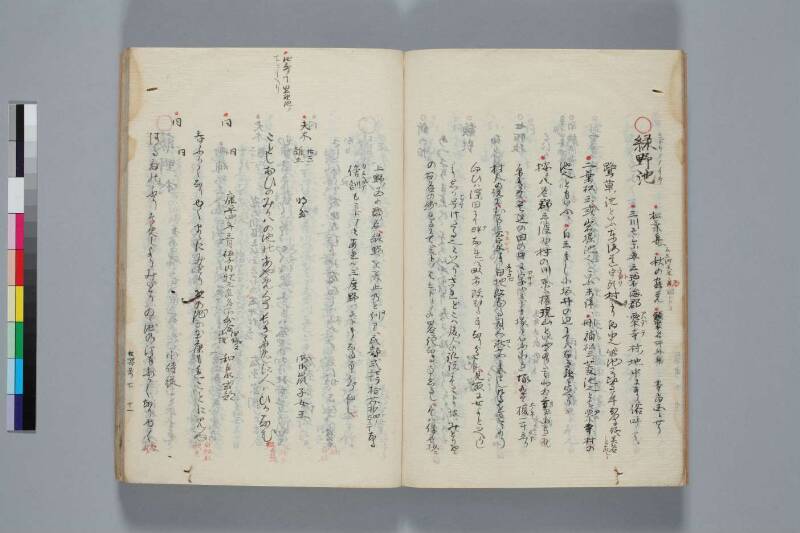
翻刻
○緑野池(ミドリノノイケ) ●松葉集《割書:云三河夫木ニ当国トアリ|》 ●秋の寝覚 ●類聚名所外集 等当国とせり
●三川モシホ草云、碧海郡 粟寺(アハデラ)村ノ地中にあり、俗呼て
鷺草ノ池といふ、東海道/宇頭(ウトウ)村より西北也、此池に鷺草おふる故に異名とす、
●二葉松云、或岩堀池也といふ未詳、●刪補松云、菱池也とも、粟(アハ)寺村の
池也ともいふ、白云もし小坂井の辺にてはなき歟といへり、
●按ニ八名郡三渡野村の川東ニ、権現山といふあり、其北の方に小き野
原有て、其辺の田の中に字(アザナ)はミドリ塚といふ小き塚有て、榎(エノキ)一本/立(タテ)り
村人の説に、むかし公家(ヲホヤケ)より田地(タトコロ)改むる司人/此(コヽ)所ニ来ましけるをこゝより
向ひは深田にて畔(ア)なれば、畝歩改むる事なりがたし、見取(ミドリ)にせよといへりし
より、しか号(ナヅケ)けたる也といへり、されどこは後ノ人の訛説にて、ミドリ塚はみどり野
の古名の残れるにて、ミドノはミドリノの略語なる事しるし、そは倭名抄ニ
上野ノ国の郡ノ名、緑野を美止乃と訓(ヨメ)り、民部式《割書:廿二ノ|二丁》拾芥抄《割書:四ノ|六十二丁》なる
傍訓(カタヘガナ)もミドノとあれば、三度野はミドリノなる事うづなし、
●夫木《割書:廿三|雑五》 明玉 御(、)御厳子女王
ことしおひのみかはの池のあやめぐさ長きためしに人はひかなむ《割書:松イセ|》【「松イセ」朱字】
●同 《割書:同|》 康平四年三月祐子内親王家名所歌合《割書:伊勢又|山城》和泉式部
春ふかくなりゆくまゝにみどり野の池の玉藻も色ことに見ゆ《割書:白松外|秋モ》【「白松外秋モ」朱字】
●同 《割書:同|》
はる雨のふりそめしよりみどりのゝ池の汀もふかくなりゆく《割書:松|外》【「松外」朱字】
【「●夫木」の上辺に書入れ】
《割書:●此歌ノコト里野池ノ|下ニイヘリ》
【「○」「●」「、」は朱】
古歌考 下 十一
現代語訳
○緑野池(ミドリノノイケ) ●『松葉集』では三河、『夫木集』には当国とあり ●『秋の寝覚』 ●『類聚名所外集』 等では当国とする
●『三川藻塩草』によると、碧海郡粟寺村の地中にあり、俗に
鷺草の池という、東海道の宇頭村より西北にある、この池に鷺草が生えるため異名とする、
●『二葉松』によると、或いは岩堀池だというが未詳、●『刪補松』によると、菱池ともいい、粟寺村の
池ともいう、白によるともし小坂井の辺りではないかという、
●私見によると八名郡三渡野村の川東に、権現山というものがあり、その北の方に小さな野
原があり、その辺りの田の中に字名はミドリ塚という小さな塚があり、榎が一本立っている
村人の説明によると、昔役人が田地改めのため此処に来た際、ここから
向こうは深田で畦なれば、畝歩を改めることは困難である、見取りにせよと言ったことから
このように名づけたということである、しかしこれは後の人の訛った説で、ミドリ塚はみどり野
の古名の残ったもので、ミドノはミドリノの略語であることは明らかで、それは『倭名抄』に
上野の国の郡の名、緑野を美止乃と読み、『民部式』巻二十二の二丁、『拾芥抄』巻四の
六十二丁の傍訓もミドノとあれば、三度野はミドリノであることは疑いなし。
●『夫木集』巻二十三雑五 明玉 御厳子女王
今年生いの三河の池の菖蒲草長き例しに人は引かなん
●同 康平四年三月祐子内親王家名所歌合 和泉式部
春深くなり行くままに緑野の池の玉藻も色異に見ゆ
●同
春雨の降り初めしより緑野の池の汀も深くなりゆく
英語訳
○Midorino Pond (Midorinono-ike) ●"Matsuba-shū" lists it as Mikawa, "Fuboku-shū" says it's in this province ●"Aki no nezame" ●"Ruijū meisho gaishū" etc. all list it as being in this province
●According to "Mikawa Moshio-gusa," it is located within Awaji village, Hekikai district, commonly called
Sagi-gusa Pond, northwest of Utō village on the Tōkaidō road. It gets this alternate name because sagi-gusa (heron grass) grows in this pond.
●According to "Futaba-matsu," some say it's Iwahori Pond, but this is unclear. ●According to "Sanpo-matsu," it's also called Hishi Pond, or the pond of Awaji village. According to Haku, it might be in the vicinity of Osakai.
●In my opinion, to the east of the river in Miwatari village, Yana district, there is something called Gongen Mountain, and to its north there is a small field.
In the rice fields around there is a small mound with the place name Midori Mound, where a single zelkova tree stands.
According to the villagers' explanation, long ago when an official came here to survey the rice fields,
beyond here were deep fields with embankments, making it difficult to survey the ridge-steps, so he said to make it "midori" (rough estimate), and thus
it got this name. However, this is a corrupted explanation by later people. Midori Mound is a remnant of the ancient name for Midori Field, and Midono is clearly an abbreviation of Midorino. This is evident because the "Wamyō-shō"
reads the district name Midorino in Kōzuke Province as "Mitono," and the margin notes in "Minbu-shiki" volume 22, page 2, and "Shūgai-shō" volume 4,
page 62 also read it as Midono, so there is no doubt that Mitarino is Midorino.
●"Fuboku-shū" volume 23, miscellaneous 5 Akitama Princess Mimakiko
This year's growing iris grass of Mikawa pond—may people draw it as a long-lasting example
●Same Poetry contest on famous places at Princess Sukeko's residence, third month of Kōhei 4 Izumi Shikibu
As spring deepens and progresses, the jeweled seaweed of Midorino pond also appears in different colors
●Same
Since the spring rains began to fall, the shores of Midorino pond have also grown deeper