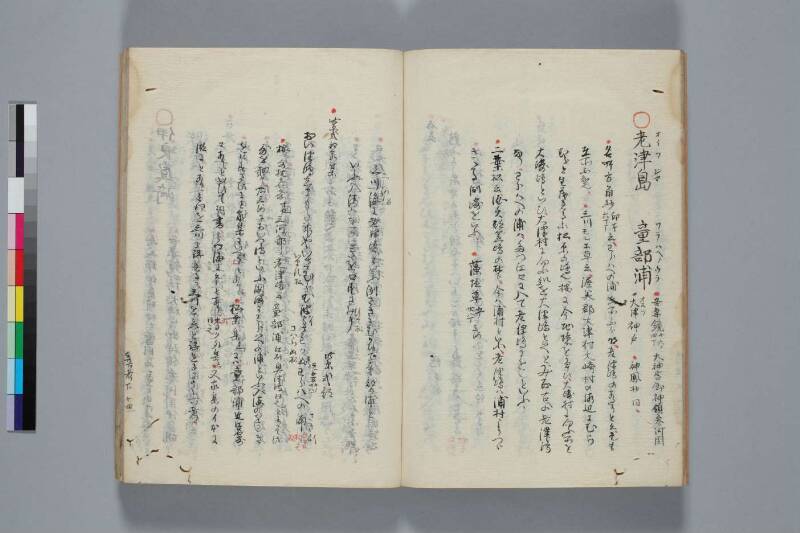
翻刻
○老津島(オイツシマ) 童部浦(ワラハヘノウラ)●吾妻鏡《割書:十六ノ|四丁》大神宮御神領参河国
・大津(オホツ)神戸 ●神鳳抄 同、
●名所方角抄《割書:印本|六十丁》云、わらはへの浦 在所不分明、老津島のあたりと云、是も
在所不知也、 ●三川モシホ草云、渥美郡大津村大崎村の海辺にむら
むらと生茂れる小松原の島也、按に今地境を争ひ、大崎村に向ふ所を
大崎島といひ、大津村に向ふ処を大津島といへと、みな古への老津島
なり、わらはへの浦は、たつ江口に入て老津島に近しといふ、
●二葉松云、渥美郡笠島の梺、今は浦村といふ、老津島は浦村よりつゞ
きたる洲崎をいふ、 ●藻塩草《割書:五ノ|卅八丁》三河
三川海(三河 名)に老津島といふ洲さきにむかひて童部の浦と
いふ入海のをかしきを口すさ/みに(ひて松)
●紫式部家集 紫式部
おい津島しまもる神やいさむ【「いさむ」の左に「います 松」】らむ波/も(はイ)さわか【「さわかぬ」の左に「さはらぬ 松」】ぬ(すイ)【「すイ」の右に書入れ「モシホ草五ノ卅八丁」】わらはへの浦(さき イ名)《割書:白名|秋モ|松》【「白名秋モ松」朱字】
●按ニ歌枕名寄《割書:十九|》三河 ̄ノ部に老津島并童部浦《割書:江州|》奥津島 同之、と有て此
歌を載て、右三河においつ島といふ洲崎にわらはへの浦といふ入海のをかしき
を口すさひにと家集にいへり」とあり、●松葉集《割書:三|》には、童部浦近江名寄
にあり、といひて詞書、みつ海に云々とあり、《割書:ホヨク外集三|同之、》●又家集のイ本に
湖にとあり、みつを三川に誤れるか、三川を三つと誤れるかよく可考、
【「○」「●」「、」「」」は朱】
古歌考 下 十四
現代語訳
○老津島(オイツシマ) 童部浦(ワラハヘノウラ)
・大津(オホツ)神戸
●『吾妻鏡』巻十六の四丁「大神宮御神領三河国」同じく、●『神鳳抄』
●『名所方角抄』(印本六十丁)に云く、童部の浦は在所不分明、老津島のあたりと云う、これも在所不明である、●『三河藻塩草』に云く、渥美郡大津村大崎村の海辺に群れ群れと生い茂った小松原の島である、考えるに今地境を争い、大崎村に向かう所を大崎島といい、大津村に向かう処を大津島というが、みな古の老津島である、童部の浦は、立江口に入って老津島に近いという、
●『二葉松』に云く、渥美郡笠島の麓、今は浦村という、老津島は浦村より続いている洲崎をいう、●『藻塩草』巻五の三十八丁「三河」
三河海(三河湾)に老津島という洲崎に向かって童部の浦という入海の趣深きを口ずさみに(詠んで)
●紫式部家集 紫式部
老津島島守る神や励まされるらむ波も穏やかな童部の浦
●考えるに『歌枕名寄』巻十九三河の部に老津島并びに童部浦(江州の奥津島と同じ)、とあってこの歌を載せて、「右三河に老津島という洲崎に童部の浦という入海の趣深きを口ずさみに」と家集にいうとある、●『松葉集』巻三には、童部浦は近江『名寄』にあり、といって詞書に、「みつ海に云々」とある、●また家集の異本に「湖に」とある、「みつ」を「三河」に誤ったか、「三河」を「三つ」と誤ったかよく考えるべきである、
古歌考 下 十四
英語訳
○Oitsu-shima (Old Harbor Island) Warahahe-no-ura (Children's Bay)
・Ōtsu (Great Harbor) Kōbe
●"Azuma Kagami" volume 16, folio 4 "Daijingū Imperial Shrine Lands in Mikawa Province" same, ●"Shinpō-shō"
●"Meisho Hōgaku-shō" (printed edition, folio 60) says: the location of Warahahe-no-ura is unclear, said to be around Oitsu-shima, but this location is also unknown, ●"Mikawa Moshio-gusa" says: it is an island of small pine groves growing in clusters along the seashore of Ōtsu village and Ōsaki village in Atsumi district. Upon consideration, now there are land boundary disputes - the area facing Ōsaki village is called Ōsaki-shima, and the area facing Ōtsu village is called Ōtsu-shima, but all are the ancient Oitsu-shima. Warahahe-no-ura is said to be near Oitsu-shima, entering at Tate-eguchi.
●"Futaba-matsu" says: at the foot of Kasashima in Atsumi district, now called Ura village, Oitsu-shima refers to the cape continuing from Ura village, ●"Moshio-gusa" volume 5, folio 38 "Mikawa"
Facing the cape called Oitsu-shima in Mikawa Sea (Mikawa Bay), composing about the charming inlet called Warahahe-no-ura
●Murasaki Shikibu's Personal Collection Murasaki Shikibu
Oitsu-shima - does the island-guarding deity encourage? The waves are gentle at Warahahe-no-ura
●Upon consideration, in "Utamakura Nayose" volume 19, Mikawa section, it lists Oitsu-shima and Warahahe-no-ura (same as Okitsu-shima in Gōshū), and records this poem, stating "The above refers to composing about the charming inlet called Warahahe-no-ura at the cape called Oitsu-shima in Mikawa" according to the personal collection, ●In "Matsuba-shū" volume 3, it says Warahahe-no-ura is in Ōmi's "Nayose," with the preface stating "in Mitsu Sea, etc." ●Also, in variant editions of the personal collection it says "in the lake." One should carefully consider whether "mitsu" was mistaken for "Mikawa," or "Mikawa" was mistaken for "mitsu."
Ancient Song Studies, Part Two, 14