翻刻
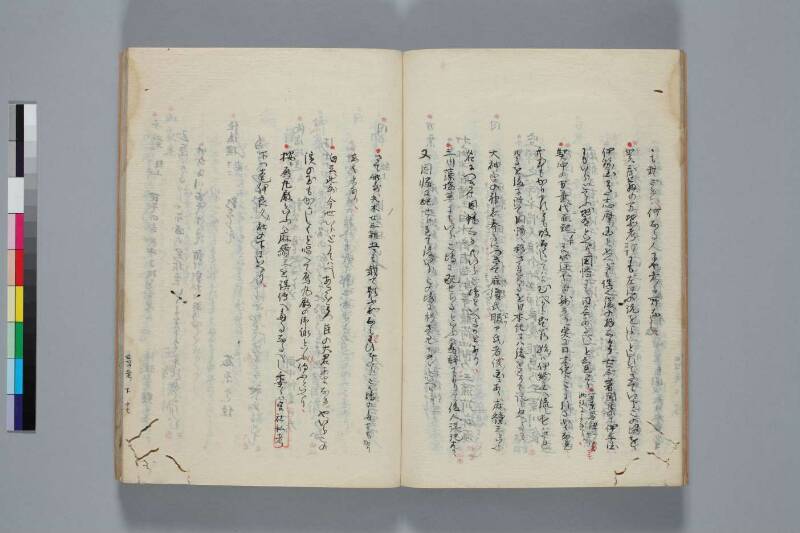
ニも載ざれは、何なる人にや考る所なし、
●賀茂翁の万葉考《割書:一ノ|十二丁》にも、左注の説をよしといひて、さていらごの崎を、
伊勢 ̄ノ国また志摩 ̄ノ国と思へるも誤也、後の物ながら古今著聞集に、伊与国
にもいらごてふ地有といへり、因幡にも同名あるべしと云れたり●《割書:万葉略解《割書:一ノ|廿三丁》ニモ【「ニモ」朱字】|此説によれり、》
●契冲の万葉代匠記《割書:一ノ下|》には、此注不審残れり、実に日本紀はこゝに引る如くなれ
共、玉もかりますとも故なくしてはよむべからず、若始 ̄メ は伊勢 ̄ノ国へ流し遣はされ
けるを、後に改て因幡へ移されけるを、日本紀には後をとりて記し給へるか、
大神宮の神衣奉るにつきて麻讀(ヲミ)氏/服部(ハトリ)氏 ̄ノ者、彼 ̄ノ国ニあり、麻讀 ̄ノ王といふ
名につきて因幡なれ共、いらご嶋といへるか、とあり、
●三川藻塩草にも、いらご嶋に配せらるといふは、歌辞によりて後人誤記すか、
又因幡に配せられて後、いらこの嶋に移さるゝか云々といへり、
●さて此歌、夫木廿三雑五ニも載て題不知、なみわ【「に」見せ消ち、右に朱字「わ」。夫木集は「に」】ひぢいらこか嶋のたまもかり
しくとあり、
●白云、此歌今世いらごにては、〽あさをうつ臣の大君あまなれや、いらこの
濱の玉もかりしく、と唱へて、烏丸殿の御詠といひ【「ふ」見せ消ち、右に朱字「ひ」】伝ふといへり、
●按ニ烏丸殿といふは、麻讀王を誤伝へたるなるべし、委くは官社私考【「官社私考」を朱の四角枠で囲】
下つ巻伊良久 ̄ノ社の下にいへり、
【「○」「●」「、」は朱
古歌考 下 十七
現代語訳
にも載せられていないので、どのような人であるかは考える所がない。
●賀茂翁の『万葉考』巻一の十二丁にも、左注の説を良いと言って、「さて伊良胡の崎を伊勢国また志摩国と思うのも誤りである。後の物ながら『古今著聞集』に、伊予国にも伊良胡という地があると言っている。因幡にも同名があるべし」と言われている。●『万葉略解』巻一の二十三丁にもこの説によっている。
●契沖の『万葉代匠記』巻一の下には、「この注釈には疑問が残る。確かに『日本書紀』はここに引用した通りであるが、『玉藻刈ります』とも理由なくしては詠むべきではない。おそらく最初は伊勢国へ流し遣わされたのを、後に改めて因幡へ移されたのを、『日本書紀』には後の方をとって記されたのか。大神宮の神衣を奉るにつきて麻續氏や服部氏の者が、その国にあり、麻續王という名につきて因幡であるけれど、伊良胡島と言ったのか」とある。
●『三河藻塩草』にも、「伊良胡島に配流されるというのは、歌辞によって後人が誤記したのか、また因幡に配流されて後、伊良胡の島に移されるのか云々」と言っている。
●さてこの歌、『夫木集』二十三雑五にも載せて題不知、「波に濡れ伊良胡が島の玉藻刈りしく」とある。
●白が云うには、「この歌、今世伊良胡にては、『麻を打つ臣の大君海人なれや、伊良胡の浜の玉藻刈りしく』と唱えて、烏丸殿の御詠と言い伝えている」という。
●考えてみると烏丸殿というのは、麻續王を誤り伝えたものであろう。詳しくは『官社私考』下巻の伊良久社の下に言っている。
古歌考 下 十七
英語訳
are also not recorded, so there is nothing to consider regarding what kind of person this was.
●Elder Kamo's "Man'yō-kō" volume 1, folio 12 also approves of the left annotation's theory, saying: "Moreover, thinking that Irago Cape belongs to Ise Province or Shima Province is also an error. Though it is a later work, 'Kokon Chomon-jū' states that there is also a place called Irago in Iyo Province. There should also be places with the same name in Inaba." ●"Man'yō Ryakkai" volume 1, folio 23 also follows this theory.
●Keichū's "Man'yō Daishō-ki" volume 1, part 2 states: "Doubts remain about this annotation. Indeed, the Nihon Shoki is as quoted here, but one should not compose 'harvesting seaweed' without reason. Perhaps initially he was sent into exile to Ise Province, but was later transferred to Inaba, and the Nihon Shoki recorded the later version. Regarding the offering of sacred garments to the Grand Shrine of Ise, members of the Omi and Hatori clans were in that province, and perhaps due to the name Prince Omi, though it was Inaba, it was called Irago Island."
●"Mikawa Moshio-gusa" also states: "The claim of exile to Irago Island - was this a mistaken record by later people based on song lyrics, or was he transferred to Irago Island after being exiled to Inaba?"
●Now, this poem is also recorded in "Fuboku-shū" volume 23, Miscellaneous 5, with unknown title: "Wet by waves, harvesting seaweed of Irago Island."
●Haku states: "This poem, in present-day Irago, is chanted as 'Beating hemp, the noble lord, are you now a fisherman? Harvesting seaweed at Irago beach,' and is said to be transmitted as the composition of Lord Karasumaru."
●Upon consideration, "Lord Karasumaru" is probably a mistaken transmission of Prince Omi. Details are given in "Kansha Shikō," lower volume, under Iraku Shrine.
Ancient Song Studies, Part Two, 17