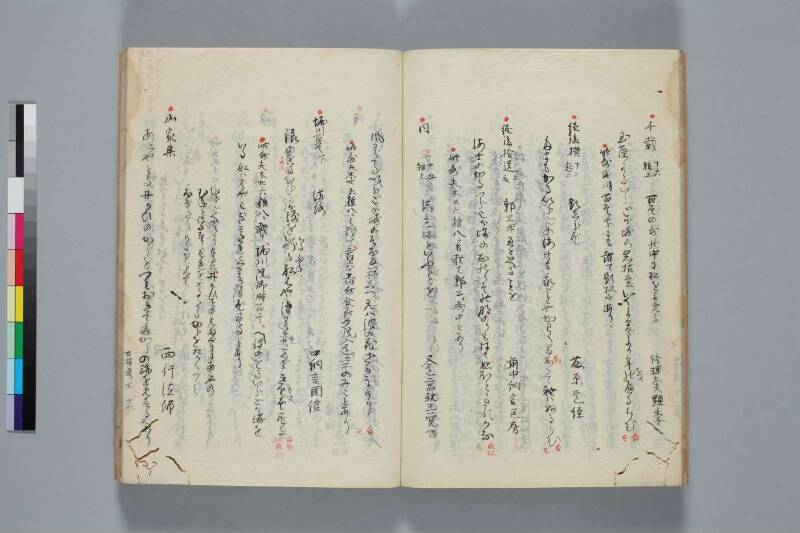
翻刻
●千載 《割書:十六|雑上》 百首の歌の中に松をよめる 修理大夫顕季
玉藻かるいらごが崎の岩根松いくよまでにか年 の(をイ)へるらむ《割書:白|モ》【「白モ」朱字】
●此歌堀川百首下にも載て題松とあり、
●続後撰 《割書:十二|恋二》 題しらず 藤原道経
たまもかるいらごの海士も我ごとやかわく間な【「お」見せ消ち、右に朱字「な」】くて袖はぬるらむ《割書:白|モ》【「白モ」朱字】
●続後拾遺《割書:三|夏》 郭公早過といへることを 前中納言匡房
海士のかるいらこが崎のなのりそのなのりもはてぬほとゝぎすかな《割書:白松|モ》【「白松モ」朱字】
●此歌夫木廿六雑八ニも載て郭公 ̄ノ歌 ̄ノ中とあり、
●同 《割書:十五|雑上》 海辺松といふことを 入道二品親王覚性
風わたるいらごが崎のそなれ松しつえは波の花さきにけり《割書:白|モ》【「白モ」朱字】
●此歌夫木廿六雑八ニも載て、三百六十番歌合、㐂多院入道二品のみことあり、
●堀川百首《割書:下|》 海路 中納言国信
浪のを【「を」の左に朱字「よホ」】るいらごが崎を いづる船(いるふねは)はや漕わた せ(れ)しまき/り(も 夫)ぞする《割書:白モ|松ホ》【「白モ松ホ」朱字】
●此歌夫木廿六雑八ニ載て、堀川 ̄ノ院 ̄ノ御時百首、〽波のをるいらごが崎を
いる船ははやこぎわたれしまきもぞする、とあり、
いらごへわたりけるに、井かひと申はまぐりにあこやの
むねと侍るなり、それをとりたるからをたかくつみ
おきたりけるを見て
●山家集 西行法師
あこやとる井かひのからをつみおきてたからの跡を見する也けり
【「○」「●」「、」は朱】
古歌考 下 十八
現代語訳
●『千載集』巻十六雑上 百首の歌の中に松を詠める 修理大夫顕季
玉藻刈る伊良胡が崎の岩根松幾世までにか年を経るらむ(『白』にも載る)
●この歌は『堀川百首』下にも載せて題は「松」とある。
●『続後撰集』巻十二恋二 題知らず 藤原道経
玉藻刈る伊良胡の海人も我が如く乾く間なくて袖は濡るらむ(『白』にも載る)
●『続後拾遺集』巻三夏 郭公早過ということを 前中納言匡房
海人の刈る伊良胡が崎の名告りそのな告りも果てぬほととぎすかな(『白』『松』にも載る)
●この歌は『夫木集』二十六雑八にも載せて郭公の歌の中とある。
●同じく巻十五雑上 海辺松ということを 入道二品親王覚性
風渡る伊良胡が崎のそなれ松し津えば波の花咲きにけり(『白』にも載る)
●この歌は『夫木集』二十六雑八にも載せて、三百六十番歌合、喜多院入道二品親王とある。
●『堀川百首』下 海路 中納言国信
波の寄る伊良胡が崎を入る船は早漕ぎ渡れ島霧ぞする(『白』『松』にも載る)
●この歌は『夫木集』二十六雑八に載せて、堀川院の御時百首、「波の寄る伊良胡が崎を入る船は早漕ぎ渡れ島霧ぞする」とある。
伊良胡へ渡った時に、井貝というのは蛤に真珠の元となるものが
ある。それを取った殻を高く積み置いてあるのを見て
●『山家集』 西行法師
真珠取る井貝の殻を積み置きて宝の跡を見せるなりけり
古歌考 下 十八
英語訳
●"Senzai-shū" volume 16, Miscellaneous, Part 1. Among the hundred poems, one composing on pine - Minister of Public Works Akinori
Harvesting seaweed at Irago Cape, the rock-rooted pine - through how many ages has it grown old? (Also recorded in "Haku")
●This poem is also recorded in "Horikawa Hyakushu" Part 2 with the topic "Pine."
●"Shoku Gosen-shū" volume 12, Love 2. Topic unknown - Fujiwara no Michinobu
The fishermen of Irago who harvest seaweed - like me, without a moment to dry, their sleeves must be constantly wet (Also recorded in "Haku")
●"Shoku Go Shūi-shū" volume 3, Summer. On "Cuckoo passing early" - Former Middle Counselor Masafusa
The fishermen harvesting at Irago Cape - the cuckoo calls before even finishing announcing its name (Also recorded in "Haku" and "Matsu")
●This poem is also recorded in "Fuboku-shū" volume 26, Miscellaneous 8, among cuckoo poems.
●Same collection, volume 15, Miscellaneous, Part 1. On "Pine by the seashore" - Priest Prince of the Second Rank Kakushō
Wind blows across Irago Cape's shore-bent pine - when the tide recedes, wave flowers have bloomed (Also recorded in "Haku")
●This poem is also recorded in "Fuboku-shū" volume 26, Miscellaneous 8, in a 360-round poetry contest by Prince Kitain of the Second Rank.
●"Horikawa Hyakushu" Part 2. Sea route - Middle Counselor Kuninobu
A ship entering where waves break at Irago Cape - row quickly across, for island mist is rising (Also recorded in "Haku" and "Matsu")
●This poem is recorded in "Fuboku-shū" volume 26, Miscellaneous 8, from the hundred poems of Emperor Horikawa's time: "A ship entering where waves break at Irago Cape - row quickly across, for island mist is rising."
When crossing to Irago, seeing that "igai" (a type of shellfish) are like clams
that contain the source of pearls, and their shells after harvesting
were piled up high
●"Sankashū" - Priest Saigyō
Piling up the shells of pearl-bearing igai - showing us the traces of treasure
Ancient Song Studies, Part Two, 18