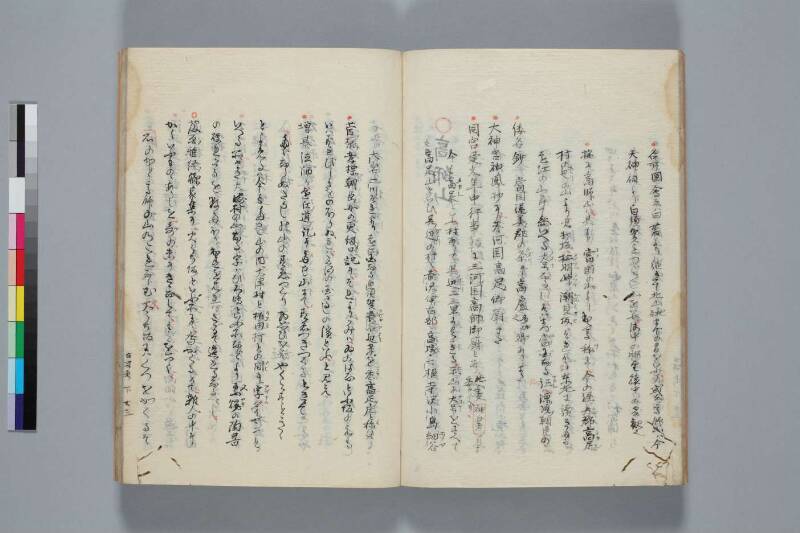
翻刻
●名所図会云白菅より続きて北山《割書:地|名》までの間をいふ、又或云高師山は今
天神祠より白須賀迄つゞきし山をいふ、海中の眺望旅中の奇観也
●按ニ高師山は、其もと当(コノ)国の山より出たる称(ナ)にて、今の渥美郡 高足(タカシ)
村の辺(ホトリ)の山より、火打坂、松明峠(タイマツタフゲ)、潮見坂(シホミザカ)、それより東北に続きたる、
遠江の山かけて総いへる大号(オホナ)なるべし、そはまづ当(コノ)国なる証(アカシ)【「証」の左に朱字「証」】は、源 ̄ノ順 ̄ノ朝臣の、
●倭名抄 当国渥美 ̄ノ郡の条(クダリ)も、高蘆《割書:多加|之》郷あり、また
●大神宮神鳳抄に、参河 ̄ノ国高足 ̄ノ御厨、また
●同宮建久年中行事《割書:二ノ|七十丁》に、三河 ̄ノ国高師 ̄ノ御厨とあり、《割書:此全文神戸考【「神戸考」を朱の四角枠で囲む】ニ引テ|委クイヘリ、》
今も高足(タカシ)といふ村ありて、其 ̄ノ辺(ホトリ)二三里にわたれる、平(ヒラ)山の大号(オホナ)を、すべて
高足山といひ、其 ̄ノ辺(アタリ)の村々、赤_沢伊‾古‾部 高_塚 七_根 寺_沢 小_島 細(ホソ)_谷(ヤ)
大_岩 二_川、それより遠江 ̄ノ国なる白_須賀 長(ナガ)_谷(ヤ)辺(アタリ)までを悉(ミナ)高足 ̄ノ庄と称(イ)ひ、
●菅原 ̄ノ孝標 ̄ノ朝臣 ̄ノ女の、更級 ̄ノ日記に、それよりかみは、ゐのはなといふ坂のえも
いはずわびしきをのぼりぬれば、三河の国高しの濱といふ、と見え、
●増基法師が、遠江 ̄ノ道 ̄ノ記に、たかし山にて、すゑつきつくるときゝて、
〽たゞ【『増基法師集』では「たつ」】ならぬたかしの山のすゑつくり物思ひをぞやくとすときく
とよめるは、今もたかし山の内、大津村と植田(ウヱタ)村との間(アヒ)に、字(アザナハ)ダイゼンと
いへる所、また大崎村の山なる、字はひろ嶋といふ所などより、素焼(スヤキ)の陶器
の破れたるを数多ほり出すを見れば、こゝにて造れるなるべし、
○藤原 ̄ノ雅経 ̄ノ卿 ̄ノ家集に、火うち坂といふ所にて、沓かくるとて、雑人の中に
かくいふものゝありしを、歌の末にきゝなして、もとをつく、
〽石のかど高師の山のこれならむ火【「大」見せ消ち、右に朱字「火」】うち坂にはくつをかくるぞ
【「○」「●」「、」「〽」は朱】
古歌考 下 廿三
現代語訳
●名所図会に云く、白須賀より続いて北山(地名)までの間をいう、また或いは云う、高師山は今
天神祠より白須賀まで続いている山をいう、海中の眺望は旅中の奇観である
●私見によれば高師山は、そもそも当国の山より出た名称であって、今の渥美郡高足
村の辺りの山より、火打坂、松明峠、潮見坂、それより東北に続いている、
遠江の山にかけて総称した大きな名前であろう。そこでまずこの国である証拠は、源順朝臣の、
●倭名抄 当国渥美郡の条にも、高蘆(たかし)郷があり、また
●大神宮神鳳抄に、三河国高足御厨、また
●同宮建久年中行事(巻二の七十丁)に、三河国高師御厨とある。(この全文は神戸考に引いて詳しく述べてある)
今も高足という村があって、その辺り二三里にわたる、平山の大きな名前を、すべて
高足山といい、その辺りの村々、赤沢・伊古部・高塚・七根・寺沢・小島・細谷・
大岩・二川、それより遠江国なる白須賀・長谷辺りまでをすべて高足の庄と称し、
●菅原孝標朝臣の女の、更級日記に、「それよりかみは、いのはなという坂のえも
いわずわびしきを登りぬれば、三河の国高しの浜という」と見え、
●増基法師が、遠江道の記に、「たかし山にて、すえつき作るときいて、
〽ただならぬたかしの山のすえつくり物思いをぞ焼くとすと聞く」
と詠んでいるのは、今もたかし山の内、大津村と植田村との間に、字(あざな)をダイゼンと
いう所、また大崎村の山なる、字をひろ嶋という所などより、素焼の陶器
の破片を数多く掘り出すのを見れば、ここで作っていたのであろう。
○藤原雅経卿の家集に、火打坂という所にて、沓を隠すとて、雑人の中に
こういう者のあったのを、歌の末に聞きなして、もとを作く、
〽石の角高師の山のこれならん火打坂には靴を隠るぞ
古歌考 下 二十三
英語訳
●Meisho Zue states: It refers to the area continuing from Shirasuka to Kitayama (place name). Another theory says that Takashi Mountain refers to the mountain continuing from the present Tenjin shrine to Shirasuka. The view over the sea is a magnificent sight during travel.
●In my opinion, Takashi Mountain originally derives its name from mountains in this province, and would be a general name encompassing the mountains from the vicinity of present-day Takashi
Village in Atsumi District, through Hiuchi Slope, Taimatsu Pass, Shiomi Slope, and continuing northeast to
the mountains of Tōtōmi Province. The evidence that this is primarily from our province is found in Minamoto no Shitagō's,
●Wamyō-shō: In the section on Atsumi District of this province, there is Takashi Village, and also
●Daijingū Shinpō-shō mentions Takashi mikuriya of Mikawa Province, and
●Dōkyū Kenkyū nenjū gyōji (vol. 2, folio 70) mentions Takashi mikuriya of Mikawa Province. (The full text is quoted and explained in detail in Kōbe-kō)
Even today there is a village called Takashi, and the general name for the low mountains extending two to three ri around that area is called
Takashi Mountain, and the villages in that vicinity - Akazawa, Ikobe, Takatsuka, Nanane, Terazawa, Kojima, Hosoya,
Ōiwa, Futagawa, and from there to the areas of Shirasuka and Nagatani in Tōtōmi Province - are all called Takashi-no-shō.
●In the daughter of Sugawara no Takasue's Sarashina Nikki, it states: "Going further up, we climbed the indescribably desolate slope called Inohana, and reached what is called Takashi-no-hama in Mikawa Province."
●Priest Masumoto, in his Tōtōmi-dō no Ki, hearing that pottery was made at Takashi Mountain, composed:
〽"Not ordinary - at Takashi Mountain's pottery making, I hear they fire thoughts of love"
This refers to how even today, in areas within Takashi Mountain - between Ōtsu Village and Ueta Village at a place with the character name Daizen,
and at a place in the mountains of Ōsaki Village with the character name Hiroshima - many fragments of unglazed pottery
are dug up, showing that pottery was made there.
○In the personal collection of Lord Fujiwara no Masatsune, at a place called Hiuchi Slope, regarding hiding shoes, there was
such a person among the common people, which he heard about at the end of a poem and composed based on it:
〽"Stone corners of Takashi Mountain - this must be it, at Hiuchi Slope where shoes are hidden"
Koka-kō, Lower volume, 23