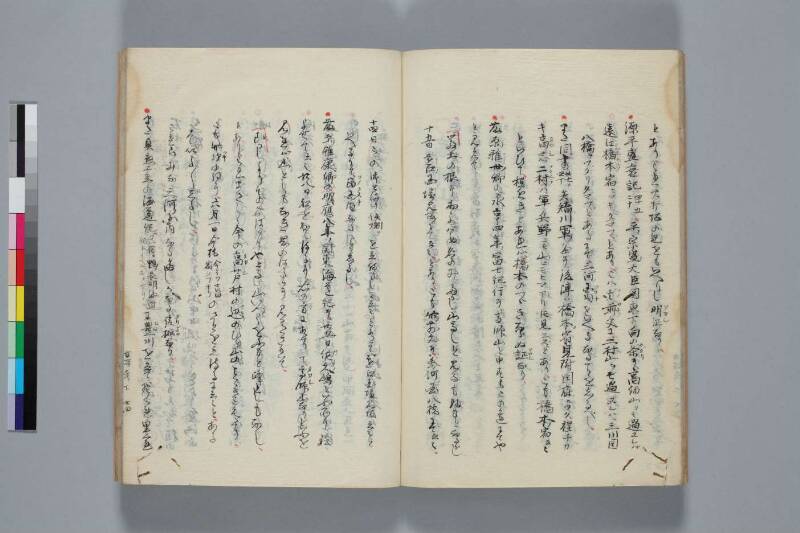
翻刻
とあり、これ火打坂の辺をもいへりし明証(アカシ)なり、
●源平盛衰記《割書:四十五|二十》、平 ̄ノ宗盛 ̄ノ大臣関東下向の条(クダリ)に、高師山ヲモ過ヌレバ
遠江 橋本(ハシモトノ)宿ニツキタマフ、とあり、こは其前(ソノサキノ)文に、二村山ヲモ過ヌレバ、三川国
八橋ヲワタリタマフとあるにて、三河 ̄ノ国内(クヌチ)をいへるなることをしるべし、
●また同書《割書:廿七ノ|四丁》矢橋川軍 ̄ノ条に、後陣は橋本 ̄ノ宿見附国府ニツク、程チカ
キ高志二村(タカシフタムラ)は軍兵野ニモ山ニモヒマアリトモ見エズ、とあり、こも橋本 ̄ノ宿云々
といひて、程近きとあれば、橋本のつゞきならぬ証(アカシ)なり、
●藤原 ̄ノ雅世 ̄ノ卿の永享四年 ̄ノ富士紀行に、高師山と申すもこの辺にてや
と見えて、
〽富士の根におよばぬ名のみたかし山高しと見るもふもとなるらし
十五日遠江 ̄ノ国塩見坂にて云々、とあり、こも此 ̄ノ前文に、参河 ̄ノ国八橋にて云々、
十四日こゝの御とまり《割書:矢矧ヲ|イフ》【「ツ」を朱で「フ」に】を立侍りしに云々、と有て、遠江国塩見坂云々と
いへるにて、当国内(コノクヌチ)なることしるし、
●藤原 ̄ノ雅康卿の、明応八年 ̄ノ関東海道記に、廿五日 佐久(サクノ)嶋といふ所に船
よせて云々、廿八日船を出し侍るに、右の方にあたりて、高師(タカシ)山なりといふを
見れば、山としもなき岡のはるかに見わたされて、
〽むかしよりその名ばかりや高し山いつくをふもと峰としもなし、
とあり、これまさしく今の高芦(タカシ)村の辺(アタリ)のひら山のことゝきこえたり、
こも此 ̄ノ次(ツキ)の詞に、六月一日今橋《割書:今イフ吉田|宿ノコトナリ》のさとを立侍るに云々と、ある
にて、いよ〳〵しるし、
これらみな三河 ̄ノ国内なるたしかなる証拠(ヨリドコロ)なり、
●また貞応二年の海道記、《割書:コハ俗ニ鴨 ̄ノ長明海道|記トイヘルモノナリ》に豊(トヨ)川を立て、野くれ里くれ
【「●」「、」「〽」は朱】
古歌考 下 廿四
現代語訳
とある。これは火打坂の辺りをも言ったものである明確な証拠である。
●源平盛衰記(巻四十五の二十)、平宗盛大臣関東下向の条に、「高師山をも過ぎれば
遠江橋本宿に着きたまう」とあり、これはその前の文に、「二村山をも過ぎれば、三河国
八橋を渡りたまう」とあることによって、三河国内のことを言っているのを知るべきである。
●また同書(巻二十七の四丁)矢橋川軍の条に、「後陣は橋本宿見附国府に着く。程近き
高志二村は軍兵野にも山にも隙間ありとも見えず」とあり、これも橋本宿云々
と言って、程近きとあれば、橋本の続きではない証拠である。
●藤原雅世卿の永享四年の富士紀行に、「高師山と申すもこの辺にてや」
と見えて、
〽富士の根に及ばぬ名のみたかし山高しと見るも麓なるらし
「十五日遠江国塩見坂にて云々」とあり、これもその前文に、「三河国八橋にて云々、
十四日ここの御宿り(矢作をいう)を立ち侍りしに云々」とあって、遠江国塩見坂云々と
言っているので、当国内のことが明らかである。
●藤原雅康卿の、明応八年の関東海道記に、「二十五日佐久島という所に船を
寄せて云々、二十八日船を出し侍るに、右の方に当たって、高師山なりという所を
見れば、山としもない丘がはるかに見渡されて、
〽昔よりその名ばかりや高し山いずくを麓峰としもなし」
とあり、これはまさしく今の高芦村の辺りの平山のことと聞こえる。
これもその次の言葉に、「六月一日今橋(今いう吉田宿のことなり)の里を立ち侍るに云々」とある
ので、いよいよ明らかである。
これらはみな三河国内である確かな証拠である。
●また貞応二年の海道記(これは俗に鴨長明海道記といわれるものなり)に豊川を立って、野が暮れ里が暮れ
古歌考 下 二十四
英語訳
This is clear evidence that it also referred to the area around Hiuchi Slope.
●In Genpei Jōsuiki (Volume 45, Section 20), in the passage about Minister Taira no Munemori's journey to the Kantō region, it states: "Having also passed Takashi Mountain,
he arrived at Hashimoto post station in Tōtōmi." This, together with the preceding text stating "Having also passed Futamura Mountain, he crossed
Yatsuhashi in Mikawa Province," shows that it refers to places within Mikawa Province.
●Also in the same work (Volume 27, Folio 4), in the section on the Battle of Yabashi River, it states: "The rear guard reached Hashimoto post station at Mitsuke provincial government office. The nearby
Takashi and Futamura appear to have no gaps for soldiers in field or mountain." This also mentions Hashimoto post station
and describes it as "nearby," proving it was not continuous with Hashimoto.
●In Lord Fujiwara no Masayo's Fuji Travel Record from Eikyō 4, it appears as "Takashi Mountain, said to be
around this area," and includes the poem:
〽"Only the name, not reaching Fuji's base - Takashi Mountain, what appears high must be merely foothills"
"On the 15th day, at Shiomi Slope in Tōtōmi Province..." This also has preceding text stating "At Yatsuhashi in Mikawa Province...,
on the 14th day, departing from this lodging place (referring to Yahagi)..." before mentioning Shiomi Slope in Tōtōmi Province,
making it clear this refers to places within our province.
●In Lord Fujiwara no Masakō's Kantō Kaidō Record from Meiō 8, it states: "On the 25th day, bringing the ship to
a place called Saku Island..., on the 28th day, when we departed by ship, looking toward the right side, at what they call Takashi Mountain,
we saw not really a mountain but hills stretching far into the distance:
〽'Since ancient times only the name - Takashi Mountain, where is the base, with no peak to speak of'"
This clearly seems to refer to the flat mountains around present-day Takashi Village.
This is further confirmed by the following passage: "On the 1st day of the 6th month, departing from Imahashi village (referring to present-day Yoshida post station)..."
making it increasingly clear.
All of these are reliable evidence of locations within Mikawa Province.
●Also in the Kaidō Record from Jōō 2 (this is what is commonly called Kamo no Chōmei's Kaidō Record), departing from Toyokawa, with fields darkening and villages darkening
Koka-kō, Lower Volume, 24