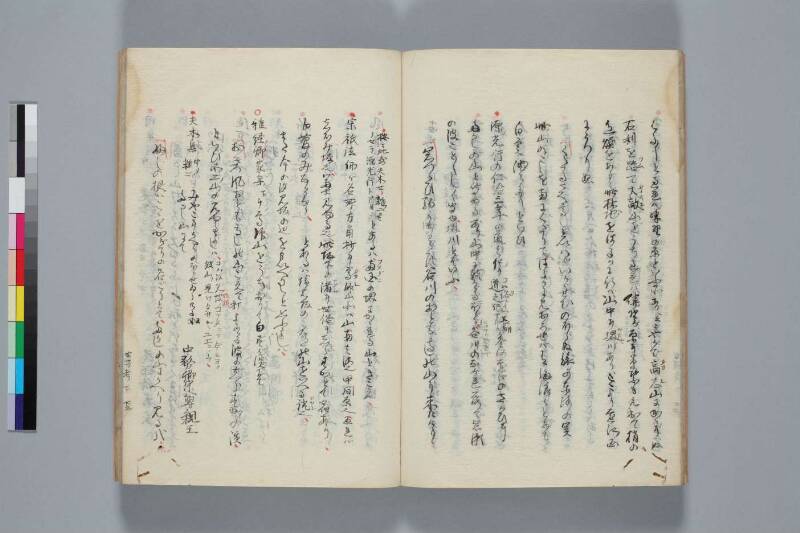
翻刻
はる〳〵と過れば、峰野の原といふ所あり、云々やがて高志(タカシ)山にかゝに【「り」カ】ぬ
石利を踏(フム)て大敵(タイテキ)山をうち過れば、焼野が原に草葉もえ出て梢の
色煙をあぐ、此 ̄ノ林地をはるかに行ば、山中に堺(サカヒ)川あり、こゝより遠江 ̄ノ国
にうつりぬ
〽くだるさへ高しといはゞいかゞせむのぼらぬ旅の東路の関
此 ̄ノ山のこしを南にくだりて、はるかに見おろせば青海浪々として
白雲沈々たり、といひ、
●源 ̄ノ光行の仁治三年の道之記に《割書:コハ俗(ヨ)ニイフ長明|道之記ナリ、》参河遠江のさかひに
たかしの山と聞ゆるあり、山中に越かゝるほどニ【「ニ」の右に書入れ「に フサウ拾葉本」】、谷川のながれ落て岩瀬
の波こと〳〵しく聞ゆ、堺川とぞいふ、
〽岩づたひ駒うちわたす谷川のおとも高しの山二来にけり、
《割書:●按ニ此歌夫木廿 ̄ノ【「ノ」朱字】雑 ̄ノ二ニモ|ノセテ源光行トアリ、》とあるは、両国(フタグニ)の堺にかゝれる山ときこえ、
●宗祇法師が名所方角抄に高師(タカシ)山北は山、南は海也、中間原也、過れば
しほみ坂也、富士見ゆる也、此坂下の渚(ナギサ)に世俗にしらすかとて宿あり、
白菅のみなとなり、 とあるは、塩見坂のこなたの山をいへる証(アカシ)也、
また今の汐見坂の辺をもいへりしと思ふよしは、
○雅経 ̄ノ卿 ̄ノ家集《割書:下|》に高師山をうちおりて白すか濱にて
〽おきつ風おとも高しの山こえて打よする波のしらすかの濱、
といひ不二 ̄ノ山の見ゆるよしは、《割書:コハ汐見塚【「塚」の右に朱字「板歟」】ノコナタニテ今モヨク|彼山ノ見ワタサルヽユヱニイフ、》
●夫木集《割書:廿ノ|雑二》 《割書:みやこにかへりのぼらせ給うけるに【「の」見せ消ち、右に「に」】|たかし山にて》 中務卿宗尊親王
〽ふじの根はこゝをかぎりの名ごりとて、たかしの山にかへり見る哉、《割書:ホ|》【「ホ」朱字】
【「○」「●」「、」「〽」は朱】
古歌考 下 廿五
現代語訳
はるばると過ぎれば、峰野の原という所がある。云々やがて高志山にかかりぬ
石利を踏んで大敵山を打ち過ぎれば、焼野が原に草葉が萌え出て梢の
色煙を上げる。この林地をはるかに行けば、山中に境川がある。ここより遠江国
に移りぬ。
〽下るさえ高しといわばいかがせん登らぬ旅の東路の関
この山の越しを南に下りて、はるかに見下ろせば青海浪々として
白雲沈々たり」と言い、
●源光行の仁治三年の道之記に(これは俗にいう長明道之記なり)「三河遠江の境に
たかしの山と聞こゆるあり。山中に越えかかる程に、谷川の流れ落ちて岩瀬
の波ことごとしく聞こゆ。境川とぞいう。
〽岩伝い駒打ち渡す谷川の音も高しの山に来にけり」
(按ずるにこの歌夫木集二十の雑二にも載せて源光行とあり)とあるのは、両国の境にかかれる山と聞こえ、
●宗祇法師が名所方角抄に「高師山北は山、南は海也、中間原也、過ぎれば
塩見坂也、富士見ゆる也、この坂下の渚に世俗に白菅かとて宿あり、
白菅の湊なり」とあるのは、塩見坂のこなたの山をいえる証拠也。
また今の汐見坂の辺をもいったしと思う理由は、
○雅経卿の家集(下)に高師山を打ち下りて白菅浜にて
〽沖つ風音も高しの山越えて打ち寄する波の白菅の浜
といい、富士山の見ゆる理由は、(これは汐見塚のこなたにて今もよく彼山の見渡さるるゆえにいう)
●夫木集(二十の雑二) (都にかえり上らせ給うけるに高し山にて)中務卿宗尊親王
〽富士の根はここを限りの名残とて、高しの山に返り見る哉
古歌考 下 二十五
英語訳
Traveling far and wide, there is a place called Mineno-no-hara. Soon reaching Takashi Mountain,
treading on stone profit and passing over Daiteki Mountain, at Yakeno-ga-hara grass shoots emerge and the treetops
raise colored smoke. Going far through this forest land, there is Sakai River in the mountains. From here one crosses
into Tōtōmi Province.
〽Even going down, if called high, what shall I do - the barrier of the eastern road of a journey without climbing
Descending south over this mountain pass and looking far down, the blue sea rolls wave upon wave
and white clouds sink deeply," it says,
●In Minamoto no Mitsuyuki's Michi-no-ki from Ninji 3 (this is what is commonly called Chōmei's Michi-no-ki): "At the border of Mikawa and Tōtōmi
there is what is known as Takashi Mountain. While crossing over the mountain, valley streams flow down and the waves at the rocky rapids
sound magnificent. This is called Sakai River.
〽Following the rocks, horses cross the valley river - the sound too has come to Takashi Mountain"
(Note: This poem is also recorded in Fuboku-shū Volume 20, Miscellaneous 2, attributed to Minamoto no Mitsuyuki) - this indicates a mountain straddling the border of both provinces.
●In Master Sōgi's Meisho Hōgaku-shō: "North of Takashi Mountain are mountains, south is the sea, with plains in between. Beyond lies
Shiomi Slope. Mount Fuji is visible. At the beach below this slope there is a lodging place commonly called Shirasuga,
which is Shirasuga Port." This is evidence referring to the mountain on this side of Shiomi Slope.
The reason I think it also referred to the area around present-day Shiomi Slope is:
○In Lord Masatsune's personal collection (Lower Volume), descending Takashi Mountain at Shirasuga Beach:
〽Offshore winds, sounds too crossing over Takashi Mountain, waves washing ashore at Shirasuga Beach
The reason Mount Fuji is visible (this is because even now that mountain can be clearly seen from this side of Shiomi Mound)
●Fuboku-shū (Volume 20, Miscellaneous 2) (When returning to the capital, at Takashi Mountain) Middle Palace Minister Prince Munetaka
〽Fuji's base - taking this as the final farewell, gazing back at Takashi Mountain
Koka-kō, Lower Volume, 25