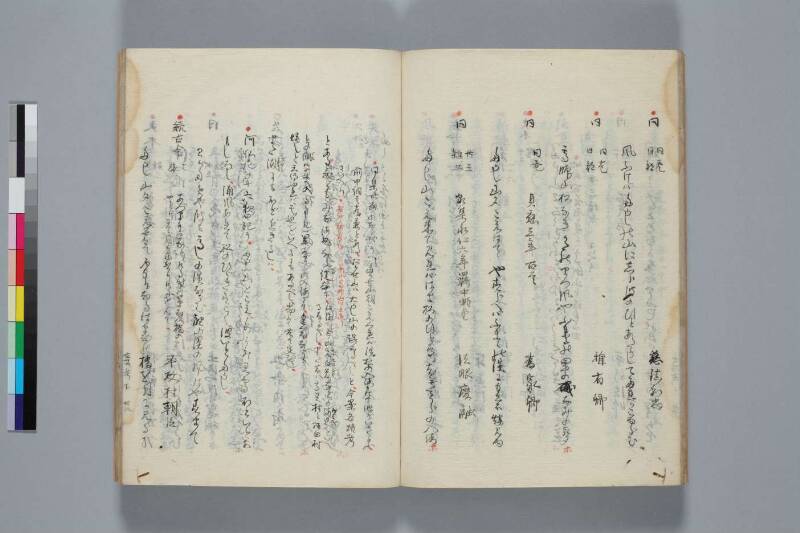
翻刻
●同 《割書:同巻|同部》 慈鎮和尚
風ふけばたかしの山にしら波のひとあたりしてたれかこゆらむ
●同 《割書:同巻|同部》 雅有卿
高師山松なきかたのまつ風やふもとの里の磯なみの声《割書:ホ|》【「ホ」朱字】
●同 《割書:同巻|》 貞応三年 百首 為家卿
たかし山夕こえはてゝやすらへばふもとの浜にもしほ焼見ゆ
●同 《割書:廿三|雑ノ五》 家集永仁六年覊中眺望 法眼慶融
たかし山こえ来て見ればはま松のひとすぢ遠きうらの入海《割書:ホ|》【「ホ」朱字】
《割書:●同集此歌のならびに〽たかせ山朝こえくれば浜松の入海かけて波ぞいさよふ、| 前中納言為兼とある、たかせ山はたかし山の誤なるべしと、今案名蹟考| にいへり、●契冲ノ補翼抄ニは高瀬山高師山同とあり【「●契冲ノ~同とあり」朱字】》
とある歌ども、みな海辺なる証(アカシ)なり、《割書:此ノ海は今の元白菅(モトシラスカ)などの海辺(ウミベ)をいへ|るなるべし、また昔は高足村と植田村》
《割書:との間(アヒ)は、東へ入る事凡一里あまりの入海にて、もしほなども|焼しと云伝ふれば、其ノ辺をいへるにもあるべし、尚よく考て定むべし、》
また湖(ミヅウミ)にもほど近きよしは、
●阿仏尼の十六夜 ̄ノ日記に、たかし山をこえ、水うみ見やるほどいとお
もしろし、浦風あれて松のひゞきすごく、波いとたかし、
わがためや波も高しの浜ならむ袖の湊の風はやすまて
●続古今 《割書:十|旅》 《割書:あづまにまかりける時はまなの橋の|やどりにて月くまなかりけるを見て、》平政村朝臣
たかし山夕こえ暮てふもとなるはまなの橋を月に見る哉
【「●」「、」「〽」は朱】
古歌考 下 廿八
現代語訳
●同(同巻同部) 慈鎮和尚
風吹けば高しの山に白波の一当たりしてたれか越ゆらん
●同(同巻同部) 雅有卿
高師山松なき方の松風や麓の里の磯波の声(ホ)
●同(同巻) 貞応三年百首 為家卿
高し山夕越え果ててやすらえば麓の浜に藻塩焼き見ゆ
●同(二十三雑の五)家集永仁六年羈中眺望 法眼慶融
高し山越え来て見れば浜松の一筋遠き浦の入海(ホ)
(●同集この歌の並びに〽高瀬山朝越え来れば浜松の入海かけて波ぞいさよう、前中納言為兼とある、高瀬山は高し山の誤りなるべしと、今案名蹟考に言えり、●契沖の補翼抄には高瀬山高師山同とあり)
とある歌ども、みな海辺なる証拠なり。(この海は今の元白菅などの海辺を言えるなるべし、また昔は高足村と植田村との間は、東へ入ること凡そ一里余りの入海にて、藻塩なども焼きしと云い伝うれば、その辺を言えるにもあるべし、なおよく考えて定むべし)
また湖にも程近きようすは、
●阿仏尼の十六夜日記に、高し山を越え、水海見やる程いと面白し、浦風荒れて松の響きすごく、波いと高し、
我がためや波も高しの浜ならん袖の湊の風はやまずて
●続古今(十旅) (東に参りける時浜名の橋の宿りにて月曇りなかりけるを見て)平政村朝臣
高し山夕越え暮れて麓なる浜名の橋を月に見るかな
古歌考 下 二十八
英語訳
●Same (Same volume, same section) Monk Jichin
When wind blows, white waves strike once against Takashi Mountain - who would cross over?
●Same (Same volume, same section) Lord Masaari
At Takashi Mountain, in the direction where there are no pines, is it the pine wind or the sound of shore waves at the village below? (Ho)
●Same (Same volume) Jōō 3rd year, hundred poems Lord Ieka
Having finished crossing Takashi Mountain at evening and resting, I see seaweed salt being burned on the beach below
●Same (Volume 23, Miscellaneous 5) Personal collection, Einin 6th year, distant view while traveling Hōgen Keiyū
Having come over Takashi Mountain and looked, the beach pines stretch in a single line far across the bay inlet (Ho)
(●In the same collection, next to this poem: "Takase Mountain - crossing in the morning, waves ripple over the inlet of beach pines," attributed to Former Middle Counselor Tamekane. "Takase Mountain" is likely an error for "Takashi Mountain," according to the current Anmeiseki-kō. ●Keichū's Hoyoku-shō states that Takase Mountain and Takashi Mountain are the same)
All these poems are evidence of its location by the sea. (This sea likely refers to the present-day coastal area of Motoshirasuga and such places. Also, in ancient times, between Takashi Village and Ueda Village, there was a bay inlet extending eastward for about one ri, and it is said that seaweed salt was burned there, so it may refer to that area as well. This should be further considered and determined.)
That it is also close to a lake is evident from:
●In Abutsu-ni's Izayoi Nikki: "Crossing Takashi Mountain, gazing at the lake was most interesting. The sea wind was rough, the pine trees' sound eerie, and the waves very high."
Is it for me that the waves are high at this Takashi beach? The wind at the harbor of sleeves does not cease
●Shoku-Kokin (Volume 10, Travel) (When going east, seeing the unclouded moon at the lodging of Hamana Bridge) Taira no Masamura
Having crossed Takashi Mountain at evening and grown dark, I see Hamana Bridge at the foot in the moonlight
Koka-kō, Lower Volume, 28