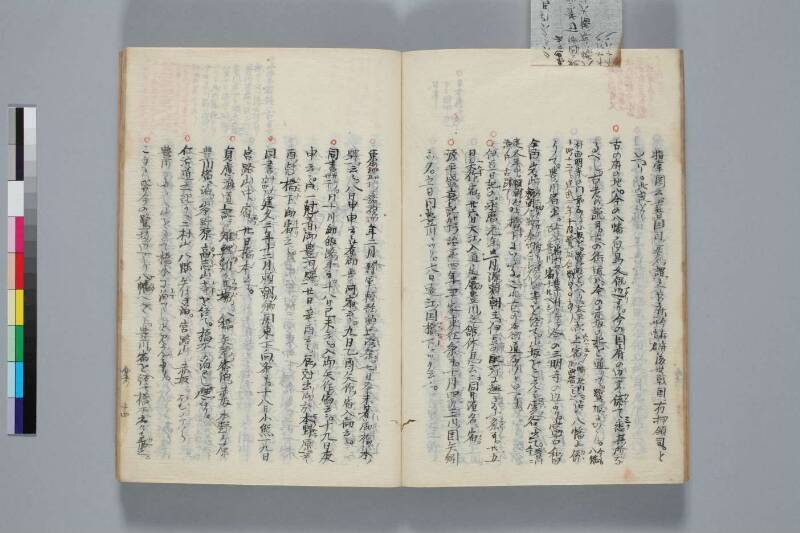
翻刻
【右丁】
【行頭の〇は朱書き】
指掌図 ̄ニ云。古昔国司 ̄ノ居処 ̄ヲ謂 ̄フ_二之官府 ̄ト_一《割書:今存府|中遺_レ名》後世戦国 ̄ニ有_二押領司_一【訓点の脱落】。と
いへり。《割書:此説いろ〳〵》
〇古の府の地は。今の八幡白鳥久保 ̄ノ辺(アタリ)より。今の国府の辺まで係(カケ)て悉(ミナ)其 ̄ノ所な
るべし。古老の説に。古 ̄ヘ の街道は。今の赤坂の北を通りて。鷺坂にかゝり。《割書:今も|八幡》
《割書:村西明寺の門前なる小坂を。鷺坂といへり。太平記|十四ノ十二丁。建武二年十月鷺坂合戦の事あり》上宿(ウハジユク)《割書:八幡 ̄ノ地内也。古 ̄ノ|御油宿也といへり。》八幡に係(カヽ)
りて。豊川宿へ出。《割書:今ノ古宿村ヨリ豊川村カケテ|古ヘノ豊川宿ナルベシ。》今の三明寺の辺より。当-古 和-田
金-田 岩崎《割書:産土神クラカケノ社アリ。建久中|頼朝卿。鞍 ̄ヲ奉納ニフレタリ。》等を経(ヘ)て。山坂をこえて。雲谷(ウノヘ)【「ウノヤ」とあるところ】へ出て。《割書:普門|寺 ̄ニ》
《割書:建久年中。頼朝 ̄ノ卿上|洛ノトキノ古跡アリ。》橋下(ハシモト)にいたる。これ古 ̄ヘ の本街道なりといへり。
〇伊豆日記の。永暦元年三月。源 ̄ノ頼朝主。伊豆の配所に趣き給ふ条(クダリ)に。廿五
日 矢作(ヤハギ) ̄ニ宿 ̄ス。廿六日大江 ̄ノ入道定厳 ̄ガ豊川 ̄ノ之舘 ̄ニ休息 ̄フ云々。同日浜名 ̄ニ宿 ̄ス。
〇源平盛衰記《割書:廿三ノ|九丁》治承四年平家東征 ̄ノ条に。十月四日三川 ̄ノ国矢矧
ニ ツク。五日同豊川 ̄ニ ツク。六日遠江 ̄ノ国 橋下(ハシモト) ̄ニ ツク云々。
【左丁】
〇東鑑《割書:卅二ノ|五丁》嘉禎四年二月。将軍頼経 ̄ノ卿上洛 ̄ノ条 ̄ニ。七日癸未著_二【訓点脱落】御橋-本 ̄ノ
駅 ̄ニ_一云々。八日甲申云々著_二御豊河 ̄ノ宿 ̄ニ_一云々。九日乙酉矢作 ̄ノ宿 ̄ニ入御云々。
〇同書《割書:卅二ノ。|卅一丁》同十日御帰路 ̄ノ条に。十八日己未云々。入_二御矢作 ̄ノ宿云々。十九日庚
申云々。戌 ̄ノ一尅著 ̄ト_二御豊河 ̄ノ駅 ̄ニ_一。廿日辛酉云々。辰 ̄ノ尅出-_二【訓点「一」は誤記】御於 本野原(モトノハラ) ̄ニ_一。云々
酉 ̄ノ尅 橋下(ハシモト) ̄ニ御 宿(トマリ)云々。
〇同書《割書:十ノ|六十四丁》建久三年十二月。頼朝 ̄ノ郷関東下向 ̄ノ条に。十八日小熊十九日
宮路山中 ̄ニ宿《割書:シ玉フ》。廿日橋本云々。
〇貞応海道記 ̄ニハ稚鯉鮒(チリフ)か馬場(ウマバ)。八橋矢矯 ̄ノ宿泊。赤坂本野が原
豊川宿 ̄ニ泊。峯野原 高志(タカシ)山 等(ナド)を経て。橋本に泊りし趣(サマ)なり。
〇仁治道之記にも。二村山 八幡 矢はぎ泊。宮路山 赤坂 ほむのがはら
豊川 たかし山をへて橋本に泊(トマ)りしと見えたり。
〇これら皆今の鷺坂 ̄ノ辺より八幡(ヤハタ)へかゝり。豊川 ̄ノ宿を経(ヘ)て橋本へ出ける趣(サマ)也。
和考 十四
現代語訳
【右丁】
指掌図に言う。「古昔、国司の居処を之官府と謂う(今も府中の名が残る)。後世戦国時代には押領司があった」と言っている。(この説はいろいろある)
○古の府の地は、今の八幡白鳥久保の辺りから、今の国府の辺まで係わって、すべてその所であろう。古老の説によると、古への街道は、今の赤坂の北を通って、鷺坂にかかり(今も八幡村西明寺の門前なる小坂を鷺坂という。太平記十四巻十二丁に、建武二年十月鷺坂合戦の事がある)、上宿(八幡の地内である。古の御油宿であるという)、八幡に係わって、豊川宿へ出る(今の古宿村より豊川村にかけて古への豊川宿であろう)。今の三明寺の辺より、当古和田、金田、岩崎(産土神クラガケの社がある。建久年中頼朝卿が鞍を奉納された)等を経て、山坂を越えて、雲谷へ出て(普門寺に建久年中、頼朝卿上洛の時の古跡がある)、橋本に至る。これが古への本街道であるという。
○伊豆日記の永暦元年三月、源頼朝主が伊豆の配所に趣く条に「二十五日矢作に宿す。二十六日大江入道定厳が豊川の館に休息す云々。同日浜名に宿す」とある。
○源平盛衰記(二十三巻九丁)治承四年平家東征の条に「十月四日三川国矢矧に着く。五日同豊川に着く。六日遠江国橋本に着く云々」とある。
【左丁】
○東鑑(三十二巻五丁)嘉禎四年二月、将軍頼経卿上洛の条に「七日癸未、御橋本駅に着く云々。八日甲申云々、御豊河宿に着く云々。九日乙酉矢作宿に入御云々」とある。
○同書(三十二巻三十一丁)同十日御帰路の条に「十八日己未云々。御矢作宿に入る云々。十九日庚申云々。戌の一刻、御豊河駅に着く。二十日辛酉云々。辰の刻、本野原より出御。云々。酉の刻、橋本に御宿云々」とある。
○同書(十巻六十四丁)建久三年十二月、頼朝卿関東下向の条に「十八日小熊、十九日宮路山中に宿し給う。二十日橋本云々」とある。
○貞応海道記には「稚鯉鮒(チリフ)か馬場。八橋矢矯の宿泊。赤坂本野が原、豊川宿に泊。峯野原、高志山等を経て、橋本に泊った様子である」とある。
○仁治道之記にも「二村山、八幡、矢はぎ泊。宮路山、赤坂、ほむのがはら、豊川、たかし山を経て橋本に泊った」と見えている。
○これらは皆、今の鷺坂の辺りより八幡へかかり、豊川の宿を経て橋本へ出た様子である。
和考 十四
英語訳
[Right page]
The Shishō-zu states: "In ancient times, the residence of the provincial governor was called shi-no-kanfu (today the name Fuchū still remains). In later warring states period, there were ōryōji (military commissioners)." (There are various theories about this.)
○The site of the ancient fu probably extended from the present-day area of Hachiman Hakuchō Kubo to the vicinity of the present Kokufu. According to the accounts of old people, the ancient highway passed north of present-day Akasaka and reached Sagi-saka (even now, a small hill in front of the gate of Saimyōji temple in Hachiman village is called Sagi-saka. The Taiheiki, volume 14, folio 12, records a battle at Sagi-saka in the tenth month of Kenmu 2 [1335]). It connected to Kami-juku (within Hachiman territory; said to be the ancient Goyu post station), Hachiman, and led to Toyokawa post station (from present-day Furujuku village to Toyokawa village was probably the ancient Toyokawa post station). From the vicinity of present-day Sanmyōji, it passed through Tōko-wada, Kaneda, Iwasaki (where there is a shrine to the tutelary deity Kuragake; Lord Yoritomo dedicated a saddle there during the Kenkyū period) and others, crossed mountain passes, emerged at Unoya (at Fumon-ji there are remains from when Lord Yoritomo traveled to the capital during the Kenkyū period), and reached Hashimoto. This is said to have been the main highway in ancient times.
○In the Izu Nikki, under the entry for the third month of Eiryaku 1 when Minamoto no Yoritomo went to his place of exile in Izu: "On the 25th day, lodged at Yahagi. On the 26th day, rested at the mansion of Ōe no Nyūdō Teigen in Toyokawa, etc. On the same day, lodged at Hamana."
○In the Genpei Seisuiki (Volume 23, folio 9), in the section on the Taira clan's eastern expedition in Jishō 4 (1180): "On the fourth day of the tenth month, arrived at Yahagi in Mikawa Province. On the fifth day, arrived at Toyokawa in the same province. On the sixth day, arrived at Hashimoto in Tōtōmi Province, etc."
[Left page]
○In the Azuma Kagami (Volume 32, folio 5), under the entry for the second month of Katei 4 (1238) regarding Shogun Yoriie's journey to the capital: "On the 7th day, mizunoe-hitsuji, arrived at the Hashimoto station, etc. On the 8th day, kinoe-saru, etc., arrived at the Toyokawa post station, etc. On the 9th day, kinoto-tori, entered the Yahagi post station, etc."
○The same book (Volume 32, folio 31), under the entry for the return journey on the same 10th day: "On the 18th day, tsuchinoto-hitsuji, etc. Entered the Yahagi post station, etc. On the 19th day, kanoe-saru, etc. At the first hour of inu [7-9 PM], arrived at the Toyokawa station. On the 20th day, kanoto-tori, etc. At the hour of tatsu [7-9 AM], departed from Motono-hara, etc. At the hour of tori [5-7 PM], lodged at Hashimoto, etc."
○The same book (Volume 10, folio 64), under the entry for the twelfth month of Kenkyū 3 (1192) regarding Lord Yoritomo's return to Kantō: "On the 18th day Oguma, on the 19th day lodged in the Miyaji mountains. On the 20th day Hashimoto, etc."
○The Jōō Kaidō-ki states: "Chiryū or Baba. Lodged at Yatsuhashi Yahagi station. Lodged at Akasaka Motono-ga-hara, Toyokawa station. Passed through Mineno-hara, Takashi mountain, etc., and lodged at Hashimoto."
○The Ninji Michi-no-ki also shows: "Futamura mountain, Hachiman, lodged at Yahagi. Passed through Miyaji mountain, Akasaka, Homuno-ga-hara, Toyokawa, Takashi mountain and lodged at Hashimoto."
○All of these show the pattern of going from the vicinity of present-day Sagi-saka to Hachiman, passing through Toyokawa post station, and emerging at Hashimoto.
Wakō 14