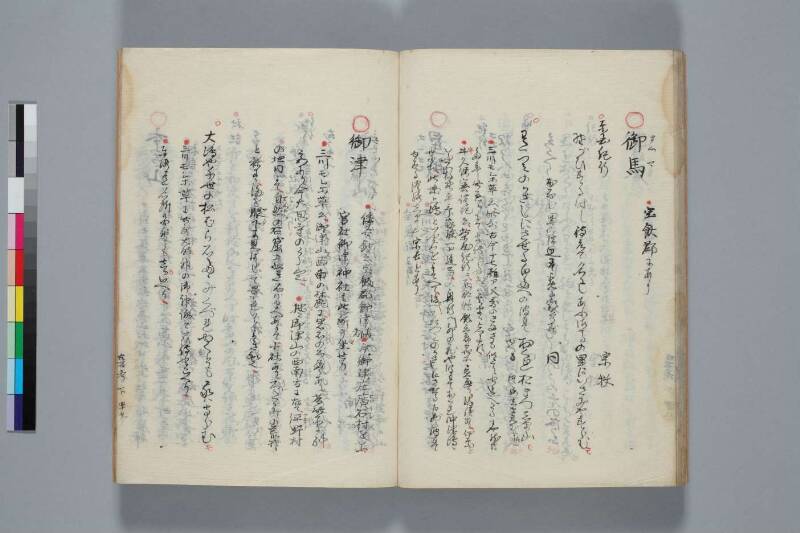
翻刻
○御馬(オムマ) ●宝飫郡にあり
○東国紀行 宗牧
野がひする時し待えて名にしあふ御馬の里にいさみやすらむ《割書:モ》【「モ」朱字】
おなじ里の浜辺にてよめる題しらず
○ 同
わたつみのかざしにさせる白たへの波もておくれおきつしま山【「おくれおきつしま山」の左に「ゆへる淡路しま見む 六帖三」】《割書:モ》【「モ」朱字】
●三川モシホ草云、此歌古今十七雑部ニ入、歌のさまさも似たり、書違へたるにや、然共
多年此通りにて書伝へたれは其まゝしるす、
●牛【「井」見せ消ち、右に朱字「牛」】久保密談記云、柴屋紀行ニ、西 ̄ノ郡 ̄リ鵜殿三郎宿所昼通り、湯漬あり、伊奈と
いふ所牧野平三郎家城一日逗留、又興行〽卯の花や波もておくれ沖津嶋、
宗長、此城上嶋といふ名をよそへて、後、〽わたつみのかさしにさせる白妙の波もて
ゆする淡路しま山、宗長、とあり、
○御津(ミツ) ●倭名鈔云宝飯 ̄ノ郡御津《割書:美|都》今御津 ̄ノ庄/廣石(ヒロイシ)村をいふ、
官社御津 ̄ノ神社も此 ̄ノ所に坐(マ)せり、
●三川モシホ草云、御津山 ̄ノ西南の麓に、岩ほの石畳あり、昔此所に別
宮あり、今大恩寺のうら山也、●按ニ御津山の西南 ̄ノ方に在て、泙野(ナギノ)村
の地内にて、自然(オノヅカラ)の石窟の如き石がまへありて、小社あり、石(イシ)たゝみの荒神
と称す、海を眼下(マシタ)に見はらして景色いとよき処也、
○
大嶋や千世の松ばら石だゝみくづれゆくとも我は守らむ《割書:モ》【「モ」朱字】
●三川モシホ草に此歌大明神の御神詠といひ伝ふといへり、
●東海道名所図会にもしかいへり、
【「○」「●」「、」は朱字】
古歌考 下 四十九
現代語訳
○御馬(オムマ) ●宝飫郡にある
○『東国紀行』 宗牧
野駆けする時を待っていて、名にし負う御馬の里で勇み休らうのだろう
同じ里の浜辺で詠んだ、題知らず
○ 同
海神のかんざしに挿させる白妙の波をもって遅れる沖津島山
●『三河藻塩草』によると、この歌は古今集十七雑部に入っているが、歌の様子がよく似ている。書き違えたのだろうか。しかしながら長年このように書き伝えられているので、そのまま記す。
●『牛久保密談記』によると、『柴屋紀行』に「西郡より鵜殿三郎の宿所を昼通り、湯漬けあり。伊奈という所で牧野平三郎の家で一日逗留。また興行があり『卯の花や波もて遅れ沖津島』。宗長『この城上島という名を寄せて、後に『わたつみのかざしにさせる白妙の波もてゆする淡路島山』宗長』」とある。
○御津(ミツ) ●『倭名抄』によると宝飯郡御津、今の御津庄の廣石村をいう。
官社である御津神社もこの所にお座しになっている。
●『三河藻塩草』によると、御津山の西南の麓に、岩の石畳がある。昔この所に別宮があり、今は大恩寺の裏山である。●考察するに御津山の西南方にあって、泙野村の地内にて、自然の石窟のような石構えがあって、小社がある。石畳の荒神と称する。海を眼下に見晴らして景色がとても良い所である。
○
大島や千代の松原石畳、崩れゆくとも我は守ろう
●『三河藻塩草』にこの歌は大明神の御神詠と言い伝えるといっている。
●『東海道名所図会』にも同様に言っている。
古歌考 下 四十九
英語訳
○Omma (Imperial Horses) ●Located in Hōi District
○"Tōgoku Kikō" (Eastern Provinces Travel Record) Sōboku
Waiting for the time to gallop across the fields, shall I rest courageously in the village of Omma, famous by name?
Composed at the beach of the same village, title unknown
○ Same author
The white waves that can be inserted as hairpins for the sea god delay at Okitsushima Mountain
●According to "Mikawa Moshiogusa," this poem is included in the miscellaneous section (volume 17) of the Kokin-shū, and the style of the poem is quite similar. Perhaps it was written incorrectly? However, since it has been transmitted in writing this way for many years, I record it as is.
●According to "Ushikubo Mitsudan-ki," in "Shibaya Kikō" it states: "Passing through Udono Saburō's lodging during the day from Nishi district, there was yuzuke (rice with hot tea). Stayed one day at Makino Heizaburō's house in a place called Ina. There was also a poetry gathering: 'Deutzia flowers—waves delay at Okitsu Island.' Sōchō: 'Using the name of this Kijōjima, later: "White waves that can be inserted as hairpins for the sea god shake Awaji Island Mountain" by Sōchō.'"
○Mitsu (Harbor) ●According to "Wamyō-shō," Mitsu in Hōi District refers to present-day Hiroishi village in Mitsu Manor.
The official shrine, Mitsu Shrine, is also located in this place.
●According to "Mikawa Moshiogusa," at the southwestern foot of Mount Mitsu, there is a stone pavement of rocks. In ancient times there was a detached shrine here; it is now the back mountain of Daion-ji temple. ●Upon examination, it is located to the southwest of Mount Mitsu, within the territory of Nagino village, where there is a natural cave-like stone formation with a small shrine. It is called the Stone Pavement Aragami (fierce deity). It offers an excellent view overlooking the sea below.
○
Great island, eternal pine grove, stone pavement—even if it crumbles away, I shall protect it
●"Mikawa Moshiogusa" says this poem is traditionally said to be a divine poem by the great deity.
●"Tōkaidō Meisho Zue" also states the same.
Kokakou, Volume 2, Page 49