翻刻
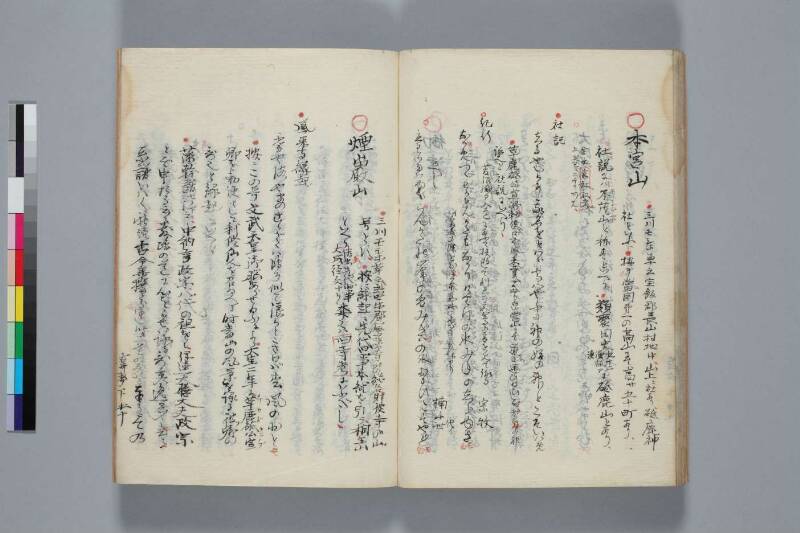
○本宮山 ●三川モシホ草云宝飯郡長山村地中、山上ニ社あり、砥鹿神
社といふ、●按に当国第一の高山にて、高サ五十町あり、
社説には本茂山(モトシゲヤマ)と称すといへり、●類聚国史《割書:九十二|漁猟部|漁》に、砥鹿山とあり、
《割書:全文官社私考|上巻ニヒケリ可見、》【「官社私考」を朱の四角枠で囲】
●社記
しるやいかに我名をとはゞちはやぶる神の始の神とこそいはめ
●草鹿砥公宣卿、勅使として鳳来寺へまゐり給ひ当山にて道に迷ひ給ひし時、老翁の神
詠也と社説にいへり、
○紀行 菅沼織部入道にあふて挨拶して別れ本宮嵩の雪を見て詠る 宗牧
ながめつゝわかれんかたもなかりけむ汀の氷みねのしらゆき《割書:モ|白》【「モ白」朱字】
《割書:イ 冨長の城を出とて本宮山の雪によすトアリ》
○ かへし 楠千/世(代 イ)
立わかれゆくらんかたの峰の雪みぎはの氷おもひこそやれ《割書:モ|白》【「モ白」朱字】
○煙巌山 ●三川モシホ草云、設楽郡鳳来寺山の総名則彼寺の山
号とす、●按ニ緑【縁ヵ】起ニ先代旧事本紀を引テ、桐生山
といへり《割書:偽書先代旧事|大成径文ナリ、》委くは旧寺考【「旧寺考」を朱の四角枠で囲】にいふべし、
●鳳来寺縁起
霧や海やまのすがたは嶋に似て浪かとこさ【「こさ」は『参河国古歌名蹟考再稿下』では「き」】けば松風のおと《割書:モ》【「モ」朱字】
●按ニこの歌、文武天皇御脳あらせ給ふにより、大宝二年に、草鹿砥公宣(クサカドキンノブ)
卿を勅使として、利修仙人を召給へる時当山の風景を詠る彼 ̄ノ卿の
歌也と縁起にいへり、
●藩幹譜《割書:七ノ下|二丁》云、中納言政宗、八代の祖をも、伊達大膳大夫政宗
とぞ申た【「た」は『参河国古歌名蹟考再稿下』では「け」】る云々、敷島の道に心をよせ、詠る歌秀逸多し、云々、
系譜いはく、新続古今集撰せられし時、二首の歌を奉る、その
【「○」「●」「、」は朱字】
古歌考 下 五十
現代語訳
○本宮山 ●『三河藻塩草』によると宝飯郡長山村の地域内にあり、山上に社がある。砥鹿神社という。●考察するに当国第一の高山で、高さは五十町(約5.5km)ある。
社の説明では本茂山(モトシゲヤマ)と称するという。●『類聚国史』に砥鹿山とある。
(詳細は『官社私考』上巻に引用されているので参照のこと。)
●社記
知るだろうか、もし私の名を問うならば、勢いの激しい神の最初の神と言うであろう
●草鹿砥公宣卿が勅使として鳳来寺へ参られた際、当山で道に迷われた時の老翁の神の詠歌だと社の説明にある。
○紀行 菅沼織部入道に会って挨拶して別れ、本宮嶽の雪を見て詠む 宗牧
眺めつつ別れる方角もなかったであろう、汀の氷と峰の白雪を
(異説:富永の城を出て本宮山の雪によせて詠むとある)
○ 返歌 楠千世(代)
立ち別れて行くであろう方角の峰の雪、水際の氷に思いを馳せることよ
○煙巌山 ●『三河藻塩草』によると、設楽郡鳳来寺山の総称で、すなわちその寺の山号とする。●考察するに縁起に『先代旧事本紀』を引用して、桐生山といっている。
(『先代旧事本紀』は偽書で、大成経の文である。)詳しくは『旧寺考』で述べるべきである。
●鳳来寺縁起
霧か海か、山の姿は島に似て、波かと聞こえれば松風の音
●考察するにこの歌は、文武天皇が御脳病を患われたため、大宝二年に草鹿砥公宣卿を勅使として利修仙人を召された時、当山の風景を詠んだ彼の卿の歌だと縁起にある。
●『藩翰譜』によると、中納言政宗の八代の祖も伊達大膳大夫政宗と申したという。和歌の道に心を寄せ、詠む歌に秀逸なものが多い。
系譜によると、『新続古今集』が撰集された時、二首の歌を奉ったという。その
古歌考 下 五十
英語訳
○Mount Hongū ●According to "Mikawa Moshiogusa," it is located within the territory of Nagayama village in Hōi District, with a shrine on the mountaintop called Toga Shrine. ●Upon examination, it is the highest mountain in this province, with a height of fifty chō (approximately 5.5 km).
According to the shrine's explanation, it is called Motoshige-yama. ●In "Ruiju Kokushi" it is referred to as Toga-yama.
(For details, see the citation in volume 1 of "Kansha Shikō.")
●Shrine Record
Do you know? If you were to ask my name, I would say I am the first of the mighty gods
●According to the shrine's explanation, this is a divine poem by an old man-deity when Minister Kusakado Kinnobu, serving as imperial messenger to Hōrai-ji temple, lost his way on this mountain.
○Travel Record Meeting and greeting the lay priest Suganuma Oribe, then parting and composing upon seeing the snow of Mount Hongū peak Sōboku
Gazing continuously, there would have been no direction to part toward—the ice of the shore and the white snow of the peaks
(Variant: Composed in reference to the snow of Mount Hongū upon leaving Tominaga Castle)
○ Reply poem Kusunoki Chiyo (Chidai)
Parting and departing toward the snowy peaks in that direction, how my thoughts turn to the ice at the water's edge
○Mount Engan ●According to "Mikawa Moshiogusa," this is the general name for Mount Hōrai-ji in Shitara District, which serves as that temple's mountain title. ●Upon examination, the origin story quotes the "Sendai Kuji Hongi," calling it Mount Kiryū.
(The "Sendai Kuji Hongi" is a spurious work, being text from the Taisei-kyō.) Details should be discussed in "Kyūji-kō" (Study of Ancient Temples).
●Hōrai-ji Origin Story
Mist or sea? The mountain's form resembles an island, and what sounds like waves is the sound of pine winds
●Upon examination, this poem was composed by Minister Kusakado Kinnobu describing the scenery of this mountain when he was sent as imperial messenger to summon the hermit Rishū in Taihō 2 (702), due to Emperor Monmu's brain illness, according to the origin story.
●According to "Hankan-fu," the eighth-generation ancestor of Middle Counselor Masamune was also called Date Daizen-no-dabu Masamune. He devoted his heart to the way of poetry, composing many excellent verses.
According to the genealogy, when the "Shin Shoku Kokin-shū" was compiled, he submitted two poems. Those
Kokakou, Volume 2, Page 50