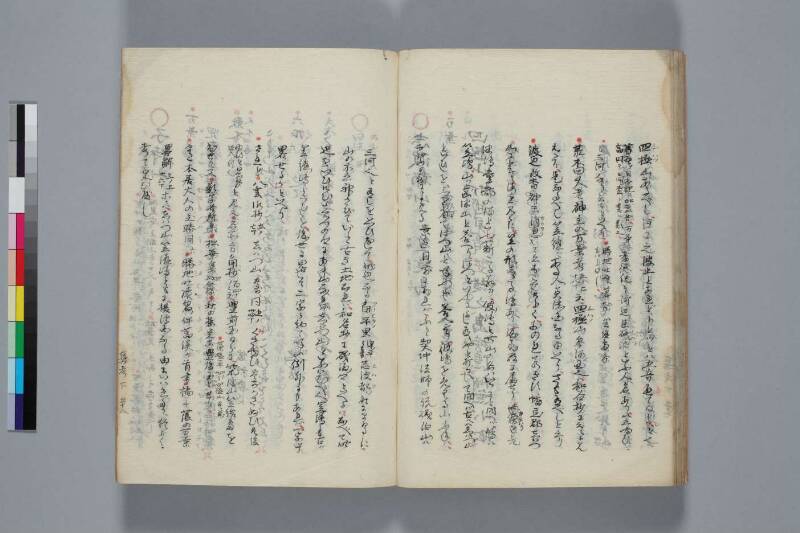
翻刻
四極(シハツ)山あるべし、注に之波止とあれど、トとツとは五音通【「通」朱字】て同じこ【「こ」朱字】と也、
《割書:葛野ヲ日本記ニ加豆怒、万葉ニ|高円ヲ高松ト書ル類也、》孝徳紀に河辺 ̄ノ臣/磯泊(シハツ)といふ人名あり、笠ゆひ
も三河なり云々といへり、《割書:●勝地吐懐篇《割書:上ノ|廿六丁》|もはら同し、》笠縫島 ̄ノ条
●荒木田久老神主の万葉考《割書:三ノ上|十八丁》云、四極(シハツ)山参河 ̄ノ国也、和名抄に云々ト見
えたり、是なるべし、笠縫は、ある人美濃国なる由いへり、さも有べしと云り
●渡辺政杳【『参河国古歌名蹟考再稿下』では「香」】神主/消息(セウソコ)して云おこせけらく、おのれ若き頃幡豆 ̄ノ郡しはつ
山に登り、海を見るに、笠の形したる島あり、渥美 ̄ノ郡に属せり、此/傍(カタハラ)を老
津嶋童部の浦といふ、薪こる翁に、彼 ̄ノ島と此山の名は、いかにと問へば、島は
笠嶋、山は歯津(ハツ)山と答へり、はつといふによし有りやと打かへして問へば、古へはしはつ山
といひしを、上を省(ハブキ)てはつ山と呼ふよし答ヘたり、彼 ̄ノ島をめぐる小ふねは、
万葉の歌によめる景色目 ̄ノ前にあれば、ふと契冲法師の説磯泊山は
三河也と有しを思ひ出して此 ̄ノ辺なる角平(ツノヒラノ)里《割書:津ノ平|とも書》志波都(シハツ) ̄ノ社にまゐるに、
山の木立神さびて、いと古き土地なれば、和名称に磯泊 ̄ノ郷といへるは、なべて此
辺をいひけむ、しはつの郷にある山なればしはつ山といふはむべ也、笠嶋も古は
笠縫 ̄ノ嶋といひしを、後世に略して二字に約て呼ぶ例外にもあれば、一字中
略せるか」といへり、
●されど●八雲御抄《割書:五ノ|七丁》しはつ山《割書:豊前》同《割書:五ノ|卅四丁》く(か)【「か」朱字】さゆひ《割書:豊前》かさぬひ《割書:豊後》
《割書:ゆひと同所歟|但入別也》と見え●名所方角抄《割書:百四十|ノヒラ》豊前国の分に、柴津(シバツ)山笠結島を
《割書:●藻塩草《割書:四ノ|四丁》四極山豊前》
出せり、又●類字名所集●松葉集《割書:四|大分郡》●秋の寝覚等豊後国とせり、
●また本居大人の玉勝間《割書:六》●勝地吐懐篇 ̄ノ伴蒿蹊が首書●橘千蔭の万葉
略解《割書:三ノ上|十六丁》等ニは、しはつ山笠縫嶋ともに、摂津国なる由にいはれたり、猶よく
考て定むべし
【「●」「、」「」」は朱字】
古歌考 下 五十八
現代語訳
志波都(しはつ)山があるはずである。注には「之波止」とあるが、「ト」と「ツ」とは五音通じて同じことである。(葛野を日本紀に「加豆怒」、万葉に高円を「高松」と書く類である。)孝徳紀に河辺臣磯泊(しはつ)という人名があり、笠結いも三河であるなどと言っている。(勝地吐懐篇もほぼ同じである。)笠縫島の条
●荒木田久老神主の万葉考によると、「志波都山は三河国である。和名抄に云々と見える。これであろう。笠縫は、ある人が美濃国であると言っている。そうかもしれない」と言っている。
●渡辺政杳神主が手紙で言ってきたことには、「自分が若い頃に幡豆郡志波都山に登り、海を見ると、笠の形をした島があり、渥美郡に属していた。このそばを老津嶋童部の浦という。薪を切る翁に、あの島とこの山の名はどうかと問うと、島は笠嶋、山は歯津(はつ)山と答えた。『はつ』というのに理由があるかと重ねて問うと、昔は志波都山と言ったが、上を省いて『はつ山』と呼ぶようになったと答えた。あの島を巡る小舟は、万葉の歌に詠まれた景色が目の前にあるので、ふと契沖法師の説で『磯泊山は三河である』とあったのを思い出して、この辺りの角平の里にある志波都社に参ると、山の木立が神々しく、とても古い土地なので、和名抄に磯泊郷と言うのは、概してこの辺りを言ったのであろう。志波都の郷にある山なので志波都山というのは当然である。笠嶋も昔は笠縫島と言ったが、後世に略して二字に約めて呼ぶ例もあるので、一字を略したのか」と言っている。
●しかし八雲御抄には「しはつ山(豊前)」「かさゆひ(豊前)」「かさぬひ(豊後)」(結いと同所か、ただし別入りか)と見え、名所方角抄の豊前国の分に、柴津山笠結島を出している。また類字名所集、松葉集、秋の寝覚等は豊後国としている。
●また本居大人の玉勝間、勝地吐懐篇の伴蒿蹊の序文、橘千蔭の万葉略解等には、志波都山・笠縫嶋ともに、摂津国であると言われている。なおよく考えて決めるべきである。
古歌考 下 五十八
英語訳
there should be a Shihatsu Mountain. The annotation reads "Shihato," but "to" and "tsu" are phonetically equivalent through the five-sound correspondence. (This is like how Kadono is written as "Kazuno" in the Nihon-ki, and Takamaru is written as "Takamatsu" in the Man'yōshū.) In the Kōtoku Chronicle there is a person named Kawabe no Omi Shihatsu, and Kasayui is also in Mikawa, etc. (The Katchi Tokai-hen says much the same.) Section on Kasanui Island
●According to the Man'yō-kō by Shinto priest Arakida Hisaoi, "Shihatsu Mountain is in Mikawa Province. This appears in the Wamyō-shō, etc. This must be it. As for Kasanui, someone says it is in Mino Province. This may well be so."
●Shinto priest Watanabe Masayō sent word in a letter saying: "When I was young, I climbed Shihatsu Mountain in Hazu District and looked at the sea. There was an island shaped like a hat, belonging to Atsumi District. The area beside it is called Oitsu-shima Warabe-no-ura. When I asked an old man cutting firewood about the names of that island and this mountain, he answered that the island was Kasa-shima and the mountain was Hatsu-yama. When I asked again whether there was a reason for calling it 'Hatsu,' he replied that in ancient times it was called Shihatsu-yama, but the first part was omitted and it came to be called Hatsu-yama. The small boats circling that island presented the very scenery sung about in the Man'yōshū poem, so I suddenly recalled the theory of the monk Keichū that 'Shihato Mountain is in Mikawa.' I visited Shihatsu Shrine in the nearby Tsunohira Village, and seeing that the mountain groves were sacred and the land very ancient, the Shihato Village mentioned in the Wamyō-shō probably referred to this general area. Since it is a mountain in Shihatsu Village, it is natural to call it Shihatsu Mountain. Kasa-shima was probably also called Kasanui-no-shima in ancient times, but was later abbreviated to two characters as is common, or perhaps one character was omitted."
●However, the Yakumo Mishō lists "Shihatsu-yama (Buzen)" and "Kasayui (Buzen)" and "Kasanui (Bungo)" (perhaps the same place as Yui, but listed separately), and the Meisho Hōgaku-shō lists Shibatsu Mountain and Kasayui Island under Buzen Province. Also, the Ruiji Meisho-shū, Matsuba-shū, Aki no Nezame, etc., place them in Bungo Province.
●Furthermore, in Motoori-ōjin's Tamakatsuma, Ban Kōkei's preface to Katchi Tokai-hen, Tachibana Chikage's Man'yō Ryaku-ge, etc., both Shihatsu Mountain and Kasanui Island are said to be in Settsu Province. This should be considered more carefully before deciding.
Kokka-kō, Volume 2, Page 58