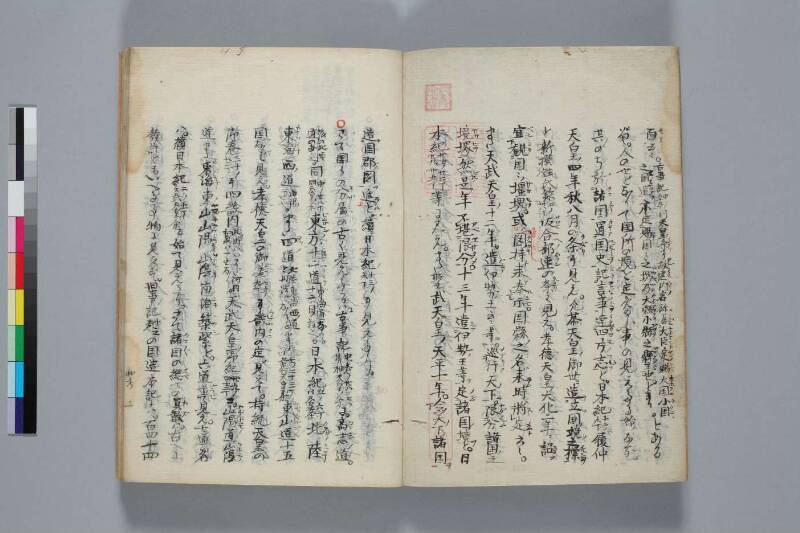
翻刻
【右丁】
面(モ) ̄ト_一云々。《割書:古事記《割書:中ノ|五十九丁》同天皇 ̄ノ条(クダリ)に故(カレ)建内(タケウチ) ̄ノ宿祢 ̄ヲ為(シ玉ヒ)_二 大臣(オホオミ) ̄ト_一【訓点の脱落】定(サダメ)-_二賜(玉ヒ)大国小国(オホクニヲクニ) ̄ノ|之 国造(クニノミヤツコ) ̄ヲ_一亦定-_二賜 ̄ヒキ国々之 堺(サカヒ)及(マタ)大県小県之(オホアガタヲアガタノ)県主(アガタヌシ) ̄ヲ_一也。とあり。》とある
ぞ。人の世となりて国所の境を定め給ふ事の見えたる始 ̄メ なる。
其 ̄ノ のち於(ニ)_二諸国(クニ〴〵)_一置(オキ) ̄テ_二国史(フビト) ̄ヲ_一記(シルシ) ̄テ_二言事(コトバトコト) ̄ヲ_一達(イタセ) ̄リ_二 四方志(ヨモノフミ) ̄ヲ_一と。日本紀《割書:十二ノ|六丁》履中
天皇 ̄ノ四年秋八月の条(クダリ)に見え。允恭天皇 ̄ノ御世 ̄ニ造 ̄リ_二立 ̄ツ国 ̄ノ境 ̄ノ之 標(シルシ) ̄ヲ_一
と新撰姓氏録《割書:上ノ|卅八丁》坂合部(サカヒヘ) ̄ノ連(ムラシ)の条(クダリ)に見え。孝徳天皇 ̄ノ大化二年 ̄ニ詔 ̄スラク
宜 ̄ベシ_下観(ミ) ̄テ_二国々 ̄ノ「土偏+畺」堺(サカヒ) ̄ヲ_一。或 ̄ハ書(フミニシ)し或 ̄ハ【書からここまで朱書きで挿入】図(カタヲカキ)持 ̄チ来 ̄テ奉 ̄ル_上_レ示(ミセ)。国県 ̄ノ之名 ̄ハ来 ̄ラム時 ̄ニ將(ス)_レ定 ̄メント云々。
また天武天皇 ̄ノ十二年。遣 ̄ハシテ_二伊勢 ̄ノ王云々等 ̄ヲ_一。巡(メグリ)-_二行 ̄テ天 ̄ノ下 ̄ヲ_一。限(サダメ)-_二分(シム)諸国 ̄ノ之
境界(サカヒ) ̄ヲ_一然 ̄レトモ是 ̄ノ年不_レ堪(アヘ)_二限分(エサタメ)_一。十三年遣 ̄シテ_二伊勢 ̄ノ王等 ̄ヲ_一定 ̄メシム_二諸国 ̄ノ境 ̄ヲ_一と。日
本紀《割書:廿五ノ廿ニ丁|廿九ノ卅五丁》等に見え。また聖武天皇 ̄ノ天平十年。令 ̄シテ【「令」の左横に「下」と訓点】_二 天 ̄ノ下 ̄ノ諸国 ̄ヲ_一
【左丁】
造 ̄テ_二国郡 ̄ノ図 ̄ヲ_一進 ̄ラシム_上と。続日本紀《割書:十三ノ|六丁》に見えたり。
〇【朱書き】さて国々の分属(キザミ)の古く見えたるは。古事記《割書:中ツ巻ノ廿八ノヒラ|崇神天皇ノ条》に。高志(コシ) ̄ノ道。
《割書:後の北陸|道の事也。》同《割書:中ノ廿八丁|同天皇 ̄ノ条》東(ヒムカシ) ̄ノ方 ̄ノ十二(トヲマリフタ)道(ミチ)《割書:東海道なり。|十二 ̄ハ国 ̄ノ数也。》日本紀《割書:五ノ六丁|同天皇条》北陸(クヌガノミチ)
東海(ウミツミチ)西 ̄ノ道《割書:山陽|道也。》また四(ヨツ) ̄ノ道《割書:北陸東海西 ̄ノ道|と丹波となり。》また《割書:七ノ二十三丁|景行天皇 ̄ノ条》東山(ヒムカシノヤマ) ̄ノ道十五
国なと見え。孝徳天皇の御巻《割書:廿五ノ|九丁》に畿内(ウチツクニ)の定 ̄メ見えて。持統天皇の
御巻《割書:三十ノ|廿二丁》に四畿内《割書:此 ̄ノ時はいまだ河内|和泉は一国なり。》天武天皇 ̄ノ御紀《割書:廿九ノ|四十二丁》に。山陽(カゲトモ) ̄ノ道 山陰(ソトモ) ̄ノ
道また東海(ウミツミチ)東 ̄ノ山(ヤマノミチ)山陽(カケトモノミチ)山陰(ソトモノミチ)南 ̄ノ海(ミチ)築紫(ツクシ)と。六道 並(ナラビ)て見え。七道の名
は。続日本紀《割書:二ノ五丁|文武天皇 ̄ノ条》に始て見えたり。さて諸国(クニ〴〵)の総(スベ)ての員数(カズ)は。古へに
幾許ともいへる事物に見えす。旧事記《割書:十之|巻》の国造本記には。百四十四
和考 二
現代語訳
【右丁】
面」などと云っている。(『古事記』中巻五十九丁の同じ天皇の条には「そこで建内宿禰を大臣とし、大国小国の国造を定め賜い、また国々の境界及び大県小県の県主を定め賜った」とある。)
これが人の世となって国土の境界を定められたことが見える最初である。
その後、諸国に国史を置いて言葉と事柄を記録し、四方志を作成したと、『日本書紀』(巻十二、六丁)履中天皇四年秋八月の条に見え、允恭天皇の御世に国境の標識を造り立てたと『新撰姓氏録』(上巻三十八丁)坂合部連の条に見える。
孝徳天皇の大化二年に詔して「国々の境界を視察し、ある物は文書に記し、ある物は図に描いて持参し奉示せよ。国県の名前は来る時に定めるであろう」などと云っている。
また天武天皇十二年に伊勢王等を遣わして、天下を巡行させ、諸国の境界を区分して定めさせたが、この年は区分を完成できず、十三年に伊勢王等を遣わして諸国の境を定めさせたと『日本紀』(巻二十五の二十二丁、二十九の三十五丁)等に見える。
また聖武天皇の天平十年に、天下の諸国に命じて
【左丁】
国郡の図を作って進上させたと『続日本紀』(巻十三、六丁)に見えている。
○さて国々の区分で古く見えるものは、『古事記』(中巻二十八ページ、崇神天皇の条)に「高志道」(後の北陸道のことである)、同書(中巻二十八丁、同天皇の条)に「東方十二道」(東海道である。十二は国の数である)、『日本紀』(巻五、六丁、同天皇条)に「北陸道、東海道、西道」(山陽道である)、また「四つの道」(北陸道、東海道、西道と丹波である)、また(巻七、二十三丁、景行天皇の条)「東山道十五国」などと見える。
孝徳天皇の御巻(巻二十五、九丁)に畿内の定めが見えて、持統天皇の御巻(巻三十、二十二丁)に「四畿内」(この時はまだ河内と和泉は一国である)、天武天皇の御紀(巻二十九、四十二丁)に「山陽道、山陰道、また東海道、東山道、山陽道、山陰道、南海道、筑紫」と六道が並んで見える。七道の名前は『続日本紀』(巻二、五丁、文武天皇の条)に初めて見えた。
さて諸国の総ての数は、古代にいくつとも言われた記録に見えない。『旧事記』(巻十)の国造本記には百四十四
郷考 二
英語訳
[Right Page]
"face" and so on. (The Kojiki, middle volume, folio 59, in the section on the same emperor states: "Therefore, Takeuchi no Sukune was made great minister, and the provincial governors of large and small provinces were appointed, and the boundaries of various provinces as well as the district chiefs of large and small districts were established.")
This represents the first instance where the establishment of territorial boundaries in human society can be observed.
Thereafter, provincial scribes were appointed in various provinces to record words and events and compile regional chronicles, as seen in the Nihon Shoki (volume 12, folio 6) in the section on Emperor Richū's fourth year, eighth month of autumn. It is recorded that boundary markers for provinces were constructed during Emperor Ingyō's reign, as noted in the Shinsen Shōjiroku (upper volume, folio 38) in the section on Sakaibe no Muraji.
In the second year of Taika under Emperor Kōtoku, an edict was issued stating: "The boundaries of various provinces should be inspected, some recorded in documents, and some drawn in maps to be brought and presented. The names of provinces and districts will be determined when the time comes."
Furthermore, in the twelfth year of Emperor Tenmu, Prince Ise and others were dispatched to tour the realm and establish boundaries between provinces. However, the demarcation could not be completed that year, so in the thirteenth year, Prince Ise and others were again sent to establish provincial boundaries, as recorded in the Nihon Shoki (volume 25, folio 22; volume 29, folio 35).
Also, in the tenth year of Tenpyō under Emperor Shōmu, all provinces throughout the realm were ordered to
[Left Page]
create maps of their provinces and districts and submit them, as recorded in the Shoku Nihongi (volume 13, folio 6).
○ As for the ancient divisions of provinces that can be observed, the Kojiki (middle volume, page 28, section on Emperor Sujin) mentions "Koshi-dō" (referring to the later Hokuriku-dō), and the same work (middle volume, folio 28, same emperor's section) refers to "twelve eastern routes" (referring to the Tōkai-dō; twelve indicates the number of provinces). The Nihon Shoki (volume 5, folio 6, same emperor's section) mentions "Hokurikudō, Tōkaidō, and Nishi-dō" (referring to San'yōdō), as well as "four routes" (Hokurikudō, Tōkaidō, Nishi-dō, and Tanba), and also (volume 7, folio 23, section on Emperor Keikō) "fifteen provinces of Tōsandō."
The imperial volume on Emperor Kōtoku (volume 25, folio 9) shows the establishment of the Kinai, and the imperial volume on Empress Jitō (volume 30, folio 22) mentions "four Kinai provinces" (at this time, Kawachi and Izumi were still one province). In the imperial chronicle of Emperor Tenmu (volume 29, folio 42), six routes are mentioned together: "San'yōdō, San'indō, also Tōkaidō, Tōsandō, San'yōdō, San'indō, Nankaidō, and Tsukushi." The name "seven routes" first appears in the Shoku Nihongi (volume 2, folio 5, section on Emperor Monmu).
As for the total number of all provinces, no ancient records specify an exact count. The Kokuzō Honki in the Kuji Honki (volume 10) lists one hundred and forty-four.
Village Study, Volume 2