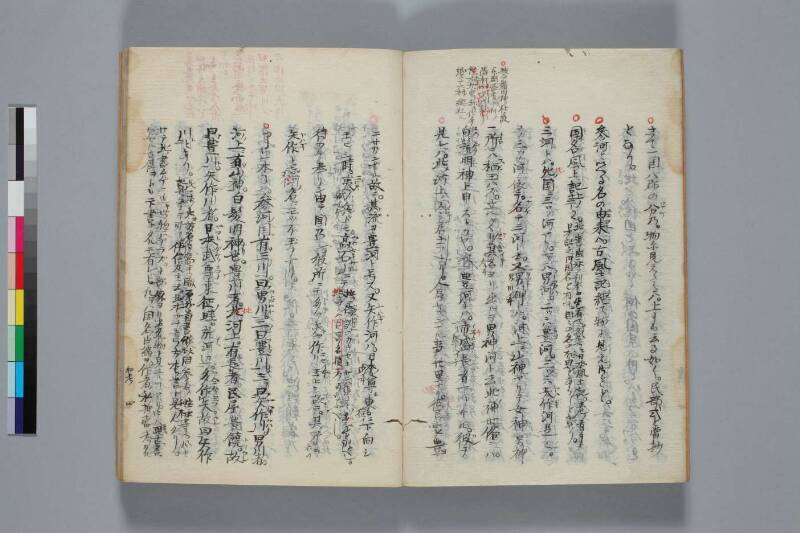
翻刻
【右丁 行頭の〇は朱書き】
〇さて一国八郡の分(ワカチ)の。物に見えたるは。上にも云る如く。民部式と当抄
となり。
〇参河といへる名の由来(ユエヨシ)は。古風土記 絶(タエ)て物に見えざれど。
〇国名風土記《割書:上ノ|十二丁》 に。《割書:此 ̄ノ書宝永ノ刊本ニ此已有て。題号ニ日本風土記。巻ノ首に|日本記【ママ】之内国名と有て。国々の名の故(ユヘ)由をあら〳〵と記せり。》
〇【〇を見せ消ち】三河トハ。此 ̄ノ国 ̄ニ三ッノ河アリ。一《割書:ツ》ニハ男河(ヲトコカハ)。二《割書:ツ》ニハ豊(トヨ)河。三《割書:ツ》ニハ矢作(ヤハギ)河是也。
コノ三ツノ河ニ依テ。名(ナツケ)テ三河ト云。又 男(ヲツト)【左横に「男川イ本」と傍記】神トハ。河上 ̄ニ山神アリテ女神男神
一所(トコロ)ニハ栖(スミ)玉ハズ。立ヘダヽリテスミ玉フイ本。其名【「名」の左横に「処イ本」と傍記】ヨリ出ルヲ男神河ト云此 ̄ノ神世俗ニハ。
白鬚(シラヒゲノ)明神ト申ストカヤ。次ニ豊河トハ。市盛(イチモリ)【「市盛」の左横に「一リノ盛ナルイ本」と傍記】 ̄ノ長者アリケル。彼(カレ)ヲ
見レバ。此 ̄ノ河上ニスミ居玉フナリ。【「スミ居玉フナリ」の右横に「イ本ナシ」と記し線で見せ消ち】人屋サカンナル事廿里ナリ。彼 ̄ノ民家 豊(トヨ)
【左丁】
ニサカンナル故ニ。其 ̄ノ流を豊河ト号ス。又 矢作(ヤハギ)河ハ。日本尊【「尊」の右肩に挿入記号を付け、左肩に「武イ本」と傍記】。東〇【〇の左横に「征イ」と傍記】 ̄ニ下向シ
玉ヒシ時。夷(エビス)ノ兵ド【「ノ兵ド」を半丸かっこで括り「賊イ本」と傍記】モ。高石山(カウセキサン)ニテ《割書:按フニ傍(カタヘ)訓(カナ)のカウセキサンは誤にて。タカシ山と訓 ̄ム べし。|此事ハ古哥名積【注】考五いふべし。》
【注 「古哥名積」を朱で四角く囲んでいる。古哥名「蹟」とあるところか】
待カケ奉リシ由ニ聞召シ。彼 ̄ノ所ニテ多ク矢ヲ作リ【「リ」の右横に「ラセイ本」と傍記】玉ヒシ故ニ。其 ̄ノ所〇ヲ【左横に「名イ」と傍記】
矢作(ヤハギ)トモ。〇河【左肩に「メ或はヌ、イ」と傍記】 ̄ノ名ニモツケ玉フナリ。
〇また一本には。参河 ̄ノ国 ̄ニ有 ̄リ_二 三 ̄ツノ川_一。曰 ̄フ_二男川(ヲトコガハト)_一。二 ̄ノ曰 ̄フ_二豊(トヨ)川 ̄ト_一 三 ̄ヲ曰 ̄フ_二矢作川(ヤハキカハ) ̄ト_一。男川 ̄ハ者。
河 ̄ノ上 ̄ニ有 ̄リ_二山神_一。白髪明神 ̄ナリ也。豊川 ̄ハ者。北【「北」を見せ消ちにして右横に「此」と朱書き】河上。有 ̄リ_二長者_一。民屋豊饒 ̄ナリ。故(カレ)
曰 ̄フ_二 豊川 ̄ト_一。矢作川 ̄ハ者。日本武尊(ヤマトダケノミコト)【ママ】東征 ̄ノ時 ̄ニ。於 ̄テ_二【返り点「二」が脱落】河辺 ̄ニ_一。多(サハニ) 作(ハキ玉フ)_レ矢 ̄ヲ故(カレ)曰_二矢作
川 ̄ト_一【返り点「二」とあるは誤記】とあり。《割書:此一本ノ文。藤原惺窩主職原抄首書《割書:寛文|刊本》同参考《割書:宝永|刊本》等 ̄ニ。風土|記抄ニ云トテ引リ。伴信友主云。此本カナ書ノ方本ツ書ト見え【ママ】タリ。》
サテ此 ̄ノ書ムゲニ近 ̄キ世 ̄ノ物 ̄ニ ハアラズ。卜部家ヨリ出タル物ト見ユルコトアリ。中 ̄ニ ハ現(ウツヽ) ̄ノ古書 ̄ニ
記セル古伝【傳】ヲトリテ書キタルモ有レド。凡 ̄テ ハ国名 ̄ノ由緒ヲ。作者 ̄ノ私 ̄ノ押当 ̄ニ考タル
和考 四
【右丁 頭部】
〇按白鬚明神ノ社ノ設
楽郡長者 平(ヒラ)村ノ
隣村手【「手」の右横に「チ」と朱書き】洗所【「洗所」の左横に「ヤレイ」と朱書き】村ニアリテ
俗 ̄ニ本地(ホンヂ) ̄ノ宮 ̄ト称 ̄ス作手
郷三十六村 ̄ノ総社也
現代語訳
【右丁】
○さて一国八郡の区分が記録に見えるのは、上にも言った通り、『民部式』と『当抄』である。
○三河という名の由来は、古風土記が絶えて記録に見えないが、
○『国名風土記』(上巻十二丁)に(この書は宝永の刊本にあって、題号に『日本風土記』とあり、巻の冒頭に「日本記之内国名」とあって、国々の名の由来をおおまかに記している)
三河とは、この国に三つの河がある。一つには男河、二つには豊河、三つには矢作河である。この三つの河によって、名づけて三河という。また男神とは、河上に山神があって、女神男神が一か所には住まれず、隔てて住まれる。その名から出るのを男神河という。この神を世俗には白鬚明神と申すとか。次に豊河とは、市盛の長者がいた。彼を見れば、この河上に住んでおられるのである。人家が栄えることが二十里である。その民家が豊
【左丁】
かに栄えるゆえに、その流れを豊河と号する。また矢作河は、日本武尊が東征に下向された時、蝦夷の賊徒が高石山にて(考えるに傍訓のカウセキサンは誤りで、タカシ山と読むべきである。この事は『古歌名跡考』で述べよう)
待ち伏せ申し上げたと聞こし召し、その所にて多く矢を作らせられたゆえに、その所を矢作とも、河の名にもつけられたのである。
○また一本には、「三河国に三つの川がある。一を男川という。二を豊川という。三を矢作川という。男川は、河の上に山神がある。白髪明神である。豊川は、この河上に長者がある。民屋が豊かである。ゆえに豊川という。矢作川は、日本武尊東征の時に、河辺にて多く矢を作られた。ゆえに矢作川という」とある。(この一本の文は、藤原惺窩の『職原抄首書』(寛文刊本)、同『参考』(宝永刊本)等に、風土記抄にいうとして引用されている。伴信友が言うには、この本は仮名書きの方が本来の書きと見えている)
さてこの書は全く近世のものではない。卜部家より出た物と見えることがある。中には実際の古書に記された古伝を取って書いたものもあるが、おおむねは国名の由緒を、作者の私的な推測で考えた
和考 四
【右丁頭部】
○考察:白鬚明神の社は設楽郡長者平村の隣村、手洗所村にあって、俗に本地の宮と称する。作手郷三十六村の総社である。
英語訳
[Right Page]
○ Now, regarding the division of one province into eight districts, what appears in records is, as mentioned above, the Minbushiki and the Tōshō.
○ As for the origin of the name "Mikawa," although ancient provincial gazetteers (fudoki) have been lost and do not appear in records,
○ In the Kokumei Fudoki (upper volume, folio 12) (this work exists in a Hōei period printed edition, titled "Nihon Fudoki," with "Nihon-ki no uchi kokumei" at the beginning of the volume, roughly recording the origins of the names of various provinces):
"Mikawa" refers to three rivers in this province. The first is the Otoko River, the second is the Toyo River, and the third is the Yahagi River. From these three rivers, it was named Mikawa. Regarding the male deity, there is a mountain deity upstream, and the female and male deities do not dwell in one place but live separately. From this name comes the Male Deity River. This deity is commonly called Shirahige Myōjin. Next, regarding the Toyo River, there was a wealthy man of Ichimori. Looking at him, he dwelt upstream of this river. The flourishing of human habitations extended for twenty ri. Because those people's homes were abundant
[Left Page]
and prosperous, that waterway was called Toyo River. Also, regarding the Yahagi River, when Prince Yamatotakeru went east on his expedition, he heard that Emishi rebels were lying in wait at Mount Takashi (upon consideration, the marginal reading "Kōsekisan" is incorrect; it should be read as "Takashi-yama." This matter will be discussed in the Koka Meiseki-kō),
and at that place he had many arrows made, so that place was called Yahagi, and the river was also given that name.
○ Another version states: "In Mikawa Province there are three rivers. The first is called Otoko River. The second is called Toyo River. The third is called Yahagi River. Otoko River has a mountain deity upstream. It is Shirahige Myōjin. Toyo River has a wealthy person upstream. The people's houses are prosperous. Therefore it is called Toyo River. Yahagi River is where Prince Yamatotakeru, during his eastern expedition, made many arrows by the riverside. Therefore it is called Yahagi River." (This version is quoted in Fujiwara Seika's Shokugenshō Shusho (Kanbun printed edition), and his Sankō (Hōei printed edition), etc., as being from a fudoki extract. Ban Nobutomo states that in this version, the kana writing appears to be the original form.)
Now, this work is not entirely from recent times. There are indications it originated from the Urabe family. Some parts take ancient traditions recorded in actual old books, but generally the origins of province names are considered through the author's private conjectures.
Wakō 4
[Right Page Header]
○ Note: The shrine of Shirahige Myōjin is located in Tearaisho village, neighboring Chōjahira village in Shitara District, commonly called Honchi no Miya. It is the general shrine of the thirty-six villages of Tsukude Township.