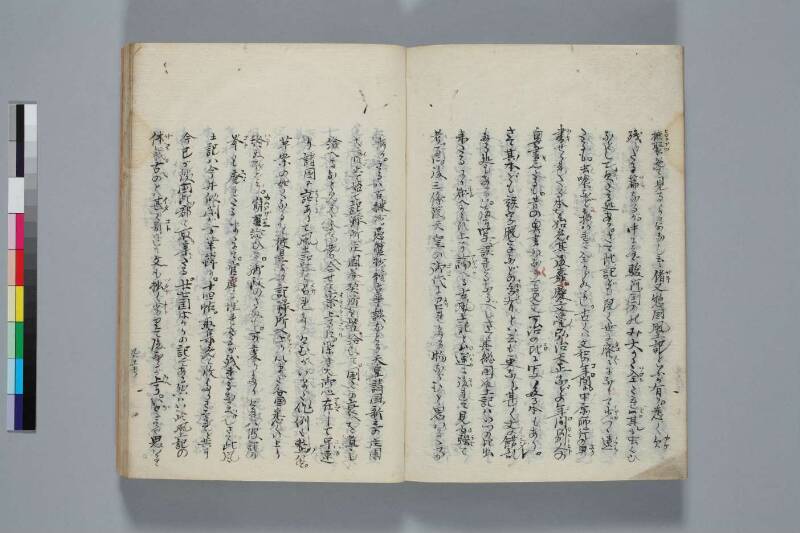
翻刻
【右丁】
摭聚(ヒロヒアツ)めて見るより外なし云々 偖(サテ)又惣国風土記といふが有り。悉く欠(カケ)
残りたる篇(フミ)なるが。中にたゞ駿河 ̄ノ国ののみ大かた全(ソロヒ)たれど【「は」を見せ消ちにして「ど」を傍記】。其 ̄レ も虫くひ
なとして欠(カケ)たる処あり。さて此 ̄ノ記ども既(ハヤ)【振り仮名は朱書き】くよ世に廃々(タエ〴〵)になり【「し」を見せ消ちにして「り」と朱書き】て少(イサヽカ)づゝ遺(ノコリ)
たるも。虫喰などに【「も」を見せ消ちにして「に」と朱書き】損はれて全からぬよし。古くは文和の年間(コロ)に。中原 ̄ノ師行の奥(ホク)
書(カキ)せられたる本を始め其後嘉-慶文-亀弘-治天-正などの年間(コロ)。別人(ヒトヒト)の
奥書 ̄キ したるも。昔の奥書はなく【「ら」を見せ消ちにして「く」と朱書き】て寛文万治の比(コロ)に写たる本もあり。
さて其 ̄ノ本ども誤字脱字などの多有(ヲホカル)とは云も一史なり。甚く丈の錯乱(ミダレ)
たる処もあるは。後に写 ̄シ誤れるなるべしさて其総国風土記はいつの比出
来たるにか知(シル)へからず上に論(アゲツラ)へる古風土記とは。遥(ハルカ)に後(ヲク)れて見ゆ。強(シヒ)て
考 ̄フ るに。後三条院 ̄ノ天皇の御代(ミヨ)に召(メサ)れたる物ならむと思はるゝ事
【左丁】
あり。さるは百練抄。愚管抄。続古事談などに天皇諸国 ̄ノ新奇庄園
を停止(トヽメ)て始て記録所。庄園券契所を置 ̄キ給ひて。国々の衰 ̄ヘ を直し
給へるなと見えたるを。考 ̄ヘ合せて察(オモヒ)上(タテマツル)事に。深き大御心 在(マシマ)して早速(ニハカ)
に諸国に詔(ミコトノリ)ありて風土記を召(メサ)れたりけむがいまだ作例も整(トトノ)はず。
草案の如くなるを彼是より記録所へ上(タテマツリ)り【送り仮名「り」が重複】いまだ各国悉くは上り
終(ハテ)ぬほどに。崩(カムアガ)り給ひて。御政のさまも。万変りたりけれは彼記の
挙(コト)も廃(スタ)れたるまゝにて。官庫に埋れたるが残れるなるべし。さて此風
土記は今井似閑が万葉緯に。十四帖。取集めて収たりき。それと共に
今己が彼 ̄ノ国此 ̄ノ郡と取 ̄リ集 ̄メ たる。廿七国ばかりの記ぞある然はいへ此風土記の
体裁(サマ)。古 ̄ヘ のとは甚(イタ)く別(コト)にして文も拙(ツタナ)く劣(オト)りて後なるが上(ウヘ)に。いかにぞや思はるゝ
風土記考 四
現代語訳
【右丁】
収集して見る以外にない、云々。さて、また「惣国風土記」というものがある。すべて欠損して残った書物であるが、その中でただ駿河国のもののみがほぼ完全に揃っているものの、それも虫食いなどで欠けた箇所がある。さて、これらの記録は既に世の中で廃絶に瀕しており、わずかずつ残っているものも、虫食いなどで損なわれて完全ではない様子である。古くは文和年間(1352-1356)に中原師行が奥書を記した本を始めとして、その後嘉慶・文亀・弘治・天正などの年間に、別々の人々が奥書したものもある。昔の奥書はなくて、寛文・万治の頃(1661-1673)に写した本もある。さて、その本どもは誤字脱字などが多いとはいえ、一つの史書である。甚だしく文章が錯乱した箇所もあるのは、後に写し間違えたのであろう。さて、その総国風土記がいつ頃出来たものか知ることはできない。上に論じた古風土記とは、はるかに後のもののように見える。強いて考えるに、後三条院天皇の御代(1068-1073)に召された物であろうと思われることが
【左丁】
ある。そのことは、百練抄、愚管抄、続古事談などに「天皇が諸国の新奇庄園を停止して、初めて記録所・庄園券契所を置かれて、国々の衰退を正された」などと見えるのを、考え合わせて推察申し上げることに、深い大御心があって早速に諸国に詔があって風土記を召されたのであろうが、まだ作成の例も整わず、草案のようなものを彼方此方より記録所へ献上したが、まだ各国すべてが献上し終わらないうちに、崩御されて、御政治の様子も、すべて変わったので、あの記録のことも廃れたままで、官庫に埋もれていたものが残っているのであろう。さて、この風土記は今井似閑が『万葉緯』に十四帖として取り集めて収録した。それと共に今、自分があの国この郡と取り集めた、二十七国ばかりの記録がある。しかしながら、この風土記の体裁は、古来のものとは甚だしく異なっており、文章も拙く劣っていて後世のものである上に、どうしてかと思われる
風土記考 四
英語訳
[Right page]
There is nothing else but to collect and examine them, etc. Now, there is also something called "Sōkoku Fudoki" (General Provincial Gazetteer). This consists entirely of fragmentary and incomplete volumes, but among them only that of Suruga Province is mostly complete, though it too has gaps due to insect damage and such. Now, these records have already fallen into disuse in the world, and even the little that remains in fragments has been damaged by insect holes and other causes, rendering them incomplete. The oldest versions include a copy with a postscript written by Nakahara no Morotsune during the Bunwa era (1352-1356), followed by copies with postscripts by various individuals during the Kakei, Bunki, Kōji, and Tenshō eras. There are also copies made during the Kanbun-Manji period (1661-1673) that lack the old postscripts. Now, while these books contain many erroneous and missing characters, they constitute historical records nonetheless. The severely corrupted passages were likely caused by copying errors in later times. When this General Provincial Gazetteer was compiled cannot be determined. It appears to be much later than the ancient fudoki discussed above. If we must conjecture, it seems likely to have been commissioned during the reign of Emperor Go-Sanjō (1068-1073), for which there is
[Left page]
evidence. This is because works such as Hyakurenshō, Gukanshō, and Zoku Kojidan record that "the Emperor halted the establishment of novel private estates in various provinces and for the first time established the Records Office and the Private Estate Document Office, thereby correcting the decline of the provinces." Considering this together, one can surmise that with deep imperial concern, edicts were quickly issued to the various provinces calling for fudoki, but since precedents for compilation were not yet established, draft-like documents were submitted from here and there to the Records Office. However, before all provinces had finished their submissions, the Emperor passed away, and the entire system of governance changed, so the matter of these records was abandoned and they remain buried in the official archives. Now, this fudoki was collected and compiled by Imai Jikan in his Man'yōshū-i in fourteen volumes. Along with this, I myself have now collected records from about twenty-seven provinces, gathering material from this province and that county. However, the format of this fudoki is vastly different from the ancient ones, and the writing is crude and inferior, clearly being from a later period, which raises questions about
Fudoki Considerations Volume 4