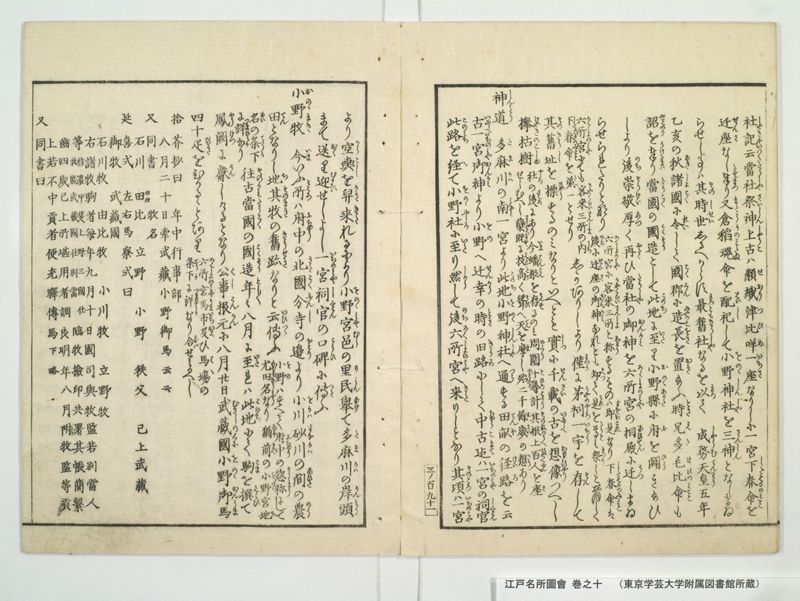
翻刻
【右丁】
社記云(しやきにいはく)当社(たうしや)祭神(さいしん)上古(しやうこ)は瀬織津比咩(せおりつひめ)一座(いちさ)なりしに一宮 下春命(したはるのみこと)を
遷座(せんさ)なし奉(たてまつ)り又(また)倉稲魂(うかのみたま)命を配祀(はいし)して小野神社(おのゝしんしや)を三神(さんしん)となしまゐ
らせし事は其(その)時世(しせい)しるへからす最(もつとも)舊社(きうしや)なるを以(もつ)て 成務天皇(しやうむてんわう)五年
乙亥の秋(あき)諸国(しよこく)に令(れい)して国郡(こくくん)に造長(みやつこをさ)を置(おき)給ふ時(とき)兄多毛比命(えたけひのみこと)も
詔(みことのり)を奉(うけたまは)り当国(たうこく)の国造(こくそう)として此地(このち)に至(いた)り小野県(おののあかた)に府(ふ)を闢(ひら)き給ひ
しより後(のち)崇敬(そうけい)厚(あつ)く再(ふたゝ)ひ当社(たうしや)の御神(おんかみ)を六所宮(ろくしよのみや)の相殿(あひてん)に遷(うつ)しまゐ
らせられたりとなり《割書:六所宮(ろくしよのみや)に客来三所(きやくらいさんしよ)と称(しよう)するものは即(すなはち)是(これ)なり下春命(したはるのみこと)は|後(のち)に遷座(せんさ)の御神(おんかみ)なれとも却(かへつ)て是(これ)を尊(たうと)み祭(まつり)しとおほしく》
《割書:六所宮(ろくしよのみや)にても客来三所(きやくらいさんしよ)の内(うち)|下春命(したはるのみこと)を弟(たい)【第】一とせり》しかありしより僅(わつか)に茅祠(かやのやしろ)一宇(いちう)を存(そん)して
其(その)舊址(きうし)を標(ひやう)するのみなりといへとも実(しつ)に千載(せんさい)の古(いにしへ)を想像(おもひやり)つへし
欅枯樹(けやきのこしゆ)《割書:社(やしろ)の後(うしろ)にあり今(いま)蟠根(はんこん)を存(そんす)るのみ周囲(めくり)十尋(とひろ)計(はかり)其(その)根上(ねのうへ)百人(ひやくにん)を座(さ)|せしむへし蘖(わかはへ)既(すて)に枝(えた)高(たか)く聳(そひ)へ天(てん)を摩(ま)し殆(ほとんと)二千 余歳(よさい)の想(さう)あり》
神道(しんたう) 多麻川(たまかは)の南(みなみ)一宮より此地(このち)小野神社(をのゝしんしや)へ通(つう)する田畒(てんほ)の径路(けいろ)を云
古(いにしへ)一宮(いちのみや)御神(おんかみ)より小野(をの)へ遷幸(せんかう)の時(とき)の旧路(きうろ)にして中古(ちゆうこ)迠(まて)は一宮(いちのみや)の祠官(しくわん)
此路(このみち)を経(へ)て小野社(をのゝやしろ)に至(いた)り然(しかう)して後(のち)六所宮(ろくしよのみや)へ来(きた)りしとなり其頃(そのころ)は一宮(いちのみや)
【枠外】 三ノ百九十一
【左丁】
より空輿(からこし)を舁来(かききた)れるにより小野宮邑(をのゝみやむら)の里民(りみん)挙(あけ)て多麻川(たまかは)の岸頭(かんとう)
まて送(おく)り迎(むかひ)せしよし一宮祠官(いちのみやしくわん)の口碑(こうひ)に伝(つた)ふ
小野牧(おのゝまき) 今(いま)いふ所(ところ)は府中(ふちゆう)の北(きた)国分寺(こくふんし)の辺(ほとり)より小川(をかは)砂川(すなかは)の間(あいた)の農(のう)
田(てん)となりし地(ち)其牧(そのまき)の旧跡(きうせき)なりと云傳(いひつた)ふ《割書:小野(をの)はすへて府中(ふちゆう)の惣称(そうしよう)にして|尤(もつとも)旧名(きうみやう)なり猶(なほ)前(まへ)の小野(をのゝ)宮 地(ち)》
《割書:名(めい)の条下(てうか)|に詳(つまひらか)なり》往古(そのかみ)当国(たうこく)の国造(こくそう)年々(とし〳〵)八月に至(いた)れは此地(このち)にて駒(こま)を撰(えらひ)て
鳳闕(ほうけつ)に獻(けん)しけるとなり公事根元(くしこんけん)に八月廿日 武蔵国(むさしのくに)小野(をのゝ)御馬(おんうま)
四十 疋(ひき)をひかるゝとあり《割書:六所宮(ろくしよのみや)馬市(うまいち)及(およ)ひ馬場(はゝ)の|条下(てうか)に詳(つまひらか)なり合(あは)せみるへし》
拾芥抄曰 年中行事部
八月二十日牽武蔵小野御馬云々
又同書 牧名
石川 田(由歟)比 立野 小野 秩父 己上武蔵
延喜式 左右馬寮式曰
御牧 武蔵国
石川牧 由比牧 小川牧 立野牧
右諸牧駒者毎年九月十日国司与牧監若別当人
等《割書:信濃甲斐上野三国仕|牧監武蔵国仕別当》臨牧撿印共署其帳簡繋
歯四歳己上所堪用者調良明年八月附牧監等貢
上若不中貢者便充駅伝馬《割書:下略》
又同書曰
現代語訳
【右丁】
社記によれば、当社の祭神は上古は瀬織津比咩一座であったが、一宮の下春命を遷座申し上げ、また倉稲魂命を配祀して小野神社を三神としたということである。その時代は明らかではないが、最も古い社であるため、成務天皇五年乙亥の秋、諸国に令して国郡に造長を置かれた時、兄多毛比命も詔を受けて当国の国造として此地に至り、小野県に府を開かれてから後、崇敬が厚く、再び当社の御神を六所宮の相殿に遷し申し上げられたという。《六所宮に客来三所と称するものは即ちこれである。下春命は後に遷座された御神であるが、かえってこれを尊び祭ったと思われる》
《六所宮でも客来三所の内、下春命を第一としている》このようであったため、わずかに茅葺きの祠一宇を存して、その旧址を示すのみであるが、実に千年の昔を想像することができる。
欅の枯木《社の後ろにある。今は根株を存するのみ。周囲十尋ほど。その根の上に百人を座らせることができる。若芽がすでに枝高く聳え天に届き、ほとんど二千余年の様相がある》
神道 多摩川の南、一宮から此地小野神社へ通じる田畑の小径をいう。古く一宮の御神が小野へ遷幸された時の旧路で、中古まで一宮の祠官がこの路を経て小野社に至り、そして後に六所宮へ来たという。その頃は一宮
【左丁】
から空の輿を担ぎ来たため、小野宮村の里民が挙って多摩川の岸辺まで送り迎えしたという。一宮祠官の口伝に伝わる。
小野牧 今いう所は府中の北、国分寺の辺りから小川・砂川の間の農田となった地で、その牧の旧跡であると言い伝えられる。《小野はすべて府中の総称で、最も古い名前である。なお前の小野宮地名の条下に詳しい》
往古、当国の国造が年々八月に至ると、此地で駒を選んで朝廷に献上したという。公事根元に「八月二十日 武蔵国小野御馬四十疋を牽く」とある。《六所宮馬市及び馬場の条下に詳しい。あわせて見るべし》
拾芥抄に曰く 年中行事部
八月二十日牽武蔵小野御馬云々
また同書 牧名
石川 田(由歟)比 立野 小野 秩父 已上武蔵
延喜式 左右馬寮式に曰く
御牧 武蔵国
石川牧 由比牧 小川牧 立野牧
右諸牧駒者毎年九月十日国司与牧監若別当人等《信濃甲斐上野三国は牧監を置く、武蔵国は別当を置く》臨牧撿印共署其帳簡繋歯四歳已上所堪用者調良明年八月附牧監等貢上若不中貢者便充駅伝馬《以下略》
また同書に曰く
英語訳
【Right Page】
According to the shrine records, the deity of this shrine was originally Seoritsu-hime alone, but later Shitaharu-no-mikoto from Ichinomiya was transferred here, and Uka-no-mitama-no-mikoto was enshrined as well, making Ono Shrine a shrine of three deities. The period when this occurred is unclear, but being the most ancient shrine, in the fifth year of Emperor Seimu, year of kinoto-i, autumn, when an imperial decree was issued to establish provincial governors in all provinces, Etakemohi-no-mikoto also received the imperial command and came to this land as provincial governor of this province, establishing his seat in Ono County. After this, veneration became deep, and the deity of this shrine was again transferred to the auxiliary hall of Rokushō Shrine. 《What is called "Kyakurai Sansho" (Three Visiting Deities) at Rokushō Shrine refers to this. Though Shitaharu-no-mikoto was a deity transferred later, it seems this deity was especially revered and worshipped》
《At Rokushō Shrine as well, among the Three Visiting Deities, Shitaharu-no-mikoto is considered first》 Due to this history, only a single thatched shrine building remains to mark the old site, but one can truly imagine the thousand-year past.
Withered zelkova tree 《Located behind the shrine. Now only the root remains. About ten fathoms in circumference. A hundred people could sit on its roots. Young shoots already grow tall and reach toward heaven, giving an impression of nearly two thousand years》
Shintō (Sacred Path): Refers to the path through fields from Ichinomiya south of the Tama River to Ono Shrine at this location. This is the old route from ancient times when the deity of Ichinomiya was transferred to Ono. Until the medieval period, the shrine officials of Ichinomiya would take this route to reach Ono Shrine and then proceed to Rokushō Shrine. At that time, from Ichinomiya
【Left Page】
an empty palanquin was carried, so all the villagers of Ono-no-miya village would escort and welcome it to the banks of the Tama River. This is preserved in the oral tradition of Ichinomiya shrine officials.
Ono Ranch: The area referred to today extends from around Kokubunji north of Fuchū to the farmland between Ogawa and Sunagawa, and is said to be the old site of that ranch. 《Ono is the general name for all of Fuchū and is the most ancient name. Details are in the previous section on Ono-no-miya place names》
In ancient times, the provincial governor of this province would select horses at this location every year in the eighth month to present to the imperial court. The Kuji Kongen records: "Twentieth day of eighth month: Leading forty horses from Ono in Musashi Province." 《Details are in the sections on Rokushō Shrine horse market and riding grounds. See those sections as well》
The Shūgaishō states: Annual Events Section
Twentieth day of eighth month: Leading horses from Ono in Musashi, etc.
The same work also lists: Ranch Names
Ishikawa, Ta(Yu?)hi, Tachino, Ono, Chichibu - All in Musashi
The Engi-shiki, Left and Right Horse Bureau regulations state:
Imperial Ranches, Musashi Province
Ishikawa Ranch, Yuhi Ranch, Ogawa Ranch, Tachino Ranch
For horses from these ranches: Every year on the tenth day of the ninth month, the provincial governor together with ranch supervisors or deputy administrators 《Shinano, Kai, and Kōzuke provinces use ranch supervisors; Musashi Province uses deputies》 visit the ranches to inspect and brand them, signing the records together. Four-year-old and older horses suitable for use are selected and trained, then presented by ranch supervisors and others in the eighth month of the following year. Those unsuitable for presentation are used as post-station horses 《remainder omitted》
The same work also states: