翻刻
【右丁】
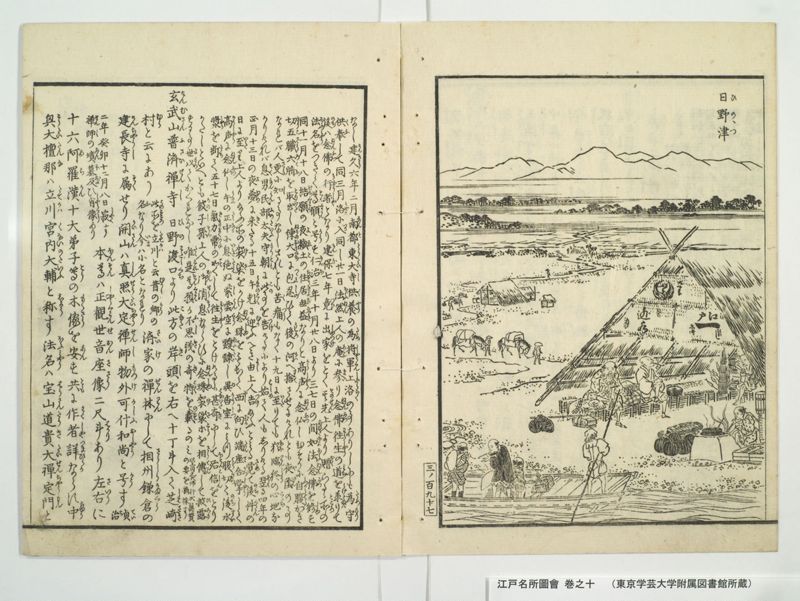
日野津(ひのゝつ)
【暖簾】
江戸 一 高崎
近藤
【枠外】 三ノ百九十七
【左丁】
《割書:なし建久(けんきう)六年二月 南都(なんと)東大寺(とうたいし)供養(くやう)の為(ため)将軍(しやうくん)上洛(しやうらく)の事ありしにも為守(ためもり)|供奉(くふ)して同三月 洛(みやこ)に入(いる)同し廿一日 法然(ほふねん)上人の庵(あん)に参(まい)り念仏往生(ねんふつわうしやう)の道(みち)を承(うけたまは)りて|の後(のち)は念仏(ねんふつ)の行者(きやうしや)となり建保(けんほ)七年 竟(つひ)に出家(しゆつけ)をとく其先(そのせん)上人より贈(おく)らるゝ所(ところ)の|法名(ほふみやう)をつきて尊願(そんくわん)と号(かう)す仁治(にんち)三年十月廿八日より三七日の間(あひた)如法念仏(によほふねんふつ)を修(しゆ)す|同十一月十八日 結願(けちくわん)の夜(よ)穢土(ゑと)の住居(ちゆうきよ)無益(むゑき)なりと高声(かうしやう)に念仏(ねんふつ)しひそかに自(みつから)腹(はら)かき|切(きり)五臓六腑(こさうろくふ)を取出(とりいた)し練(ねりの)大口(おほくち)に包(つゝみ)忍(しの)ひて後(うしろ)の河(かは)へ捨(すて)させにけれとも夜陰(やいん)の事|なれば人 更(さら)に知(し)る事なしされとも苦痛(くつう)もなく十九日に至(いた)りても猶(なほ)臨終(りんしう)の心地(こゝち)な|かりければ息男(そくなん)民部太夫守朝(みんふのたいふもりとも)に此(この)事を告(つけ)けるにより始(はしめ)て人もしりける翌(あく)る四年の|正月十三日の夜(よ)夢(ゆめ)に来(き)たる十五日 午剋(うまのこく)に迎(むか)ふへき由(よし)上人 告(つけ)給ふとみる覚(さめ)て後(のち)件(くたん)の|日に至(いた)り上人より給ふ所の袈裟(けさ)をかけ念珠(ねんしゆ)をもちて西(にし)に向(むか)ひ端座(たんさ)合掌(かつしやう)して|高声(かうしやう)に念仏(ねんふつ)し午(うま)の正中(たゝなか)に息(いき)絶(たえ)ぬ紫雲(しうん)空(くう)に靉霴(あいたい)【靆】し異香(ゐかう)室(しつ)にみつ腹切(はらきり)て後(のち)水(すい)|漿(しやう)を断(たち)て五十七日 気力(きりよく)常(つね)の如(こと)くして往生(わうしやう)をとけけるも甚(はなはた)奇(き)にして殆(ほとんと)信(しん)をとり|かたしといへとも彼(かの)子孫(しそん)上人の御消息(おんせうそく)ならひに念珠(ねんしゆ)袈裟(けさ)等(とう)を相伝(さうてん)して披露(ひろう)|する事 世(よ)以(もつ)てかくれなし唯(たゝ)是(これ)尊願(そんくわん)か不思議(ふしき)の奇特(きとく)を載(のす)るのみ《割書:以上円光大師行状翼賛|の要を摘採す》》
玄武山(けんむさん)普済禅寺(ふさいせんし) 日野渡口(ひのわたしくち)より此方(こなた)の岸頭(きし)を右へ十丁斗入て芝崎(しはさき)
村(むら)と云にあり《割書:此所(このところ)を立川(たてかは)と云 昔(むかし)の郷(かう)の|名(な)なり今(いま)は小名となれり》済家(さいけ)の禅林(せんりん)にして相州(さうしう)鎌倉(かまくら)の
建長寺(けんちやうし)に属(そく)せり開山(かいさん)は真照大定禅師物外可什和尚(しんせうたいちやうせんしもつけかしふおしやう)と号(かう)す《割書:貞(てい)|治(ち)》
《割書:二年癸卯十二月八日 寂(しやく)す|禅師(せんし)の墳墓(ふんほ)及(およ)ひ肖像(しやうさう)あり》本尊(ほんそん)は正観世音座像(しやうくわんせおんささう)二尺 斗(はかり)あり左右(さいう)に
十六 阿羅漢(あらかん)十大弟子 等(とう)の木像(もくさう)を安(あん)す共(とも)に作者(さくしや)詳(つまひらか)ならす中(ちゆう)
興大檀那(こうたいたんな)は立川宮内大輔(たてかはくないのたいふ)と称(しよう)す法名(ほふみやう)は宝山道貴大禅定門(はうさんたうきたいせんちやうもん)と
現代語訳
【右丁】
日野津(ひのの津)
【暖簾】
江戸 一 高崎
近藤
【左丁】
《建久六年二月、南都東大寺供養のため将軍上洛のことがあったが、為守も供奉して同三月都に入り、同二十一日法然上人の庵に参り念仏往生の道を承って後は念仏の行者となり、建保七年ついに出家を遂げた。その先、上人より贈られた法名を付けて尊願と号した。仁治三年十月二十八日より三七日の間如法念仏を修した。同十一月十八日結願の夜、穢土の住居は無益なりと高声に念仏し、ひそかに自ら腹を切り五臓六腑を取り出し、練り大口に包み忍んで後ろの河へ捨てさせたけれども、夜陰のことなれば人は更に知ることがなかった。されども苦痛もなく十九日に至っても猶臨終の心地がなかったので、息男民部太夫守朝にこの事を告げたことにより初めて人も知るようになった。翌る四年の正月十三日の夜、夢に来る十五日午の刻に迎えるべき由を上人が告げ給うと見た。覚めて後、件の日に至り上人より給う所の袈裟をかけ念珠を持って西に向かい端座合掌して、高声に念仏し午の正中に息絶えた。紫雲が空に靉靆し異香が室に満ちた。腹切って後水漿を断って五十七日、気力常の如くして往生を遂げたのも甚だ奇にして殆ど信を取り難いと言えども、彼の子孫が上人の御消息並びに念珠袈裟等を相伝して披露することは世もって隠れなし。ただこれ尊願の不思議の奇特を載するのみ《以上円光大師行状翼賛の要を摘採する》》
玄武山普済禅寺 日野渡口よりこちらの岸頭を右へ十丁ばかり入って芝崎村というにある。《この所を立川と言う。昔の郷の名なり。今は小名となった》済家の禅林で相州鎌倉の建長寺に属している。開山は真照大定禅師物外可什和尚と号する。《貞治二年癸卯十二月八日寂す。禅師の墳墓及び肖像がある》本尊は正観世音座像二尺ばかりあり、左右に十六阿羅漢十大弟子等の木像を安置する。共に作者は詳らかでない。中興大檀那は立川宮内大輔と称する。法名は宝山道貴大禅定門と
英語訳
【Right Page】
Hinono-tsu (Hino Port)
【Shop curtain】
Edo 一 Takasaki
Kondo
【Left Page】
<<In the second month of Kenkyū 6, when the shogun went up to the capital for the dedication ceremony of Tōdaiji Temple in Nanto, Tamemori also accompanied him and entered the capital in the third month of the same year. On the 21st day, he visited the hermitage of Saint Hōnen and received instruction on the path of nenbutsu rebirth. Thereafter he became a nenbutsu practitioner, and in Kenpō 7 he finally took the tonsure. Previously, he had received a Buddhist name from the saint and called himself Songan. From the 28th day of the 10th month of Ninji 3, he practiced proper nenbutsu for twenty-one days. On the 18th day of the 11th month, the night of the completion of his vows, declaring that dwelling in this impure land was meaningless, he chanted nenbutsu in a loud voice and secretly cut open his own belly, removed his internal organs, wrapped them in white silk, and had them secretly thrown into the river behind. However, since it was during the night, people knew nothing of it. Yet he felt no pain, and even by the 19th day he still did not feel like dying, so he told his son Minbu-no-Taifu Moritomo about this matter, and only then did people come to know of it. On the night of the 13th day of the first month of the following fourth year, he dreamed that the saint told him he would be received on the 15th day at the hour of the horse. After awakening, on that appointed day he put on the kesa received from the saint, held prayer beads, faced west, sat upright with palms together, chanted nenbutsu in a loud voice, and breathed his last at the middle of the horse hour. Purple clouds gathered in the sky and a mysterious fragrance filled the room. Having cut his belly and then abstaining from water and food for fifty-seven days, maintaining his usual strength and achieving rebirth - this was so extraordinary as to be almost incredible. However, his descendants have transmitted and disclosed the saint's letters along with prayer beads, kesa, etc., which is well known to the world. This merely records the miraculous wonders of Songan. <<The above extracts the essentials from the biographical supplements of Great Master Enkō.>>>>
Genbuyama Fusai Zen Temple: Located about ten chō to the right from the riverbank on this side of the Hino ferry crossing, in what is called Shibasaki village. <<This place is called Tatekawa. It was the name of an ancient district, now become a minor place name.>> It is a Zen temple of the Sai school affiliated with Kenchōji Temple in Kamakura, Sagami Province. The founding priest was called Shinshō Taijō Zen Master Motsukai Kashū Oshō. <<He passed away on the 8th day of the 12th month of Jōji 2 (1363). The Zen master's tomb and portrait exist.>> The principal image is a seated statue of Kannon about two shaku tall, with wooden statues of the Sixteen Arhats, Ten Great Disciples, etc. placed on the left and right. The makers of all of them are unknown. The great patron of the restoration was called Tatekawa Kunai-no-Taifu. His Buddhist name was Hōzan Dōki Dai-Zenjōmon.