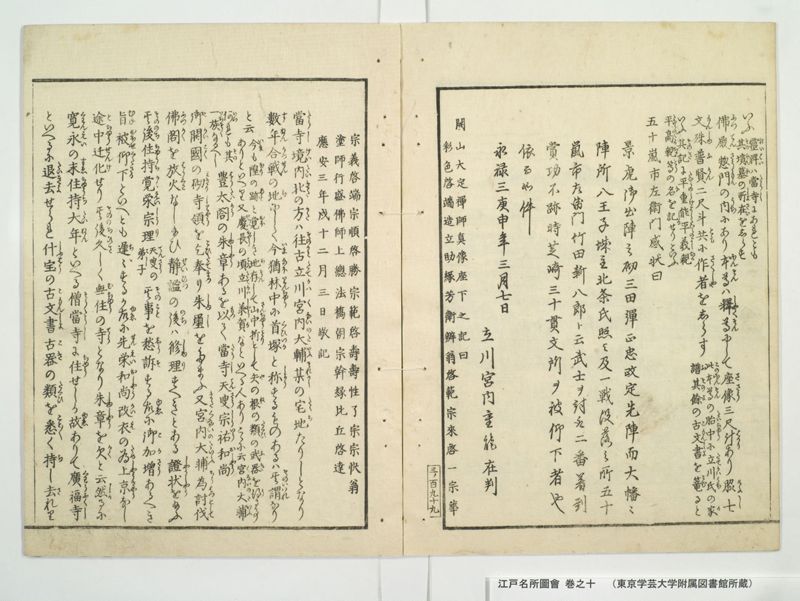
翻刻
【右丁】
いふ《割書:霊牌(れいはい)は当寺(たうし)にあれとも|其(その)墳墓(ふんほ)の所在(しよさい)をしらす》
仏殿(ふつてん)惣門(さうもん)の内(うち)にあり本尊(ほんそん)は釈尊(しやくそん)にして座像(ささう)三尺 計(はかり)あり脇士(けふし)
文殊(もんしゆ)普賢(ふけん)二尺斗 共(とも)に作者(さくしや)をしらす《割書:此(この)本尊(ほんそん)の胎中(たいちゆう)に立川氏(たてかはうち)の家(か)|譜(ふ)其余(そのよ)の古文書(こもんしよ)を篭(こむ)ると》
《割書:いふ其記(そのき)に平重能(たいらのしけよし)平義親(たいらのよしちか)|平高親(たいらのたかちか)等(とう)の名(な)を記(しる)せりといふ》
五十嵐市左衛門感状曰
景虎御出陣之砌三田弾正忠政定先陣而大幡々
陣所八王子城主北条氏照与及一戦没落之所五十
嵐市左衛門竹田新八郎ト云武士ヲ討取二番着到
賞功不跡時芝崎三十貫文所ヲ被仰下者也
依而如件
永禄三庚申年三月七日
立川宮内重能 在判
開山大定禅師真像座下之記曰
彩色啓端造立助縁芳衛辨翁啓範宗来啓一宗華
【枠外】 三ノ百九十九
【左丁】
宗義啓端宗順啓勝宗範啓寿寿性了宗宗快翁
塗師行盛仏師上総法橋朝宗幹縁比丘啓達
応安三年戌十二月三日敬記
当寺(たうし)境内(けいたい)北(きた)の方(かた)は往古(そのかみ)立川宮内大輔(たてかはくないたいふ)某(それかし)の宅地(たくち)たりしとなり
数年(すねん)合戦(かつせん)の地(ち)にして今猶(いまなほ)林中(りんちゆう)に首塚(くひつか)と称(しよう)するものあるは其謂(そのいはれ)なり
と云《割書:今(いま)も隍(ほり)の跡(あと)と覚(おほ)しき地(ち)存(そん)して山中(さんちゆう)折(をり)として矢(や)の根(ね)の類(たくひ)武器(ふき)を得(う)る事|ありといへり又 慶長(けいちやう)の頃(ころ)立川承賀(たてかはしやうか)なといへる人ありこゝに云 宮内大輔(くないのたいふ)》
《割書:何(いつ)れも其(その)|一族(いちそく)なるへし》豊太閤(はうたいかう)の朱章(しゆしやう)あるを以(もつ)て当寺(たうし)天叟宗祐和尚(てんさうしういうおしやう)
御開国(こかいこく)の砌(みきり)寺領(しりやう)を乞(こひ)奉(たてまつ)り朱璽(しゆし)をたまふ又(また)宮内大輔(くないのたいふ)為討伐(ちうはつとして)
仏閣(ふつかく)を放火(はうくわ)なし給ひ静謐(せいひつ)の後(のち)は修理(しゆり)すへきとある證状(しやうしやう)を給ふ
其後(そののち)住持(ちゆうち)覚栄宗理(かくえいしうり)《割書:天叟(てんさう)の|弟子(てし)》其事(そのこと)を愁訴(しうそ)する故(ゆゑ)に御加増(こかさう)あるへき
旨(むね)被仰下(おほせくたさる)といへとも遅々(ちゝ)するか故(ゆゑ)に先栄和尚(せんえいおしやう)改衣(かいえ)の為(ため)上京(しやうきやう)なし
途中(とちゆう)遷化(せんけ)せり其後(そののち)久(ひさ)しく無住(むちゆう)の寺(てら)となり朱章(しゆしやう)を欠(かく)と云 然(しか)るに
寛永(くわんえい)の末(すゑ)住持(ちゆうち)大年(たいねん)といへる僧(そう)当寺(たうし)に住(ちゆう)せしか故(ゆゑ)ありて広福寺(くわうふくし)
といへるに退去(たいきよ)せられ什宝(しふはう)の古文書(こもんしよ)古器(こき)の類(たくひ)悉(こと〳〵)く持(ち)し去(さ)れり
現代語訳
【右丁】
という《割書:霊牌は当寺にあるが、その墳墓の所在は不明である》
仏殿は総門の内にあり、本尊は釈迦如来で座像は三尺ほどある。脇侍は
文殊菩薩・普賢菩薩で二尺ほど、いずれも作者は不明である《割書:この本尊の胎内に立川氏の家系図やその他の古文書を納めているという》
《割書:その記録には平重能、平義親、平高親などの名前が記されているという》
五十嵐市左衛門感状に曰く
景虎公出陣の折、三田弾正忠政定が先陣を務めて大幡々
陣所八王子城主北条氏照と一戦を交え敗走したところ、五十
嵐市左衛門が竹田新八郎という武士を討ち取り二番着到した
功績により芝崎三十貫文の所領を下賜される
よってこの通りである
永禄三庚申年三月七日
立川宮内重能 在判
開山大定禅師真像座下の記に曰く
彩色啓端造立助縁芳衛辨翁啓範宗来啓一宗華
【左丁】
宗義啓端宗順啓勝宗範啓寿寿性了宗宗快翁
塗師行盛仏師上総法橋朝宗幹縁比丘啓達
応安三年戌十二月三日敬記
当寺境内の北の方は昔、立川宮内大輔某の屋敷地であったという。
数年にわたって合戦の地となったため、今でも林中に首塚と称するものがあるのはそのためである
という《割書:今も堀の跡と思われる地形が残っており、山中では時として矢じりの類や武器を発見することがあるという。また慶長の頃、立川承賀という人がいて、これも宮内大輔の一族であろう》
豊臣秀吉の朱印状があることをもって、当寺の天叟宗祐和尚が
徳川家康の開国の際に寺領を願い出て朱印を賜った。また宮内大輔討伐のため
仏閣を放火したが、平定後は修理すべきとある証状を賜った。
その後、住持覚栄宗理《割書:天叟の弟子》がその件を愁訴したため御加増があるべき
旨を仰せ下されたが、遅々として進まないため、栄和尚は改衣のため上京したが
途中で遷化した。その後久しく無住の寺となり、朱印状を失ったという。しかし
寛永末期に住持大年という僧が当寺に住したが、事情があって広福寺
というところに退去させられ、什宝の古文書や古器の類をすべて持ち去られた。
英語訳
【Right Page】
...said 《Note: The memorial tablet is at this temple, but the location of the grave is unknown》
The Buddha Hall is within the main gate. The principal image is Shakyamuni Buddha, a seated statue about three shaku tall. The attendant bodhisattvas are
Manjushri and Samantabhadra, about two shaku each, all of unknown makers 《Note: It is said that genealogical records of the Tatekawa family and other ancient documents are stored within the principal image》
《Note: Those records are said to contain the names of Taira no Shigeyoshi, Taira no Yoshichika, Taira no Takachika, and others》
Igarashi Ichizaemon's commendation letter states:
During Lord Kagetora's campaign, Mita Danjō-chū Masasada led the vanguard at Ōhata々
When they engaged in battle with Hōjō Ujiteru, lord of Hachiōji Castle, and were routed,
Igarashi Ichizaemon killed a warrior named Takeda Shinhachirō, achieving second arrival
For this merit, he was granted the Shibasaki domain of thirty kan-mon
Therefore as recorded
Eiroku 3, Year of the Metal Monkey, 3rd month, 7th day
Tatekawa Kunai Shigenō [with seal]
The record beneath the true image of founding master Daijō Zen Master states:
Painted Keitan, construction assistance Yoshie Ben'ō Keiham Shūrai Keiichi Shūka
【Left Page】
Shūgi Keitan Shūjun Keishō Shūhan Keiju Jushō Ryōshū Shūkai'ō
Lacquerer Gyōsei, Buddhist sculptor Kazusa Hokkyō Asatsuna, patron monk Keitatsu
Respectfully recorded on the 3rd day of the 12th month, 3rd year of Ōan, year of the Dog
The northern part of this temple's grounds was formerly the residence of Tatekawa Kunai-taifu.
Being a battlefield for several years, there are still mounds called "head burial mounds" in the forest, which explains this.
It is said 《Note: Remains of what appear to be moat traces still exist, and arrowheads and weapons are occasionally found in the mountains. Also, around the Keichō era, there was a person called Tatekawa Shōga, who was likely also of the Kunai-taifu lineage》
Based on having Toyotomi Hideyoshi's vermillion seal document, the temple's Abbot Tensō Shūyū
petitioned for temple lands during Tokugawa Ieyasu's unification and received a vermillion seal. Also, for the subjugation of Kunai-taifu,
Buddhist buildings were set on fire, but a certificate was granted stating they should be repaired after pacification.
Later, the resident priest Kakuei Shūri 《Note: disciple of Tensō》 petitioned about this matter, so an increase was to be
granted, but due to delays, Abbot Ei went to Kyoto for ordination ceremony but
died en route. Afterwards the temple remained without a resident priest for a long time and lost the vermillion seal document. However,
at the end of the Kan'ei era, a priest named Tainen resided at this temple, but due to certain circumstances was made to retire to
a place called Kōfukuji, taking with him all the temple treasures, ancient documents, and old implements.