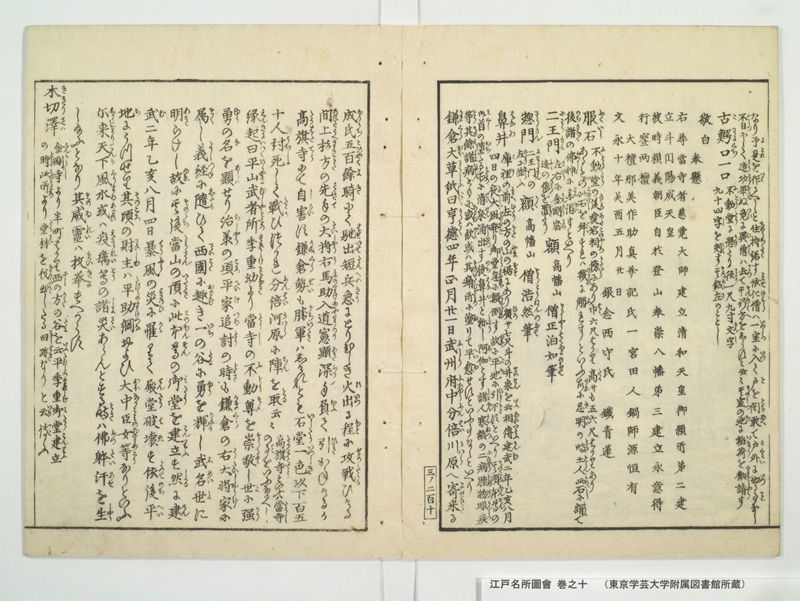
翻刻
【右丁】
《割書:なり予(よ)是(これ)を作(つく)るへしと住持(ちゆうち)諾(たく)す依(よつて)化僧(けそう)は一室(いつしつ)に入(いつ)て戸(と)を閉(とち)敢(あへ)て戸外(とくわい)に出(いつ)る事(こと)なし|不日(ふしつ)にして造功(さうこう)畢(をはん)ぬ竟(つひ)に異僧(ゐそう)は去(さつ)て其(その)行方(ゆくへ)をしらすと云々 其室(そのしつ)の地(ち)に稲荷(いなり)を勧請(くわんしやう)す》
古鰐口(こわにくち)一口《割書:不動堂(ふとうたう)に懸(かけ)たり径(わたり)一尺九寸 文字(もんし)|九十四 字(し)を刻(こく)す其銘(そのめい)左(さ)のことし》
敬白
奉懸
右尋当寺者慈覚大師建立清和天皇御願所弟【注】二建
立斗円陽成天皇
彼時頼義朝臣自於登山奉崇八幡弟【注】三建立永意得
行■两檀
大檀那美作助真并記氏一宮田人鍋師源恒有
文永十年癸酉五月廿日
銀念西守氏 鑯青蓮
服石(ふくいし)《割書:不動堂(ふとうたう)の後(うしろ)愛宕祠(あたこのやしろ)の傍(かたはら)にあり巾(はゝ)六尺はかり高(たか)サも五六尺はかりあり|あるもの此石(このいし)を拝(はい)すれは穢(けかれ)に触(ふ)れすといふ故(ゆゑ)に忌明(きめい)の時(とき)土人(としん)此石(このいし)に詣(まう)て|後(のち)諸(もろ〳〵)の佛神(ふつしん)に参詣(さんけい)すといへり》
二王門(にわうもん)《割書:左右(さいう)に金剛(こんかう)密(みつ)|迹(しやく)の像(さう)を置(おき)たり》額(かく)《割書:高幡山》僧正(そうしやう)泊如筆(はくによのふて)
惣門(さうもん)《割書:二王門(にわうもん)の|左(ひたり)に並(なら)ふ》額(かく)《割書:高幡山》僧(そう)浩然筆(こうねんのふて)
鼻井(はなゐ)《割書:庫裡(くり)の前(まへ)左(ひたり)の方(かた)の山(やま)の裾(すそ)にあり広(ひろ)サ七尺斗の井泉(せいせん)を云(いふ)相伝(あひつたふ)建武(けんむ)二年乙亥八月|四日の夜(よ)大風(たいふう)発(おこ)り御堂(みたう)忽(たちまち)に顛倒(てんたう)す故(ゆゑ)に平地(へいち)に引下(ひきくた)すといへり其頃(そのころ)本尊(ほんそん)の》
《割書:御首(みくし)の堕(おち)たる所(ところ)に清泉(せいせん)涌出(ゆしゆつ)す後(のち)鼻井(はなゐ)と称(しよう)し阿伽(あか)とす諸人(しよにん)寒熱(かんねつ)の二病(にひやう)腫物(はれもの)眼疾(かんしつ)|等(とう)其余(そのよ)諸病(しよひやう)ともに或(あるひ)は飲(のみ)或は其(その)痛所(いたむところ)に塗(ぬ)りて平愈(へいゆ)せすといふ事なしといへり》
鎌倉大草紙曰(かまくらおほさうしにいはく)享徳(かうとく)四年正月廿一日 武州(ふしう)府中(ふちゆう)分倍川原(ふんはいかはら)へ寄来(よせきた)る
【枠外】 三ノ二百十
【左丁】
成氏(なりうち)五百余騎(こひやくよき)にて馳出(はせいて)短兵急(たんへいきう)にとりひしき火(ひ)出(いつ)る程(ほと)に攻戦(せめたゝか)ひける
間(あひた)上杉方(うへすきかた)の先手(さきて)の大将(たいしやう)右馬助入道憲顕(うまのすけにふたうのりあき)深手(ふかて)負(おふ)て引(ひき)かねけるか
高籏寺(たかはたてら)にて自害(しかい)す鎌倉勢(かまくらせい)も勝軍(かちいくさ)はしかれとも石堂(いしたう)一色(いつしき)以下百五
十人 討死(うちしに)して戦(たゝか)ひつかれ分倍河原(ふんはいかはら)に陣(ちん)を取(とる)云々《割書:高籏寺(たかはたてら)といふは当寺(とうし)|の事(こと)をいふなるへし》
縁起曰(えんきにいはく)平山武者所季重(ひらやまむしやところすゑしけ)幼(をさなき)より当寺(たうし)の不動尊(ふとうそん)を崇敬(そうきやう)し世(よ)に強(かう)
勇(ゆう)の名(な)を顕(あらは)せり治承(ちしやう)の頃(ころ)平家(へいけ)追討(つゐたう)の時(とき)も鎌倉(かまくら)の右大将家(うたいしやうけ)に
属(そく)し義経(よしつね)に随(したか)ひて西国(さいこく)に趣(おもむ)き《振り仮名:一の谷|いち たに》に勇(ゆう)を輝(かゝやか)し武名(ふめい)世(よ)に
明(あき)らけし故(ゆゑ)に其後(そのゝち)当山(たうさん)の頂(いたゝき)に此(この)本尊(ほんそん)の御堂(みたう)を建立(こんりふ)す然(しかる)に建(けん)
武(む)二年乙亥八月四日 暴風(はうふう)の災(わさはひ)に罹(かゝ)りて殿堂(てんたう)破壊(はゑ)す依(よつて)後(のち)平(へい)
地(ち)にうつせり其頃(そのころ)の財主(さいしゆ)は平助綱(たひらのすけつな)およひ大中臣女等(おほなかとみのむすめとう)なりといふ
尓来(しかりしより)天下(てんか)風水(ふうすゐ)或(あるひ)は疫癘等(えきれいとう)の諸災(しよさい)あらんとする時(とき)は佛躰(ふつたい)汗(あせ)を生(しやう)
し給ふとなり其(その)威霊(ゐれい)は枚挙(まいきよ)すへからす
木切沢(ききりさは)《割書:金剛寺(こんかうし)より半町はかり西(にし)の方(かた)の谷(たに)を云(いふ)平季重(たいらのすゑしけ)御堂(みたう)建立(こんりふ)|の時(とき)此所(このところ)より堂材(たうさい)を伐出(きりいた)したる旧跡(きうせき)なりと云傳(いひつた)ふ》
【「弟」は「第」の誤】
英語訳
【Right Page】
(The monk agreed that I should create this. The mysterious monk then entered a room, closed the door, and never came out. Soon the construction was completed, and the strange monk departed, his whereabouts unknown. An Inari shrine was established on the ground of that room.)
Ancient wani-guchi (temple bell) - one piece (hung in the Fudō Hall, diameter 1 shaku 9 sun, inscribed with 94 characters. The inscription is as follows):
Respectful dedication
Humbly hung
This temple was established by Great Teacher Jikaku, imperial prayer temple of Emperor Seiwa, second establishment
Tōen Emperor Yōzei
At that time Minister Yoriyoshi climbed the mountain and worshipped Hachiman, third establishment Eii Tokugyo
■ both platforms
Great patron Mimasaka-no-suke Masa and Kishi, Ichinomiya resident, metalworker Gen Tsuneari
Bun'ei 10th year, year of the metal rooster, 5th month, 20th day
Gin'nen Saimori-shi, Shōren
Fuku-ishi (Sacred Stone) (Located behind the Fudō Hall, beside the Atago shrine. About 6 shaku wide and 5-6 shaku high. It is said that those who worship this stone will not be touched by defilement. Therefore, at the time of purification, local people visit this stone first before making pilgrimages to various Buddhist and Shinto deities)
Niō-mon Gate (Kongō Misshaku statues are placed on left and right) Plaque (Takahata-san) written by High Priest Hakujo
Main Gate (adjacent to the left of Niō-mon) Plaque (Takahata-san) written by Monk Kōnen
Hana-i Well (Located at the foot of the mountain to the left front of the kitchen quarters. A spring about 7 shaku wide. According to tradition, on the night of the 4th day of the 8th month of Kenmu 2 (1335), a great wind arose and the hall suddenly collapsed, so it was moved down to flat ground. At that time, a clear spring gushed forth where the head of the principal image fell. Later it was called Hana-i and used for ritual water. For all people's hot and cold diseases, swellings, eye ailments, and other various illnesses, whether drunk or applied to the painful area, there is no case where it fails to heal)
The Kamakura Ōsōshi states: On the 21st day of the 1st month of Kōtoku 4 (1455), [forces] advanced to Bunbai-gawara in Fuchū, Musashi Province.
【Outside Frame】Volume 3, Page 210
【Left Page】
Nariyoshi with over 500 horsemen charged out, engaged in close combat, and fought fiercely as if fire would break out.
During this, the vanguard general of the Uesugi side, Uma-no-suke Nyūdō Noriaki, suffered severe wounds and could not retreat, so he committed suicide at Takahata Temple. Although the Kamakura forces were victorious, Ishidō, Isshiki, and 150 others died in battle. Exhausted from fighting, they set up camp at Bunbai-gawara. (Takahata Temple refers to this temple)
The temple origin story states: Hirayama Musha-dokoro Sueshige revered the Fudō-son of this temple from childhood and gained fame in the world for his valor. During the Jishō period, at the time of the pursuit of the Heike clan, he served under the Right General of Kamakura, followed Yoshitsune to the western provinces, distinguished himself at Ichi-no-tani, and his military reputation became known throughout the world. Therefore, he later built a hall for this principal image on the peak of this mountain. However, on the 4th day of the 8th month of Kenmu 2 (1335), it was damaged by a violent windstorm and the hall was destroyed. Consequently, it was later moved to flat ground. The financial sponsors at that time were Taira-no-Suketsuna and daughters of the Ōnakatomi family, it is said.
Since then, when natural disasters such as floods or epidemics are about to occur in the realm, the Buddha statue perspires. Its divine power is beyond enumeration.
Kikiri-sawa (Refers to a valley about half a chō west of Kongō-ji Temple. It is said to be the historical site where Taira-no-Sueshige cut timber for hall construction when building the hall)