翻刻
【右丁】
番匠谷(はんしやうかやつ)《割書:同しく一町はかり西(にし)へ入(いる)谷(たに)を云(いふ)是(これ)も季重(すゑしけ)御堂(みたう)|建立(こんりふ)の時(とき)番匠(はんしやう)の削彫(さくてう)の地(ち)なりといひ傳(つた)へり》
別旅明神(わかたひみやうしん) 金剛寺(こんかうし)より三町はかり東(ひかし)の方(かた)別旅邑(わかたひむら)にありて此地(このち)の産(うふ)
土神(すな)とす則(すなはち)金剛寺(こんかうし)奉祀(ほうし)の宮社(きうしや)たり傳(つた)へ云 金剛寺(こんかうし)の本尊(ほんそん)不動(ふとう)
明王(みやうわう)の脇士(けうし)二童子(にとうし)を彫刻(てうこく)せし異僧(ゐそう)その像(さう)を造(つく)り終(をは)るの後(のち)立去(たちさ)
らんとす近里(きんり)の道俗(たうそく)喜悦(きえつ)のあまり其跡(そのあと)に随(したか)ひて此地(このち)まて来(き)たり
けるに件(くたん)の異僧(ゐそう)は忽(たちまち)にみえすなりぬ貴賤(きせん)奇異(きゐ)とし此地(このち)に一社(いつしや)を
建立(こんりふ)し別旅明神(わかたひみやうしん)と称(しやう)す地名(ちめい)も又(また)別旅邑(わかたひむら)といふとそ
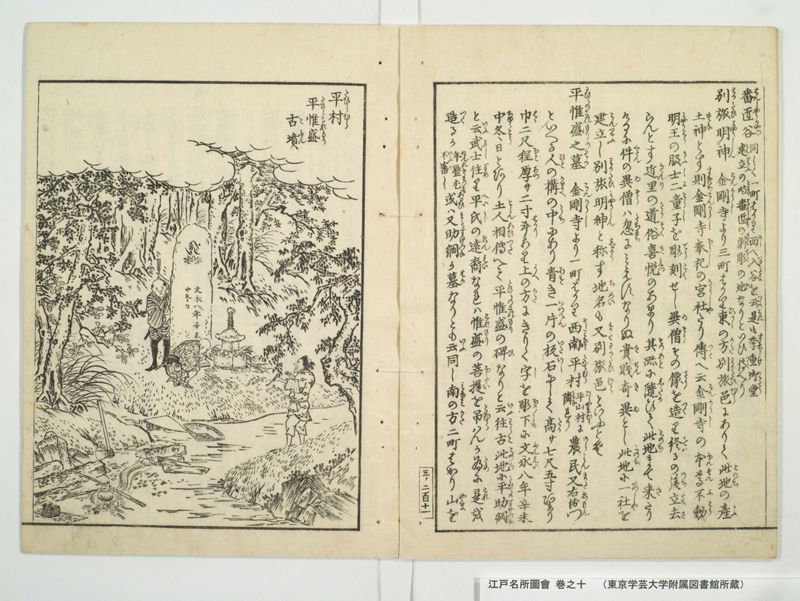
平惟盛之墓(たひらのこれもりのはか) 金剛寺(こんかうし)より一町はかり西南(にしみなみ)平村(たひらむら)《割書:平山村(ひらやまむら)に|隣(とな)れり》農民(のうみん)又右衛門(またゑもん)
といへる人(ひと)の搆(かまへ)の中(うち)にあり青(あを)き一片(いつへん)の板石(いたいし)にして高(たか)サ七尺五寸あまり
巾(はゝ)二尺 程(ほと)厚(あつ)サ二寸 斗(はかり)あり上(うへ)の方(かた)にきりく字(し)を彫(ほり)下(しも)に文永(ふんえい)八年辛未
中冬(ちゆうとう)日とあり土人(としん)相伝(あひつた)へて平惟盛(たひらのこれもり)の碑(ひ)なりと云(いふ)往古(わうこ)此地(このち)に平助綱(たひらのすけつな)
と云(いふ)武士(ふし)住(すめ)り平氏(へいし)の遠裔(ゑんえい)なれは惟盛(これもり)の菩提(ほたい)を吊(とむら)はんか為(ため)に是(これ)を
造(つく)るか《割書:年歴(ねんれき)尤(もつとも)|不審(いふか)し》或(あるひ)は又(また)助綱(すけつな)か墓(はか)なりとも云(いふ)同し南(みなみ)の方(かた)二町はかり山(やま)を
【枠外】 三ノ二百十一
【左丁】
平村(たひらむら)
平惟盛(たひらこれもり)
古墳(こふん)
【板碑文】
文永八年辛未
中冬日
【注 文中「惟盛」は「維盛」の誤】
現代語訳
【右丁】
番匠谷(ばんしょうがやつ)(同じく一町ほど西へ入る谷をいう。これも季重が御堂建立の時、番匠(大工)の削り彫りの場所であったと伝えられている)
別旅明神(わかたびみょうじん) 金剛寺から三町ほど東の方、別旅村にあって、この地の産土神とする。すなわち金剛寺が奉仕する宮社である。伝えによると、金剛寺の本尊不動明王の脇侍二童子を彫刻した異僧が、その像を造り終えた後、立ち去ろうとした。近隣の僧俗が喜悦のあまり、その跡について来てこの地まで来たが、件の異僧は忽然と見えなくなった。貴賤の人々はこれを奇異とし、この地に一社を建立して別旅明神と称した。地名もまた別旅村というのである。
平惟盛の墓 金剛寺から一町ほど西南、平村(平山村に隣接している)の農民又右衛門という人の屋敷の中にある。青い一片の板石で、高さ七尺五寸あまり、幅二尺程、厚さ二寸ほどある。上の方にきりく字を彫り、下に「文永八年辛未中冬日」とある。土地の人が相伝えて平惟盛の碑であるという。往古、この地に平助綱という武士が住んでおり、平氏の遠い末裔であるので、惟盛の菩提を弔うために造ったのか(年代はもっとも不審である)。あるいはまた助綱の墓であるとも言う。同じ南の方二町ほど山を
【枠外】 三の二百十一
【左丁】
平村
平惟盛
古墳
【板碑文】
文永八年辛未
中冬日
英語訳
【Right Page】
Banshō-gayatsu (Carpenter's Valley) (Refers to a valley about one chō to the west. This too is said to have been the place where carpenters carved and shaped wood when Sueshige built the hall)
Wakatabi Myōjin (Wakatabi Deity) - Located about three chō to the east of Kongō-ji Temple in Wakatabi Village, this serves as the tutelary deity of this land. It is a shrine served by Kongō-ji Temple. According to tradition, after the mysterious monk who carved the two attendant boys flanking the principal image of Fudō Myōō at Kongō-ji Temple finished creating the statues, he was about to depart. The monks and laypeople of the vicinity, overcome with joy, followed in his footsteps and came to this place, but the said mysterious monk suddenly disappeared from sight. People of high and low rank found this wondrous and built a shrine at this location, calling it Wakatabi Myōjin. The place name is also called Wakatabi Village.
Tomb of Taira no Koremori - Located about one chō to the southwest of Kongō-ji Temple, in Taira Village (adjacent to Hirayama Village), within the compound of a farmer named Mataemon. It is a single piece of blue slate stone, over seven shaku and five sun in height, about two shaku in width, and about two sun in thickness. At the top is carved the Sanskrit character "hrīḥ" (kiriku), and below it reads "Bun'ei 8th year, year of the metal sheep, mid-winter day." Local people have traditionally said this is the monument of Taira no Koremori. In ancient times, a warrior named Taira no Suketsuna lived in this area, and being a distant descendant of the Taira clan, he may have erected this to pray for Koremori's salvation (though the chronology is most suspicious). Others also say it might be Suketsuna's grave. About two chō to the south, toward the mountain...
【Outside Frame】Volume 3, Page 211
【Left Page】
Taira Village
Taira no Koremori
Ancient tomb
【Stone monument inscription】
Bun'ei 8th year, year of the metal sheep
Mid-winter day