翻刻
【右丁】
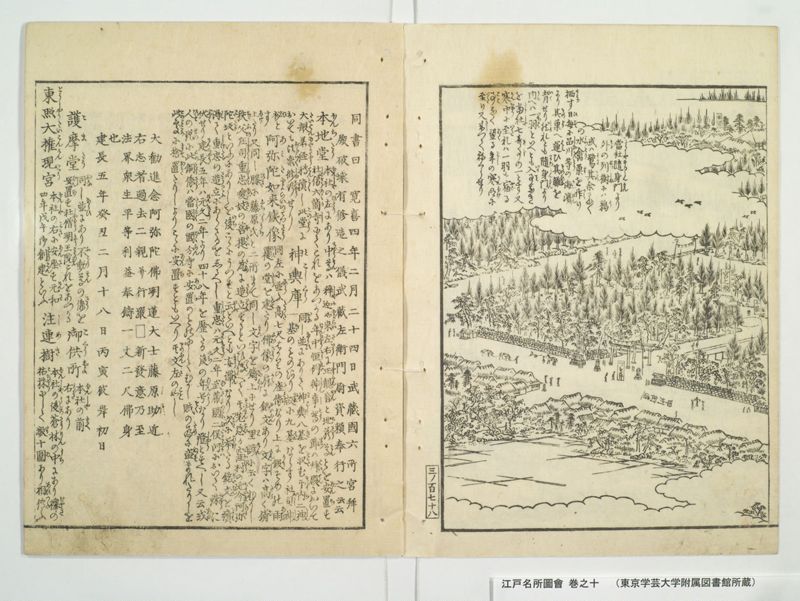
当社(たうしや)随身門(すゐしんもん)より
外(そと)の列樹(れつしゆ)には鵜(う)
或は鷺(さき)其(その)余さま〳〵
の水禽(みつとり)巣(す)を作(つく)り
栖(すとつ)す日毎(ひこと)に品川等(しなかはとう)の海浜(かいひん)
より其巣(そのす)へ運(はこ)ひ其雛(そのひな)を
育(いく)せり然(しか)れとも随身門(すゐしんもん)より
内(うち)へは一羽(いちは)といへとも入事(いること)なき
を当社(たうしや)七 奇事(きじ)の一とす又
寒中(かんちゆう)に至(いた)れは一羽も宿(やど)る
事(こと)なく翌(あく)る年(とし)の寒明(かんあけ)に
至(いた)り 又 来(きた)つてねくらせり
甲州街道
【四角囲い文字】
土俵
宮之姫
祢冝
制札
二ノ鳥井
一ノ鳥井
【枠外】 三ノ百七十八
【左丁】
同書曰 寛喜四年二月二十四日武蔵国六所宮拝
殿破壊有修造之儀武蔵左衛門尉資頼奉行之云々
本地堂(ほんちたう)《割書:本社(ほんしや)の左(ひたり)にあり中尊(ちゆうそん)は釈迦如来(しやかによらい)左右(さいう)に正観音(しやうくわんおん)と地蔵尊(ちさうそん)とを安置(あんち)す|社僧(しやそう)六箇寺(ろくかし)にてこれをあつかる年中(ねんちゆう)恒例(かうれい)神事等(しんしとう)の節(せつ)は拝殿(はいてん)において》
《割書:大般若経(たいはんにやきやう)転読(てんとく)し此堂(このたう)に|おいても法楽(はうらく)修行(しゆきやう)せり》神輿庫(みこしくら)《割書:同(おな)し並(ならひ)にありて神輿(みこし)八 基(き)を収(をさ)む其内(そのうち)二 神(しん)|一 基(き)のものあり故(ゆゑ)に九 基(き)ならす社司([し]やし)神(しん)》
《割書:秘(ひ)と|す》阿弥陀如来鉄像(あみたによらいのてつさう)《割書:同左に並(なら)ふ高(たかさ)七尺はかりの座像(ささう)なり上に仮(かり)そめの雨(あま)|覆(おひ)の堂(たう)を建(たて)たり仏像(ふつさう)の肩(かた)に銘文(めいふん)あり文字(もんし)は高(たか)く鋳(ゐ)》
《割書:上(あけ)たり又同し膝(ひさ)に藤原氏(ふちはらうち)と二所まて同し文字(もんし)を鋳上(ゐあけ)にせり里諺(りけん)に云くむかし|秩父庄司(ちゝふのしやうし)重忠(しけたゝ)愛妓(あいき)の菩提(ほたい)の為(ため)に造立(さうりふ)するといひ傳(つた)へて其先(そのせん)《振り仮名:恋ゕ窪村|こひ くほむら》の地(ち)今(いま)阿弥(あみ)|陀坂(たさか)といふにありしを後(のち)こゝにうつすと云(いふ)といへとも妄譚(まうたん)なり次(つき)に挙(あけ)たる銘文(めいふん)を読(よみ)|得(え)て重忠(しけたゝ)の造立(さうりふ)にあらさるをしるへし重忠(しけたゝ)は元久(けんきう)二年 武蔵国(むさしのくに)二俣河(ふたまたかは)において誅(ちゆう)に|伏(ふく)せり建長(けんちやう)五年は元久(けんきう)二年より四十八年を歴(へ)たる後(のち)の年号(ねんかう)なり證(しやう)とすへし又云 或(ある)|人(ひと)の説(せつ)に此(この)銅像(とうさう)は当国(たうこく)の国分(こくふん)寺に安置(あんち)のものにしてむかし賊(そく)の為(ため)に盗(ぬす)まれたりしを|此處(このところ)に捨置(すておき)たりしよりこゝに安置(あんち)すともいへり其文(そのふん)左(さ)の如(こと)し》
大勧進念阿弥陀仏明蓮大士藤原助近
右志者過去二親并行巌▢新発意乃至
法界衆生平等利益奉鋳一丈二尺仏身
也
建長五年癸丑二月十八日丙寅彼岸初日
護摩堂(こまたう)《割書:同(おな)し並(ならひ)にあり不動尊(ふとうそん)の像(さう)を|安置(あんち)す社僧(しやそう)明王院(みやうわうゐん)これをあつかる》御供所(こくうしよ)《割書:本社(ほんしや)の前(まへ)|右(みき)にあり》
東照大権現宮(とうしやうたいこんけんくう)《割書:本社(ほんしや)の右(みき)に安座(あんさ)す元和(けんわ)|四年戊午御 創建(さうこん)といふ》注連樹(しめき)《割書:本社(ほんしや)の後(うしろ)蒼林(さうりん)の中(うち)にあり欅(けやき)の|枯株(こちゆう)にして《振り仮名:数十囲|す ゐ》あり相傳(あひつた)ふ》
現代語訳
【右丁】
当社の随身門より外側の並木には鵜や鷺、その他様々な水鳥が巣を作って棲んでいる。毎日品川などの海浜からその巣へ運んできて、その雛を育てている。しかしながら随身門より内側へは一羽といえども入ることがないのを、当社七不思議の一つとしている。また寒中に至れば一羽も宿ることなく、翌年の寒明けに至り、また来てねぐらとしている。
甲州街道
【図中の建物・施設名】
土俵、宮之姫、祢宜、制札、二ノ鳥居、一ノ鳥居
【枠外】三ノ百七十八
【左丁】
同書によると「寛喜四年二月二十四日、武蔵国六所宮拝殿に破壊があり修造の儀があった。武蔵左衛門尉資頼が奉行した」とある。
本地堂:本社の左側にあり、中尊は釈迦如来、左右に正観音と地蔵尊とを安置している。社僧六ヶ寺でこれを管理している。年中恒例の神事等の節は、拝殿において大般若経を転読し、この堂においても法楽を修行している。
神輿庫:同じ並びにあって神輿八基を収めている。その内二神一基のものがあるため九基ではない。社司の神として秘密にしている。
阿弥陀如来鉄像:同左に並んで高さ七尺ばかりの座像である。上に仮そめの雨覆いの堂を建てている。仏像の肩に銘文があり、文字は高く鋳上げてある。また同じく膝に「藤原氏」と二所まで同じ文字を鋳上げにしている。里の言い伝えによると「昔、秩父庄司重忠が愛妓の菩提のために造立した」と言い伝えて、その先の恋ヶ窪村の地、今阿弥陀坂というところにあったのを後にここに移したと言うけれども、妄談である。次に挙げる銘文を読み得て重忠の造立でないことを知るべきである。重忠は元久二年武蔵国二俣河において誅殺された。建長五年は元久二年より四十八年を経た後の年号である。証拠とすべきである。また、ある人の説によると「この銅像は当国の国分寺に安置のものであって、昔賊のために盗まれたのを、この処に捨て置いたことからここに安置する」とも言う。その文は左の如くである:
大勧進念阿弥陀仏明蓮大士藤原助近
右志者過去二親并行巌▢新発意乃至
法界衆生平等利益奉鋳一丈二尺仏身
也
建長五年癸丑二月十八日丙寅彼岸初日
護摩堂:同じ並びにあり、不動尊の像を安置している。社僧明王院がこれを管理している。
御供所:本社の前右にある。
東照大権現宮:本社の右に安座している。元和四年戊午御創建という。
注連樹:本社の後ろ蒼林の中にある。欅の枯株にして数十囲ある。相伝している。
英語訳
【Right Page】
Outside the sacred trees beyond the Zuishin Gate of this shrine, cormorants, herons, and various other waterfowl build their nests and dwell there. Daily they fly from the seashores of Shinagawa and elsewhere to their nests to raise their young. However, not even a single bird enters beyond the Zuishin Gate, which is considered one of the seven wonders of this shrine. During the cold season, not one bird roosts there, but they return again to nest when the cold season ends the following year.
Kōshū Highway
【Buildings and facilities marked in the illustration】
Sumo ring, Miya-no-hime, Negi (shrine priest), Notice board, Second torii gate, First torii gate
【Outside frame】 Page 378
【Left Page】
According to the same document: "On the 24th day of the 2nd month of Kanki 4 (1232), there was damage to the worship hall of Rokusho-no-miya in Musashi Province, and repairs were undertaken. Musashi Saemon-no-jō Sukeyori served as the magistrate."
Honji-dō Hall: Located to the left of the main shrine, it enshrines Śākyamuni Buddha as the central deity, with Shō-Kannon and Jizō on either side. It is managed by six temple-monks. During annual regular ceremonies, the Mahāprajñāpāramitā Sūtra is chanted at the worship hall, and Buddhist services are also performed at this hall.
Mikoshi Storehouse: Located in the same row, it houses eight portable shrines. Among them, there is one that belongs to two deities, so it is not nine shrines in total. This is kept secret as a deity of the shrine officials.
Iron Statue of Amida Buddha: Standing in the same row, it is a seated statue approximately seven feet tall. A temporary rain shelter has been built above it. There is an inscription on the shoulder of the statue with characters cast in high relief. The same style of characters reading "Fujiwara-shi" are cast on the knee in two places. According to local legend, "Long ago, Chichibu-no-shōji Shigetada had this made for the salvation of his beloved courtesan," and it was originally located in what is now called Amida-saka in the former Koigakubo village before being moved here. However, this is a false tale. By reading the inscription given below, one can know that it was not created by Shigetada. Shigetada was executed at Futamata River in Musashi Province in Genkyū 2 (1205). Kenchō 5 (1253) is forty-eight years after Genkyū 2. This serves as proof. Another theory states that "this bronze statue was originally enshrined at the provincial temple of this province, was once stolen by thieves, and was abandoned at this place, which is why it is enshrined here." The inscription reads as follows:
Great Promoter Nen-Amida-butsu Myōren Daishi Fujiwara-no-Sukechika
This vow is for the equal benefit of departed parents, Gyōgan [?] and new novices, extending to all sentient beings in the dharma realm. We respectfully cast this Buddha statue of one jō and two shaku.
Kenchō 5, Year of the Metal Ox, 2nd month, 18th day, Day of the Metal Tiger, First Day of Equinox
Goma Hall: Located in the same row, it enshrines a statue of Fudō Myōō. It is managed by the temple-monk Myōō-in.
Gokū-sho (Offering Hall): Located to the front right of the main shrine.
Tōshō Daigongen Shrine: Seated to the right of the main shrine. Said to have been established in Genna 4, Year of the Earth Horse (1618).
Sacred Rope Tree: Located in the verdant forest behind the main shrine. It is a dead stump of a zelkova tree with a circumference of several tens of units. This has been passed down through tradition.