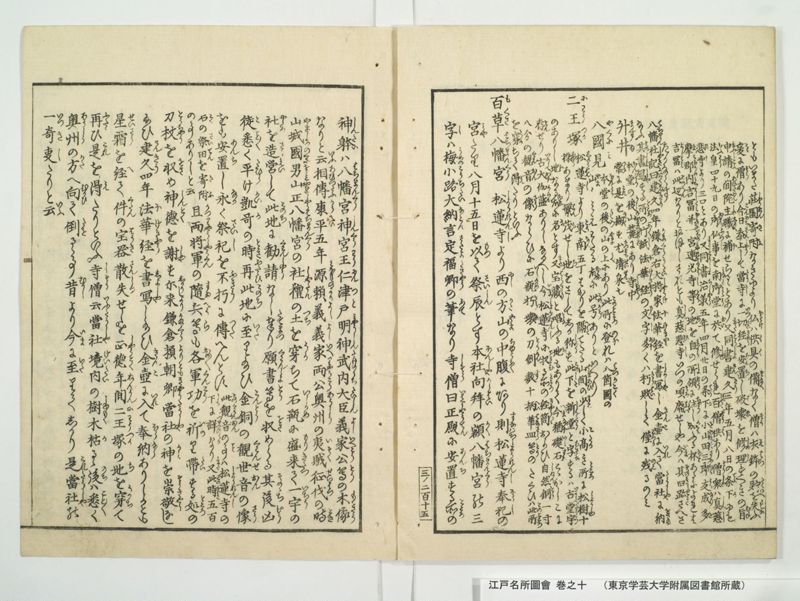
翻刻
【右丁】
《割書:ともいまた荘園(しやうゑん)寄附(きふ)なきにより仏(ほとけ)は供具(くく)の備(そなへ)なく僧(そう)は衣鉢(えはつ)の貯(たくはへ)を失(うしな)ふ|爰(ここ)に僧(そう)あり今日(こんにち)参上(さんしやう)して当寺(たうし)に一切経(いつさいきやう)を安置(あんち)し破壊(はゑ)を修理(しゆり)すへきの旨(むね)|申請(まふしこふ)の間(あひた)院主職(ゐんしゆしよく)に補(ほ)せらるゝとあり又(また)同書(とうしよ)建久(けんきう)三年五月八日の条下(てうか)にも|法皇(ほふわう)四十九日の御仏事(おんふつし)を南御堂(みなみみたう)に於(おい)て修(しゆ)せられ百僧供(ひやくそうく)あり僧衆(そうしゆ)は真慈(しんし)|悲寺(ひし)より三口とあり又(また)同書(とうしよ)治承(ちしやう)五年四月廿日の条下(てうか)に小山田三郎友成(をやまたさふらうともなり)多(た)|摩郡内(まこほりのうち)由冨(よしとみ)並(ならひに)一宮(いちのみや)蓮光寺(れんくわうし)等(とう)の地(ち)を自(みつから)の所領(しよれう)に註(ちゆう)し加(くは)ふる抔(なと)あるによれは|吉冨(よしとみ)は此辺(このへん)なりとおほしされとも真慈悲寺(しんしひし)いつの頃(ころ)廃(はい)せしや今(いま)は其(その)旧跡(きうせき)さへさ|たかならす》
《割書:八幡社記曰(はちまんしやきにいはく)建久(けんきう)四年 鎌倉(かまくら)右大将家(うたいしやうけ)法華経(ほけきやう)を書写(しよしや)し金壺(きんこ)に入(いれ)て当社(たうしや)に納(をさめ)|給ふ其(その)書写(しよしや)する所(ところ)の竹紙(ちくし)法華経(ほけきやう)の文字(もんし)多(おほ)くは朽敗(きうはい)して僅(わつか)に残(のこ)るのみ》
升井(ますゐ)《割書:本堂(ほんたう)の後山麓(うしろやまのふもと)にあり寺中(しちゆう)|常(つね)に是(これ)を掬(きく)す尤(もつとも)清泉(せいせん)也》
八国見(やくにみ)《割書:本堂(ほんたう)の後(うしろ)の山(やま)の上(うへ)にあり此所(このところ)に登(のほ)れは八箇国(はつかこく)の|山(やま)々みえわたる故(ゆゑ)に此号(このかう)ありといへり》
二王塚(にわうつか)《割書:松蓮寺(しようれんし)より東南(とうなん)五丁はかり隔(へた)てたる山間(やまあひ)の少(すこ)しく小高(こたか)き所(ところ)に松樹(しようしゆ)十|株(ちゆう)あまり繁茂(はんも)せし地(ち)をさしてしか称(しよう)す此下(このした)を新堂(しんたう)と字(あさな)するは古(いにしへ)堂宇(たうう)》
《割書:のありし地(ち)なる故(ゆゑ)に名(な)とす又(また)宝蔵(はうさう)と唱(とな)ふる地(ち)もありて今猶(いまなほ)礎石(いしすゑ)こゝかしこに|存(そん)せり古(いにしへ)大伽藍(おほからん)ありしなるへし今(いま)松蓮寺(しようれんし)に収(をさむ)る所(ところ)の経筒(きやうつゝ)およひ自然銅(しねんとう)一寸|八分の観音(くわんおん)の像(さう)ならひに石瓶(いしかめ)朽壊(きうゑ)の刀剣(とうけん)数(す)十 柄(へい)華皿(はなさら)等(とう)のたくひは此所(このところ)|を穿(うか)ちて得(え)たりといふ》
百草八幡宮(もくさはちまんくう) 松蓮寺(しようれんし)より西(にし)の方(かた)山(やま)の中腹(ちゆうふく)にあり則(すなはち)松蓮寺(しようれんし)奉祀(ほうし)の
宮(みや)たり八月十五日を以(もつ)て祭辰(さいしん)とす本社(ほんしや)向拝(かうはい)の額(かく)八幡宮(はちまんくう)の三
字(し)は梅小路大納言定福卿(うめのこうちたいなこんさたよしきやう)【注】の筆(ふて)なり寺僧曰(しそういはく)正殿(しやうてん)に安置(あんち)する所(ところ)の
【枠外】 三ノ百十五
【左丁】
神躰(しんたい)は八幡宮(はちまんくう)神宮(しんくう)王仁(わうにん)津戸明神(つとみやうしん)武内大臣(たけのうちたいしん)義家公(よしいへこう)等(とう)の木像(もくさう)
なりと云(いふ)相伝(あひつたふ)康平(かうへい)五年 源頼義(みなもとのよりよし)義家(よしいへ)両公(りやうこう)奥州(あうしう)の夷賊征伐(いそくせいはつ)の時(とき)
山城国(やましろのくに)男山正八幡宮(をとこやましやうはちまんくう)の社檀(しやたん)の土(つち)を穿(うか)ちて石瓶(いしかめ)に盛(もり)来(きたつ)て一宇(いちう)の
社(やしろ)を造営(さうえい)して此地(このち)に勧請(くわしやう)なし奉(たてまつ)り願書等(くわんしよとう)を収(をさ)めらる其後(そのゝち)凶(けう)
徒(と)悉(こと〳〵)く平(たひら)け凱哥(かいか)の時(とき)再(ふたゝひ)此地(このち)に至(いた)り給ひ金銅(こんとう)の観世音(くわんせおん)の像(さう)
をも安置(あんち)し永(なか)く祭祀(さいし)を不朽(ふきう)に伝(つた)へんとす《割書:此(この)観音(くわんおん)の事(こと)は松蓮寺(しようれんし)の|下(しも)に詳(つまひらか)なり又(また)此時(このとき)五百》
《割書:石(こく)の祭田(さいてん)を寄附(きふ)|の事(こと)ありしと云》且(かつ)両将軍(りやうしやうくん)の随兵等(すゐへうら)も各(おの〳〵)軍功(くんこう)を祈(いの)り帯(たい)する処(ところ)の
刀杖(とうちやう)を収(をさ)め神徳(しんとく)を謝(しや)す尓来(しかりしより)鎌倉(かまくら)頼朝卿(よりともきやう)当社(たうしや)の神(かみ)を崇敬(そうきやう)なし
給ひ建久(けんきう)四年 法華経(ほけきやう)を書写(しよしや)し給ひ金壺(きんこ)に入(いれ)て奉納(ほうなう)ありしかとも
星霜(せいさう)を経(へ)て件(くたん)の宝器(はうき)散失(さんしつ)せしを正徳年間(しやうとくねんかん)二王塚(にわうつか)の地(ち)を穿(うかち)て
再(ふたゝ)ひ是(これ)を得(え)たりといふ寺僧云(しそういふ)当社(たうしや)境内(けいたい)の樹木(しゆもく)枯(か)るゝ後(のち)は悉(こと〳〵)く
奥州(あうしう)の方(かた)へ向(むかひ)て倒(たを)るゝ事 昔(むかし)より今(いま)に至(いた)りてしかり是(これ)当社(たうしや)の
一奇叓(いつきし)たりと云(いふ)
【注 「定福」は「さたとみ」ヵ】
現代語訳
【右丁】
(しかしながら、荘園の寄附がないため、仏は供具の備えがなく、僧は衣鉢の蓄えを失っている。ここに僧がいて、今日参上して当寺に一切経を安置し、破壊を修理すべき旨を申請したところ、院主職に補せられたとある。また同書の建久三年五月八日の条下にも、法皇四十九日の御仏事を南御堂において修せられ、百僧供があり、僧衆は真慈悲寺より三人とある。また同書の治承五年四月二十日の条下に、小山田三郎友成が多摩郡内の由富並びに一宮蓮光寺等の地を自らの所領に加えるなどとあることによれば、吉富はこの辺りであると思われるが、真慈悲寺がいつ頃廃絶したか、今はその旧跡さえ定かでない)
(八幡社記によると、建久四年、鎌倉右大将家が法華経を書写し、金壺に入れて当社に納められた。その書写した竹紙法華経の文字は多くが朽敗して、わずかに残るのみである)
升井(本堂の後ろの山麓にあり、寺中では常にこれを汲む。たいへんな清泉である)
八国見(本堂の後ろの山の上にある。この所に登れば八か国の山々が見渡せるため、この名があるという)
二王塚(松蓮寺より東南五町ほど離れた山間の少し小高い所に、松の木十株あまりが繁茂した地を指してこう称する。この下を新堂と字するのは、古に堂宇があった地であるためその名とする。また宝蔵と唱える地もあって、今なお礎石があちこちに存在している。古に大伽藍があったのであろう。今松蓮寺に収蔵する経筒および自然銅一寸八分の観音像、並びに石瓶、朽壊した刀剣数十柄、華皿等の類は、この所を掘って得たという)
百草八幡宮 松蓮寺より西の方、山の中腹にあり、すなわち松蓮寺が奉祀する宮である。八月十五日を祭日とする。本社向拝の額「八幡宮」の三字は梅小路大納言定福卿の筆である。寺僧によると、正殿に安置する
【枠外】三の百十五
【左丁】
神体は八幡宮、神功皇后、王仁、津戸明神、武内大臣、義家公等の木像であるという。相伝によると、康平五年、源頼義・義家両公が奥州の夷賊征伐の時、山城国男山正八幡宮の社壇の土を掘って石瓶に盛って来て、一宇の社を造営してこの地に勧請申し上げ、願書等を収められた。その後、凶徒はことごとく平定され、凱歌の時、再びこの地に至り給い、金銅の観世音像をも安置し、永く祭祀を不朽に伝えようとした(この観音のことは松蓮寺の項で詳しく述べる。またこの時五百石の祭田を寄附したことがあったという)。かつ両将軍の随兵等も各々軍功を祈り、帯びる処の刀杖を収め、神徳に謝した。それより鎌倉頼朝卿が当社の神を崇敬し給い、建久四年法華経を書写し給い、金壺に入れて奉納されたが、歳月を経てその宝器が散失したのを、正徳年間に二王塚の地を掘って再びこれを得たという。寺僧によると、当社境内の樹木が枯れた後は、ことごとく奥州の方へ向かって倒れることは、昔から今に至ってそうである。これは当社の一つの奇事であるという。
【注 「定福」は「さたとみ」か】
英語訳
【Right Page】
(However, because there are no donations of manor estates, the Buddha lacks the provision of offerings, and the monks have lost their stores of robes and bowls. Here there is a monk who came today requesting to install a complete sutra collection at this temple and repair the damage, whereupon he was appointed to the position of temple head. Also, in the same book under the entry for the eighth day of the fifth month of Kenkyū 3rd year, the retired emperor's forty-nine day Buddhist services were held at the Southern Hall with a hundred-monk offering, and the monks included three from Shinjihiji Temple. Also, in the same book under the entry for the twentieth day of the fourth month of Jishō 5th year, it states that Oyamada Saburō Tomonari added the lands of Yoshitomi in Tama District and Ichinomiya Renkōji Temple to his own domain, indicating that Yoshitomi is in this area, but when Shinjihiji Temple was abandoned is unclear, and even its former site is now uncertain)
(According to the Hachiman Shrine Record, in Kenkyū 4th year, the Kamakura Right General wrote out the Lotus Sutra and placed it in a golden jar to be deposited at this shrine. The characters of the bamboo paper Lotus Sutra he transcribed have mostly decayed, with only traces remaining)
Masui Well (Located at the foot of the mountain behind the main hall, the temple constantly draws from it. It is an exceptionally pure spring)
Yakunimi (Eight-Country View) (Located on top of the mountain behind the main hall. Climbing to this place, one can see the mountains of eight provinces, hence this name)
Niō Mound (About five chō southeast of Shōren-ji Temple, in a slightly elevated place in the mountains where more than ten pine trees flourish, this area is so called. The area below is named Shindō because there were once temple buildings there. There is also a place called Hōzō, and foundation stones still exist here and there. There must have been a great temple complex in ancient times. The sutra tubes and natural bronze Kannon statue one sun eight bu tall, as well as stone jars, decayed swords numbering several dozen, flower dishes and the like now stored at Shōren-ji Temple are said to have been obtained by digging at this location)
Mokusa Hachiman Shrine Located on the mid-slope of the mountain to the west of Shōren-ji Temple, it is the shrine served by Shōren-ji Temple. August 15th is observed as the festival day. The three characters "Hachiman Shrine" on the plaque of the main shrine's worship hall were written by Umenokōji Dainagon Sadafuku-kyō. According to the temple monks, the objects enshrined in the main hall
【Outside Frame】Volume 3, Page 115
【Left Page】
are wooden statues of Hachiman Shrine, Empress Jingū, Wani, Tsuto Myōjin, Takenouchi Daijin, Yoshiie-kō and others. According to tradition, in Kōhei 5th year, when both lords Minamoto Yoriyoshi and Yoshiie were subjugating the barbarian rebels of Ōshū, they dug soil from the shrine altar of Otokoyama Shō-Hachiman Shrine in Yamashiro Province, put it in a stone jar, built a shrine structure, and established it at this location with prayers and other documents stored there. Afterward, the rebellious forces were completely pacified, and at the time of victory songs, they came to this place again, also enshrining a gilt bronze Kannon statue, intending to transmit the worship permanently (The matter of this Kannon is detailed in the section on Shōren-ji Temple. Also at this time, there was a donation of five hundred koku of ritual fields). Moreover, the retainers of both generals also each prayed for military success, storing their swords and staves and giving thanks for divine virtue. From then on, Kamakura Yoritomo-kyō revered the gods of this shrine, and in Kenkyū 4th year transcribed the Lotus Sutra, placing it in a golden jar as an offering, but after years passed this precious vessel was lost, and in the Shōtoku era it was recovered by digging at the Niō Mound site. The temple monks say that when trees in the shrine precincts die, they all fall toward Ōshū, and this has been so from ancient times to the present. This is considered one of the shrine's mysterious phenomena.
【Note: "Sadafuku" may be "Sadatomi"】