翻刻
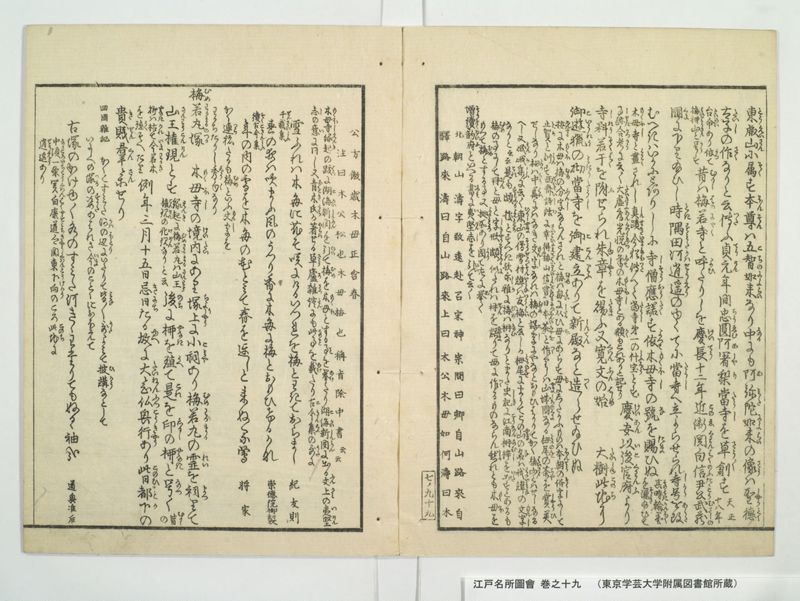
東叡山(とういえさん)に属(そく)す本尊(ほんそん)は五智如来(こちのによらい)なり中(なか)にも阿弥陀如来(あみたによらい)の像(さう)は聖徳(しやうとく)
太子(たいし)の作(さく)なりと云 伝(つた)ふ貞元(てうけん)年間 忠円阿闍梨(ちうゑむあじやり)当寺(たうし)を草創(さう〳〵)す《割書:天正|十八年》
《割書:台命(たいめい)あり依(よつ)て|梅柳山(はいりうさん)と号(かう)す》昔(むかし)は梅若(はいにやく)寺と呼(よひ)たりしを慶長(けいてう)十二年 近衛関白(このゑくわんはく)信尹公(のふたゝこう)武蔵(むさしの)
国(くに)に下り給ひし時(とき)隅田河(すみたかは)逍遥(せうえう)のゆくてに当寺(たうし)へ立よらせられ寺号(しかう)を改(あらた)
むへきはいかにとありしに寺僧(しそう)応諾(おうたく)す依(よつて)木母寺(もくほし)の号(な)を賜(たま)ひぬ 《割書:其時(そのとき)翰墨(かんほく)|を灑(そゝき)給ひて》
《割書:木母寺(もくほし)と画(くわく)されし真蹟(しんせき)今猶(いまなほ)伝(つた)へて当寺(たうし)第一の什宝(しふほう)とす|事跡合考(しせきかつかう)に云く大虚庵光悦(たいきよあんくわうゑつ)の筆(ふて)の木母寺(もくほし)とある額(かく)もこれありと記せり》 慶安(けいあん)以後(いこ)官府(くわんふ)より
寺料(しれう)若干(そくはく)を付(ふ)せられ朱章(しゆしやう)を賜(たま)ふ又 寛文(くはんふん)の始(はしめ) 大樹(たいしゆ)此地(このち)に
御遊猟(こいうれう)の拗(みきり)当寺(たうし)を御建立(ここんりふ)ありて新殿(しんてん)なと造(つく)らせ給ひぬ
《割書:按(あんする)に木母(もくほ)は梅(むめ)の分字(ふんし)ならんされと梅は毎(はい)に従(したか)ひ母(ほ)にあらす母(も)にしたかふものは本朝(ほんてう)の俗字(そくし)にして|止賀(とか)と訓(くん)す西斎詩話(せいさいしわ)に幸得(さいはひにえて)_二梅山信(はいさんのしんを)_一嘗(なむる)_二日本茶(につほんのちやを)_一と作(つく)りしは山城国(やましろのくに)なる栂尾(とかのを)の茶(ちや)を賞美(しやうひ)》
《割書:せしなり栂(とか)は中華(ちうくは)にはなき文字(もんし)なれは梅(むめ)の誤字(こし)にやなとおもひはかりてかく梅山(はいさん)とはせしなる|へし又 岷峨集(みんかしふ)に云く東山(ひかしやま)の僧(そう)雪村(せつそん)諱(いみな)は友梅(いふはい)と云しか栂尾(とかのを)にまうてこの山(やま)の名(な)は我(わか)諱(いみな)の文字(もんし)》
《割書:なりと云云 是(これ)も頗(すこふる)拠(よりところ)とすへき歟 爾雅(しか)に梅(むめ)は枏(なむ)【楠の異体字】なりとまた史記(しき)に江南(こうなん)枏梓(なむし)を出(いた)すとあるも|梅(むめ)の事にして冄(せん)と母と字形(しきやう)頗(すこふる)似(に)たれは冄(せん)を誤(あやま)りて母に作(つく)るものならん然(しか)れとも木母(もくほ)を》
《割書:もつて梅(むめ)とする事又 拠所(よりところ)あり因(より)て左に挙(あ)く|》
《割書:増続韻府(そうそくゐむふ)といへる書(しよ)に夷堅志(いけんし)を引(ひい)て云く|》
《割書:北朝山濤字致遠赴召宋神宗問曰卿自山路来自|駅路来濤曰自山路来上曰木公木母如何濤曰木》
《割書:公方傲歳木母正含春| 注曰木公松也木母梅也称旨除中書云云》
《割書:木母寺縁起(もくもしえんき)の跋(はつ)に湖海新聞(こかいしんふん)を引(ひい)て梅(むめ)を木母(もくほ)とする事(こと)を挙(あけ)たり湖海新聞(こかいしんふん)に出る文(ふん)上(かみ)の夷堅(いけん)|志(し)の意(い)に同し又 青木氏(あおきうち)か著(あらは)せる草盧雑談(さうろさつたん)にも此事(このこと)を載(あけ)たり古今集(こきんしふ)の歌(うた)に》
雪ふれは木毎に花そ咲にけるいつれを梅とわきておらまし 紀友則
《割書:千載集(せんさいしふ)|》
春の夜は吹まふ風のうつり香に木毎に梅とおもひけるかな 崇徳院御製
《割書:続古今集(そくこきんしふ)|》
年の内の雪を木毎の花とみて春を遅しと来ぬる鴬 将家
《割書:かく連(つら)ねたるも梅(むめ)といふ文字(もんし)を|わかちたりし秀句(しうく)なり》
梅若丸塚(むめわかまるのつか) 木母寺(もくほし)の境内(けいたい)にあり塚上(ちよしやう)に小祠(こみや)あり梅若丸(むめわかまる)の霊(れい)を祠(まつ)りて
山王権現(わんわうこんけん)とす 《割書:縁起(えんき)に梅若丸(むめわかまる)は山王(さんわう)|権現(こんけん)の化現(けけん)なりと云》後(のち)に柳(やなき)を殖(うへ)て是(これ)を印(しるし)の柳(やなき)と号(なつ)く 《割書:昔(むかし)|の》
《割書:柳(やなき)は枯(かれ)て今(いま)若木(わかき)|を殖(うへ)そへたり》 例年三月十五日 忌日(きにち)たる故(ゆへ)に大念仏興行(たいねんふつこうきやう)あり此日(このひ)都下(とか)の
貴賎(きせん)群参(くんさん)せり
回国雑記 かくてすみた河(かは)の辺(ほとり)にいたりて皆(みな)〳〵歌(うた)よみて披講(ひかう)なとして
いにしへの塚(つか)の姿(すかた)あはれさ今(いま)のことくにおほえて
古塚のかけゆく水のすみた河きゝわたりてもぬるゝ袖哉 道興准后
中頃(なかころ)一条(いちてう)関白(くはんはく)康道卿(やすみちきやう)関東(くはんとう)下向(けかう)のころ此地(このち)に
逍遥(せうえう)あり
現代語訳
東叡山に属している。本尊は五智如来である。中でも阿弥陀如来の像は聖徳太子の作であると伝えられている。貞元年間に忠円阿闍梨が当寺を創建した。天正十八年に台命があり、それによって梅柳山と号するようになった。昔は梅若寺と呼ばれていたが、慶長十二年に近衛関白信尹公が武蔵国に下向された時、隅田河逍遥の途中で当寺に立ち寄られ、寺号を改めるべきかどうか尋ねられたところ、寺僧が承諾したため、木母寺の号を賜った。その時に筆を取られて「木母寺」と書かれた真筆は今なお伝わって当寺第一の宝物としている。事跡合考には大虚庵光悦の筆による「木母寺」とある額もこれであると記されている。慶安以後、官府より寺料若干を付与され朱印を賜った。また寛文の始めに大樹(将軍)がこの地で御遊猟の際、当寺を御建立されて新殿なども造らせられた。
なお、木母は梅の分解字であろう。しかし梅は「毎」に従い「母」ではない。「母」に従うものは本朝の俗字で「とが」と読む。西斎詩話に「幸得梅山信 嘗日本茶」と作ったのは山城国の栂尾の茶を賞美したものである。栂は中華にはない文字なので梅の誤字かと思い推量してこのように梅山としたのであろう。また岷峨集には東山の僧雪村、諱は友梅というが栂尾に参って、この山の名は我が諱の文字であると言ったとある。これもかなり根拠とすべきであろう。爾雅に梅は楠であるとあり、また史記に江南は楠梓を出すとあるのも梅のことで、「冄」と「母」は字形がかなり似ているので、「冄」を誤って「母」に作るものであろう。しかし木母をもって梅とすることもまた根拠がある。よって左に挙げる。
増続韻府という書に夷堅志を引いて言うには、北朝の山濤、字は致遠、召に赴いて宋神宗が問うて曰く「卿は山路より来たか駅路より来たか」。濤曰く「山路より来ました」。上曰く「木公木母はいかが」。濤曰く「木公は傲歳、木母は正に春を含む」。注に曰く「木公は松なり、木母は梅なり」と称して旨を除中書云々とある。
木母寺縁起の跋に湖海新聞を引いて梅を木母とすることを挙げている。湖海新聞に出る文は上の夷堅志の意に同じである。また青木氏が著した草盧雑談にもこのことを載せている。古今集の歌に
雪降れば木毎に花ぞ咲きにける いづれを梅と分きて折らまし 紀友則
千載集
春の夜は吹き舞ふ風の移り香に 木毎に梅と思ひけるかな 崇徳院御製
続古今集
年の内の雪を木毎の花と見て 春を遅しと来ぬる鶯 将家
このように連ねたのも梅という文字を分かった秀句である。
梅若丸塚は木母寺の境内にある。塚の上に小祠があり梅若丸の霊を祀って山王権現とする。縁起に梅若丸は山王権現の化現であるという。後に柳を植えてこれを印の柳と号する。昔の柳は枯れて今は若木を植え添えている。例年三月十五日は忌日であるので大念仏興行がある。この日は都下の貴賤が群参する。
回国雑記には、このように隅田河の辺りに至って皆々歌を詠んで披講などして
いにしへの塚の姿あはれさ 今のことくに覚えて
古塚の蔭行く水の隅田河 聞き渡りてもぬるる袖かな 道興准后
中頃一条関白康道卿が関東下向の頃、この地に逍遥された。
英語訳
It belongs to Tōeizan (Kan'ei-ji Temple). The principal Buddhist image is the Five Wisdom Buddhas. Among them, the statue of Amida Buddha is said to be the work of Prince Shōtoku. During the Jōgen era, the monk Chūen Ajari founded this temple. In the eighteenth year of Tenshō, there was an imperial command, and it came to be called Bairyūzan (Plum-Willow Mountain). In ancient times it was called Umenowaka-dera, but in the twelfth year of Keichō, when the Regent Konoe Nobutada came down to Musashi Province and stopped at this temple during his excursion along the Sumida River, he asked whether the temple name should be changed. When the temple monks agreed, he bestowed the name Bokuboji (Tree-Mother Temple). At that time, he took up his brush and wrote "Bokuboji," and this authentic calligraphy is still preserved as the temple's greatest treasure. The Shiseki Gakkō records that there is also a plaque with "Bokuboji" written by Taikyoan Kōetsu. After the Keian era, the government granted the temple a certain amount of temple stipend and bestowed a vermillion seal. Also, at the beginning of the Kanbun era, the Shogun went hunting in this area and had the temple rebuilt, constructing a new hall and other buildings.
Now, "bokubō" (tree-mother) is probably the character for plum divided into parts. However, plum follows "mai" (every), not "mother." What follows "mother" is a popular character in Japan read as "toga." In the Seisai Shiwa, the verse "Fortunately obtained the faith of Plum Mountain, tasted Japanese tea" praised the tea of Toganoo in Yamashiro Province. Since "toga" is a character that does not exist in China, he probably thought it was an error for plum and thus wrote "Plum Mountain." Also, in the Minga-shū, it states that the monk Sessson of Higashiyama, whose posthumous name was Yūbai, went to Toganoo and said that this mountain's name used the characters of his posthumous name. This too should be considered quite authoritative. The Erya states that plum is "nan" (camphor), and the Records of the Grand Historian mentions that Jiangnan produces "nan" and "zi" (catalpa), which also refers to plum. Since "sen" and "mother" are quite similar in form, "sen" was probably mistakenly written as "mother." However, there is also basis for using "tree-mother" to mean plum, which I cite below.
A book called Zōzoku Infu quotes the Yijian Zhi, stating that Shan Tao of the Northern Dynasty, styled Zhiyuan, responded to a summons. Emperor Shenzong of Song asked, "Did you come by mountain road or by post road?" Tao replied, "I came by mountain road." The emperor said, "How are the tree-father and tree-mother?" Tao replied, "The tree-father is proudly aged, the tree-mother is just embracing spring." The annotation states, "Tree-father is pine, tree-mother is plum."
The postscript to the Bokuboji Engi quotes Kokai Shinbun regarding calling plum "tree-mother." The text in Kokai Shinbun has the same meaning as the above Yijian Zhi. Also, Aoki's work Sōro Zatsudan records this matter. A poem in the Kokin-shū states:
When snow falls, flowers bloom on every tree / Which should I pick, distinguishing the plum? - Ki no Tomonori
From the Senzai-shū:
On a spring night, in the drifting fragrance of swirling wind / I thought every tree was plum - Emperor Sutoku
From the Shoku Kokin-shū:
Seeing the snow of the year as flowers on every tree / The warbler comes, thinking spring is late - Masaie
Stringing together such verses are also masterful poems that split apart the character for plum.
The Umenowakamaru Mound is located within the precincts of Bokuboji Temple. There is a small shrine on top of the mound that enshrines the spirit of Umenowakamaru as Sannō Gongen. According to the temple's founding legend, Umenowakamaru is a manifestation of Sannō Gongen. Later, willows were planted, and this came to be called the "marker willow." The old willow died, and now young trees have been planted in addition. Every year on March 15th, which is the death anniversary, there is a great nembutsu ceremony. On this day, people of all social classes from the capital gather to worship.
The Kaikoku Zakki records: Thus arriving at the banks of the Sumida River, everyone composed poetry and held recitations:
The appearance of ancient mounds, how touching / It seems just like today
The shadow of the ancient mound, the flowing water of Sumida River / Even hearing of it makes my sleeves wet with tears - Priest Dōkō
Around the middle period, when Regent Ichijō Yasumichi came down to the Kantō region, he took leisure at this place.