翻刻
【コマ10】
【右丁】
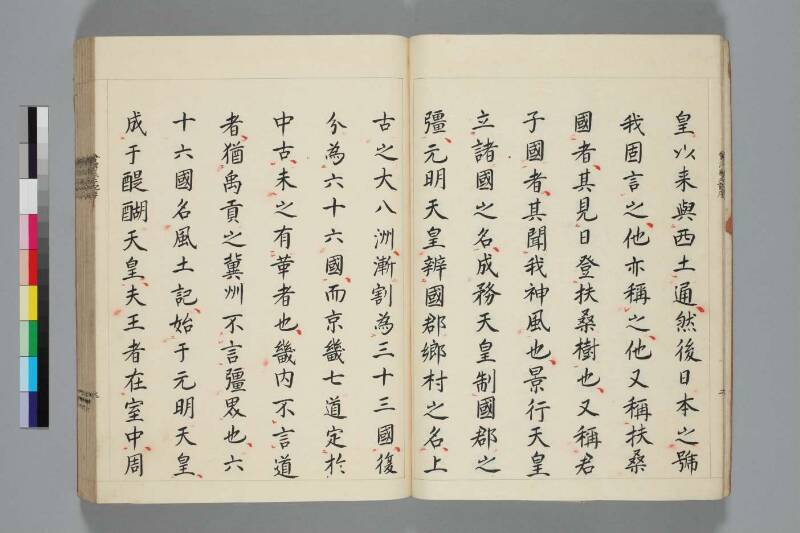
皇以来與_二西土_一通、然後日本之號#1
我固言_レ之、他亦稱_レ之、他又稱_二扶桑
國_一者、其見_三日登_二扶桑樹_一也、又稱_二君
子國_一者、其聞_二我神風_一也、景行天皇
立_二諸國之名_一、成務天皇制_二國郡之
彊_一、元明天皇辨_二國郡郷村之名_一、上
【左丁】
古之大八洲、漸割為《返り点:二》三十三國_一、復
分為《返り点:二》六十六國_一、而京畿七道定_二扵
中古_一、未_二之有_一レ革者也、畿内不_レ言_レ道
者、猶_下禹貢之冀州不_上レ言_二疆界_一也、六
十六國名風土記、始_二于元明天皇_一、
成_二于醍醐天皇_一、夫王者在_二室中_一、周
現代語訳
【右丁】
(仁)皇以来、西土(中国・大陸)と交流するようになって以降、「日本」という名称は、我々が自ら称するようになり、他国もまたそう呼ぶようになった。他国がまた「扶桑国(ふそうこく)」と称するのは、日が扶桑の樹より昇るのを見てのことである。また「君子国(くんしこく)」と称するのは、我が国の神風の評判を聞いてのことである。景行天皇が諸国の名を定め、成務天皇が国・郡の境界を制定し、元明天皇が国・郡・郷・村の名称を整備された。
【左丁】
上古の大八洲は、しだいに三十三国に分割され、さらに六十六国に分けられた。そして京畿七道の制度は中古に定まり、それ以来改められたことはない。畿内に「道」と言わないのは、ちょうど『禹貢』において冀州に疆界(きょうかい・境界)を言わないのと同じことである。六十六国の名と風土記は元明天皇に始まり、醍醐天皇の代に完成した。そもそも王者は室内に居ながらにして、周(あまね)く…
英語訳
【Right folio】
Since the reign of Emperor [Jin/Nin]mu, Japan came into contact with the Western Lands (China and the continent), and thereafter the name "Nihon" (Japan) was proclaimed by ourselves and also adopted by other countries. That other nations call it "Fusō Koku" (Land of the Fusang Tree) is because they observed the sun rising from the Fusang tree [in the east]. That it is also called "Kunshi Koku" (Land of Gentlemen/Noble People) is because they heard of our divine winds (kamikaze). Emperor Keikō established the names of the various provinces, Emperor Seimu demarcated the boundaries of provinces and districts, and Emperor Genmei organized the names of provinces, districts, villages, and hamlets.
【Left folio】
The Ōyashima (Great Eight Islands) of high antiquity were gradually divided into thirty-three provinces, and further subdivided into sixty-six provinces. The system of the Home Provinces (Kinai) and the Seven Circuits (Shichidō) was established in the middle ages [of Japanese history], and has not been revised since. The reason "circuit" (dō) is not used for the Home Provinces is analogous to how the "Yu Gong" (Tribute of Yu) does not specify boundaries for Jizhou. The names of the sixty-six provinces and the Fudoki (Records of Local Culture) originated with Empress Genmei and were completed in the reign of Emperor Daigo. Now, a true king, while residing within his chambers, comprehensively [surveys all under heaven]...