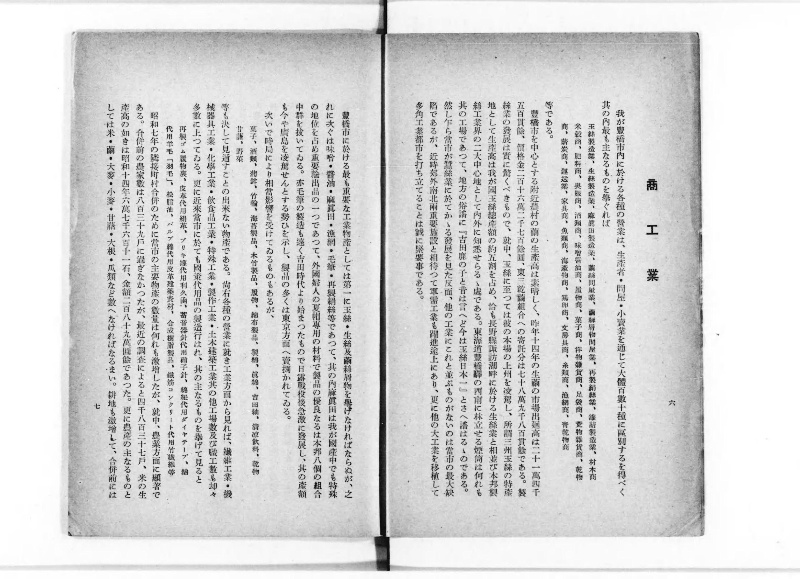
翻刻
【右頁】
六
商工業
我が豐橋市内に於ける各種の營業は、生產者・問屋・小賣業を通じて大體百數十種に區別するを得べく
其の内最も主たるものを擧ぐれば
玉絲製造業、生絲製造業、麻眞田製造業、繭絲問屋業、繭絲屑物問屋業、再製絹絲業、罐詰製造業、材木商
米穀商、肥料商、呉服商、酒類商、味噌醬油商、履物商、菓子商、洋物雜貨商、足袋商、荒物雜貨商、乾物
商、薪炭商、運送業、家具商、魚類商、海產物商、鶏卵商、文房具商、糸類商、漁網商、靑乾物商
等である。
豐橋市を中心とする附近農村の繭の生產高は素晴しく、昨年十四年の生繭の市場出廻高は二十一萬四千
五百貫餘、價格金二百十六萬二千七百餘圓、東三乾繭組合への寄託分は七十八萬九千八百貫餘である。製
絲業の發展は實に驚くべきもので、就中、玉絲に至つては彼の本場の上州を凌駕し、所謂三州玉絲の特產
地として生產高は我が國玉絲總產額の約五割を占め、恰も長野懸諏訪湖畔に於ける生絲業と相並び本邦製
絲工業会の二大中心地として内外に知悉せらるゝ處である。東海道豐橋驛の西南に林立せる煙筒は何れも
其の工場であつて、地方の俗謠に『吉田鹿の子と昔は言へど今は玉絲日本一』とさへ謠はるゝのである。
然し乍ら當市が蠶絲業に於てかゝる發展を見た反面、他の工業にこれと並ぶものがないのは當市の最大缺
陷であるが、近時郊外南北兩重要施設と相待つて軍需工業も躍進途上にあり、更に他の大工業を移植して
多角工業都市を打ち立てることは誠に緊要事である。
【左頁】
豐橋市に於ける最も重要な工業物產としては第一に玉絲・生絲及繭絲屑物を擧げなければならぬが、之
れに次ぐは味噌・醬油・麻眞田・漁網・毛筆・再製絹絲等であつて、其の内麻眞田は我が國產中でも特殊
の地位を占め重要輸出品の一つであつて、外國婦人の夏帽専用の材料で製品の優良なるは本邦八個の組合
中群を抜いてゐる。亦毛筆の製造も遠く吉田時代より始まつたもので日露戰役後急激に發展し、其の產額
も今や廣島を凌駕せんとする勢ひを示し、製品の多くは東京方面へ賣捌かれてゐる。
次いで時局により相當影響を受けてゐるものもあるが、
菓子、酒類、蒲鉾、竹輪、海苔製品、木竹製品、履物、綿布製品、製綿、眞綿、吉田紬、淸凉飲料、乾物
甘藷、野菜
等も決して見遁すことの出來ない物產である。尚右各種の營業に就き工業方面から見れば、繊維工業・機
械器具工業・化學工業・飲食品工業・特殊工業・製作工業・土木建築工業其の他工業數及び職工數も却々
多數に上つてゐる。更に近來當市に於ても國策代用品の製造行はれ、其の主なるものを擧げて見ると
再製ゴム履物裏、皮革代用絹革、ブリキ罐代用利久凾、蓄音器針代用硝子針、綿紐代用ダイヤテープ、綿
代用羊毛「羽毛」、松脂油、パルプ綿代用皮革建築資材、合成樹脂製品、鐵筋コンクリート代用竹繊維等
昭和七年の隣接町村合併のために當市の主要物產の數量は何れも激增したが、就中、農業方面に顯著で
ある。合併前の農家數は八百三十九戸に過ぎなかつたが、最近の調査によると四千八百三十七戸、米の生
產高の如きは昭和十四年六萬七千六百十一石、金額二百八十九萬圓餘であつた。更に農產の主なるものと
しては米・繭・大麥・小麥・甘藷・大根・瓜類など數へなければなるまい。耕地も激增して、合併前には
七
現代語訳
【右頁】
六
商工業
我が豊橋市内における各種の営業は、生産者・問屋・小売業を通じて大体百数十種に区別することができ、
その内最も主たるものを挙げれば
玉糸製造業、生糸製造業、麻真田製造業、繭糸問屋業、繭糸屑物問屋業、再製絹糸業、缶詰製造業、材木商
米穀商、肥料商、呉服商、酒類商、味噌醤油商、履物商、菓子商、洋物雑貨商、足袋商、荒物雑貨商、乾物
商、薪炭商、運送業、家具商、魚類商、海産物商、鶏卵商、文房具商、糸類商、漁網商、青乾物商
等である。
豊橋市を中心とする付近農村の繭の生産高は素晴らしく、昨年十四年の生繭の市場出回り高は二十一万四千
五百貫余、価格金二百十六万二千七百余円、東三乾繭組合への寄託分は七十八万九千八百貫余である。製
糸業の発展は実に驚くべきもので、就中、玉糸に至っては彼の本場の上州を凌駕し、所謂三州玉糸の特産
地として生産高は我が国玉糸総産額の約五割を占め、恰も長野県諏訪湖畔における生糸業と相並び本邦製
糸工業界の二大中心地として内外に知られるところである。東海道豊橋駅の西南に林立する煙突は何れも
その工場であって、地方の俗謡に『吉田鹿の子と昔は言えど今は玉糸日本一』とさえ謡われるのである。
然しながら当市が蚕糸業においてかかる発展を見た反面、他の工業にこれと並ぶものがないのは当市の最大欠
陥であるが、近時郊外南北両重要施設と相まって軍需工業も躍進途上にあり、更に他の大工業を移植して
多角工業都市を打ち立てることは誠に緊要事である。
【左頁】
豊橋市における最も重要な工業物産としては第一に玉糸・生糸及び繭糸屑物を挙げなければならぬが、こ
れに次ぐのは味噌・醤油・麻真田・漁網・毛筆・再製絹糸等であって、その内麻真田は我が国産中でも特殊
の地位を占め重要輸出品の一つであって、外国婦人の夏帽専用の材料で製品の優良なるは本邦八個の組合
中群を抜いている。また毛筆の製造も遠く吉田時代より始まったもので日露戦役後急激に発展し、その産額
も今や広島を凌駕せんとする勢いを示し、製品の多くは東京方面へ売り捌かれている。
次いで時局により相当影響を受けているものもあるが、
菓子、酒類、蒲鉾、竹輪、海苔製品、木竹製品、履物、綿布製品、製綿、真綿、吉田紬、清涼飲料、乾物
甘藷、野菜
等も決して見逃すことの出来ない物産である。尚右各種の営業について工業方面から見れば、繊維工業・機
械器具工業・化学工業・飲食品工業・特殊工業・製作工業・土木建築工業その他工業数及び職工数も相当
多数に上っている。更に近来当市においても国策代用品の製造が行われ、その主なるものを挙げて見ると
再製ゴム履物裏、皮革代用絹革、ブリキ缶代用利久箱、蓄音器針代用硝子針、綿紐代用ダイヤテープ、綿
代用羊毛「羽毛」、松脂油、パルプ綿代用皮革建築資材、合成樹脂製品、鉄筋コンクリート代用竹繊維等
昭和七年の隣接町村合併のために当市の主要物産の数量は何れも激増したが、就中、農業方面に顕著で
ある。合併前の農家数は八百三十九戸に過ぎなかったが、最近の調査によると四千八百三十七戸、米の生
産高の如きは昭和十四年六万七千六百十一石、金額二百八十九万円余であった。更に農産の主なるものと
しては米・繭・大麦・小麦・甘藷・大根・瓜類など数えなければなるまい。耕地も激増して、合併前には
七
英語訳
【Right Page】
6
Commerce and Industry
The various businesses within Toyohashi City can be divided into approximately one hundred and several dozen types through producers, wholesalers, and retail businesses, with the most important ones being:
Silk floss manufacturing, raw silk manufacturing, hemp-braided sandal manufacturing, cocoon and silk wholesaling, cocoon and silk waste wholesaling, reprocessed silk thread industry, canning industry, lumber dealers
Rice and grain dealers, fertilizer dealers, textile dealers, liquor dealers, miso and soy sauce dealers, footwear dealers, confectionery dealers, Western goods and sundries dealers, tabi (traditional sock) dealers, general merchandise dealers, dried goods
dealers, firewood and charcoal dealers, transportation industry, furniture dealers, fish dealers, marine products dealers, egg dealers, stationery dealers, thread dealers, fishing net dealers, green dried goods dealers
and so forth.
The cocoon production in the rural areas around Toyohashi City is remarkable. Last year (Showa 14), the market circulation of fresh cocoons was over 214,500 kan, valued at over 2,162,700 yen, with over 789,800 kan consigned to the Eastern Three Prefectures Dried Cocoon Union. The development of the silk manufacturing industry is truly astounding, particularly in silk floss production, which has surpassed Joshu, the traditional center, making this the special production area for so-called Sanshu silk floss. The production accounts for approximately 50% of Japan's total silk floss output, and along with the raw silk industry around Lake Suwa in Nagano Prefecture, it is known both domestically and internationally as one of the two major centers of Japan's silk manufacturing industry. The smokestacks standing in rows southwest of Toyohashi Station on the Tokaido line are all from these factories, and there is even a local folk song that goes, "Yoshida deer-spot pattern in the old days, but now silk floss is number one in Japan."
However, while the city has seen such development in the silk industry, the fact that no other industry matches it is the city's greatest shortcoming. Recently, however, military industries are also advancing in conjunction with important facilities in the northern and southern suburbs, and establishing a diversified industrial city by transplanting other major industries is truly an urgent matter.
【Left Page】
As the most important industrial products of Toyohashi City, silk floss, raw silk, and cocoon and silk waste must be mentioned first, followed by miso, soy sauce, hemp-braided sandals, fishing nets, writing brushes, and reprocessed silk thread. Among these, hemp-braided sandals occupy a special position among Japanese products as one of the important export items, being materials exclusively for foreign women's summer hats, and the excellence of the products is outstanding among the eight unions in Japan. The manufacturing of writing brushes also began in the distant Yoshida period and developed rapidly after the Russo-Japanese War, showing momentum that may now surpass Hiroshima in production volume, with most products being sold in the Tokyo area.
Next, although some are considerably affected by the current situation,
Confectionery, alcoholic beverages, kamaboko, chikuwa, seaweed products, bamboo and wood products, footwear, cotton fabric products, cotton processing, silk floss, Yoshida pongee, soft drinks, dried goods
Sweet potatoes, vegetables
are also products that cannot be overlooked. Furthermore, looking at the various businesses from an industrial perspective, the numbers of textile industry, machinery and equipment industry, chemical industry, food and beverage industry, special industry, manufacturing industry, civil engineering and construction industry, and other industries and workers are quite substantial. Recently, national policy substitute products are also being manufactured in the city, with the main ones being:
Recycled rubber shoe soles, silk leather as leather substitute, wooden boxes as tin can substitutes, glass needles as phonograph needle substitutes, diamond tape as cotton cord substitute, wool and feathers as cotton substitutes, pine resin oil, leather and construction materials as pulp cotton substitutes, synthetic resin products, bamboo fiber as reinforced concrete substitute, etc.
Due to the merger with neighboring towns and villages in Showa 7 (1932), the quantities of the city's major products all increased dramatically, particularly notable in agriculture. The number of farming households was only 839 before the merger, but according to recent surveys, it is 4,837 households. Rice production in Showa 14 was 67,611 koku, valued at over 2,890,000 yen. Furthermore, the main agricultural products include rice, cocoons, barley, wheat, sweet potatoes, daikon radish, and melons. Cultivated land also increased dramatically; before the merger
7