翻刻
【右丁】
水江(みつのえ)の浦島子(うらしまこ)といへるもの釣(つり)を好(この)み舟(ふね)に乗(しやう)して海(うみ)に遊(あそ)ひ永(なか)く
家(いへ)に歸(かへ)らすといへりされと幾數百歳(いくすひやくさい)を経(ふ)る事(こと)をしらすと
《割書:續浦島子傳(そくうらしまこてん)にわつかに衣(ころも)を洗(あら)ふの老嫗(おうな)にあふて旧里(きうり)の古人(こしん)を問(とふ)嫗(おうな)答(こた)へて|いはく我(われ)年(とし)百有(ひやくいう)七/歳(さい)いまた島子(しまこ)の名(な)をきかす唯(たゝ)我祖父(わかそふ)の世(よ)古老(こらう)口傳(こうてん)して数百(すひやく)》
《割書:歳(さい)を経(ふ)るのみ傳来(てんらい)語(こ)に云(いは)く昔(むかし)水江(みつのえの)浦島子(うらしまこ)といふ者(もの)あり釣(つり)を好(このみ)舟(ふね)に乗(しやう)し久江|浦(うら)に遊(あそ)ひ遂(つひ)に帰(かへ)らす蓋(けたし)海中(かいちゆう)に入(いつ)てより幾数百歳(いくすひやくさい)を経(ふ)る事をしらすと日本(にほん)》
《割書:後記(こうきに)云(いはく)むかし聞(きく)浦島子(うらしまこ)仙化(せんけ)|して去(さ)り漸(やうや)く百年を過(すく)ると云々》こゝに於(おい)て蓬嶺(ほうれい)の仙宮(せんきう)に遊(あそ)ふの間(あひた)時世(しせい)
遥(はるか)に隔(へたゝ)り舊里(きうり)の遷(うつり)變(へん)せし事を悲歎(ひたん)し又/仙遊(せんいう)の未央(みあう)を想(おもひ)
像(やり)て悲戀(ひれん)に堪(たへ)す前(さき)の誓(ちか)ひを忘(わす)れて忽(たちまち)に玉匣(たまてはこ)を開(ひら)きけれは
裡(うち)より紫雲(しうん)出(いて)て蓬城(ほうしやう)をさして靉靆(あいたい)として去(さ)るのみ時(とき)に
其(その)形容(かたち)忽然(こつせん)として衰老(すゐらう)晧白(こうはく)の人と変(へん)す云々《割書:万葉集(まんえふしふ)氣(いき)佐倍(さへ)|絶(たえ)而(て)後(のち)遂(つひに)壽(いのち)死(しに)》
《割書:祁流(ける)水江之(みつのえの)浦島子(うらしまのこか)家(いへ)地(ところ)見(みむ)云云/丹後風土記(たんこふうとき)にも島子(しまこ)俄(にはか)に老翁(らうをう)となり遂(つひ)に死(し)す|時(とき)に天長(てんちやう)二年なりとあり扶桑略記(ふさうりやくき)日本後記(にほんこうき)上に同し續浦島子傳(そくうらしまこてん)に島子(しまこ)神(しん)》
《割書:女(によ)一諾(いつたく)の約(やく)を違(たか)へ仙遊(せんいう)再會(さいくわい)の期(こ)を失(うしな)ひ紅涙(こうるい)千行(せんかう)白鬢(はくひん)を湿(うるほ)し丹誠(たんせい)萬緒(はんしよ)絳(こう)|宮(きう)を乱(みたし)其後(そののち)金梁(きんりやう)に鳴(なゐ)て玉液(きよくゑき)を飲(のみ)紫霞(しか)を喰(くらひ)青彩(せいさい)を服(ふくし)頚鶴(けいくわく)を延(のへ)立(たつ)て遥(はるか)に》
《割書:鼇(かう)海(かい)の蓬嶺(ほうれい)神鳳(しんほう)の馳(はする)を望(のそ)み跱(そはたつ)て遠(とほ)く仙洞(せんとう)の芳淡(はうたん)を顧(かへりみ)る巌河(かんか)に飛遊(ひいう)して|海浦(かいほ)に隠淪(いんりん)し遂(つひ)に終(をは)る所(ところ)をしらす後代(こうたい)地仙(ちせん)と号(かう)す所謂(いはゆる)浦島子傳(うらしまこてん)古賢(こけん)撰(せん)》
《割書:する所(ところ)也/其言(そのこと)不朽(くちす)宜(よろ)しく千古(せんこ)に傳(つた)ふへしと云々/此傳(このてん)は延喜(えんき)十二年庚辰/﨟(らう)八月朔日に|記(しる)せしものにして始(はしめ)に承平二年壬辰四月廿二日/勘解由曹局(かけゆさうきよく)に於(おい)て坂上家高(さかのうへのいへたか)》
【左丁】
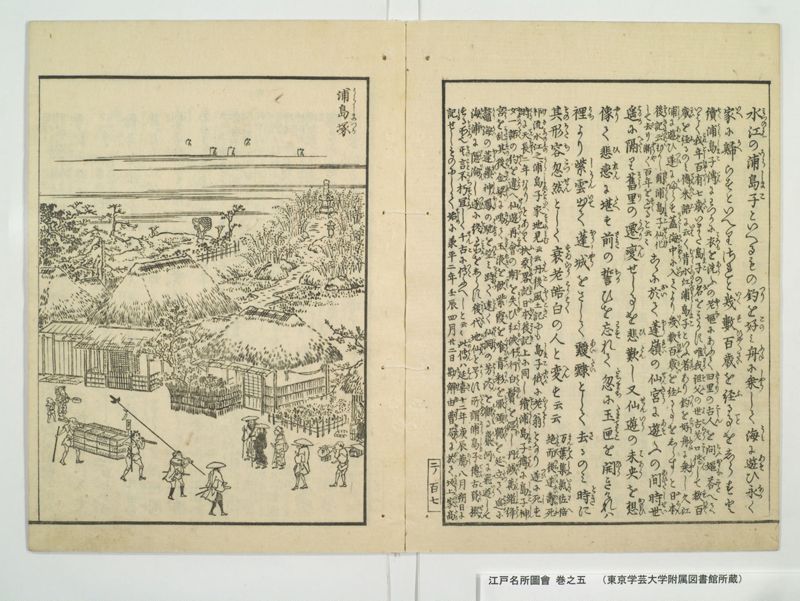
浦島塚(うらしまつか)
【図】
現代語訳
【右丁】
水江の浦島子という者が釣りを好み、舟に乗って海に遊び、永く家に帰らなかったと言われている。しかし何百歳を経たかは分からないと。
『続浦島子伝』によると、わずかに衣を洗う老婆に会って故郷の昔の人を尋ねた。婆が答えて言うには、「私は年百七歳だが、まだ島子の名を聞いたことがない。ただ私の祖父の世に古老が口伝で語ったのは数百歳を経るのみ。言い伝えによると、昔水江の浦島子という者がいて、釣りを好み舟に乗り、久江浦に遊んで、ついに帰らなかった。おそらく海中に入ってから何百歳を経たか分からない」と。『日本後記』に言うには、「昔聞くところでは、浦島子は仙人となって去り、ようやく百年を過ぎた」とある。
ここにおいて蓬莱の仙宮で遊んでいる間に時世が遥かに隔たり、故郷の移り変わりを悲嘆し、また仙人の世界での楽しみが終わってしまったことを思って悲恋に堪えず、前の誓いを忘れて、忽ち玉手箱を開けた。すると中から紫雲が出て蓬莱城に向かって雲のように去っていくだけであった。その時、その容貌は忽然として衰え老い、白髪の人と変わってしまった。
『万葉集』には「息さえ絶えて後ついに命死にける水江の浦島子が家の場所を見ん」とある。『丹後風土記』にも島子が俄かに老翁となり、ついに死んだ、時に天長二年なりとある。『扶桑略記』『日本後記』上にも同じ。『続浦島子伝』には、島子は神女との一つの約束を違え、仙人の世界での再会の機会を失い、紅い涙千行白髪を濡らし、真心万緒紅宮を乱した。その後金梁に鳴いて玉液を飲み、紫霞を食らい青彩を着て、首を鶴のように延ばし立って遥かに鰲海の蓬莱、神鳳の駆けるのを望み、立って遠く仙洞の芳しい淡きを顧みる。巌河に飛び遊んで海浦に隠れ沈み、ついに終わる所を知らない。後代地仙と号する。いわゆる浦島子伝は古賢が撰したところである。その言葉は朽ちず、よろしく千古に伝えるべしという。この伝は延喜十二年庚辰八月朔日に記したもので、始めに承平二年壬辰四月二十二日勘解由曹局において坂上家高が
【左丁】
浦島塚
【図】
英語訳
【Right page】
It is said that a person named Mizue-no-Urashima-ko loved fishing, rode in a boat to play on the sea, and never returned home for a long time. However, it is unknown how many hundreds of years passed.
According to the "Zoku Urashima-ko Den" (Continuation of the Tale of Urashima), he met only an old woman washing clothes and asked her about the old people of his hometown. The old woman answered, saying: "I am 107 years old, but I have never heard the name of Shima-ko. Only in my grandfather's time did the elders pass down orally that several hundred years had passed. According to tradition, long ago there was a person called Mizue-no-Urashima-ko who loved fishing, rode in boats, played at Kue Bay, and never returned. Probably after entering the sea, it is unknown how many hundreds of years have passed." The "Nihon Kōki" states: "I heard long ago that Urashima-ko became an immortal and departed, and barely a hundred years have passed."
Here, while playing in the immortal palace of Hōrai, the times became vastly distant, and he lamented the changes in his old village. Also, thinking that his pleasures in the immortal realm had ended, unable to bear his sorrowful longing, he forgot his previous oath and suddenly opened the jeweled box. From within, purple clouds emerged and departed like mists toward Hōrai Castle. At that time, his appearance suddenly aged and declined, transforming into a white-haired old man.
The "Man'yōshū" states: "Even his breath ceased, and finally his life died - I would see the home place of Mizue-no-Urashima-ko." The "Tango Fudoki" also says that Shima-ko suddenly became an old man and finally died, this being in the 2nd year of Tenchō. The "Fusō Ryakki" and "Nihon Kōki" say the same. The "Zoku Urashima-ko Den" states that Shima-ko broke his single promise with the divine woman, lost the opportunity for reunion in the immortal realm, and red tears in a thousand lines moistened his white temples, while his sincere heart in ten thousand threads disturbed the crimson palace. Afterward, he cried on golden beams and drank jade liquid, ate purple mist and wore blue robes, stretched his neck like a crane and stood gazing far toward the giant turtle sea of Hōrai and the divine phoenix's galloping, standing and looking back distantly at the fragrant lightness of the immortal cave. Flying and playing among rocky rivers, hiding and sinking in sea bays, finally no one knows where he ended. Later generations called him an earthbound immortal. The so-called "Urashima-ko Den" is what the ancient sages compiled. Those words do not decay and should rightly be transmitted for a thousand ages. This record was written on the first day of the eighth month of Engi 12 (year of Kanoe-Tatsu), beginning with Sakanoue no Ietaka at the Bureau of Inspection of Provincial Records on the 22nd day of the fourth month of Jōhei 2 (year of Mizunoe-Tatsu)...
【Left page】
Urashima Mound
[Illustration]