翻刻
【右丁】
【欄外上部】
百八十二
【上段】
正月の朔日は何の
の十二 支(し)なりと暦(こよみ)
を見て。是を我(わが)左
の手の小 指(ゆび)の頭(かしら)に
当 。食指(ひとさしゆひ)の方へ各(をの〱)
指(ゆび)の頭(かしら)に十二 支(し)の
次第(しだい)をあてゝかぞへ。
食指(ひとさしゆひ)の三 節(ふし)にかぞ
へ下す時。其月大な
れば食指(ひとさしゆひ)の本の節(ふし)
を次の月朔日とし。
其月小なれは食指(ひとさしゆび)
【左丁・上段】
の本より二つ目の節。
を次の月朔日と定め。
正月朔日の十二支よ
り。其大小に随(したがひ)て小指
の頭(かしら)より食指の本節(もとふし)
或は二 ̄ツ目の節まで
十二 支(し)の次第(したい)に
数(かそへ)て。二月の朔日
を知(しる)べし。十二月何
れもかくごとし。兎(と)
角(かく)何れの月の朔
日にても心 覚(おぼへ)ある
【右丁・下段】
造作(さうさ)になをしやう。一 夜(や)のうちに靨(えくぼ)お
のづから少しもなくなをしやうは。大豆を
徳利(とくり)へ一はいつめ水を入をくべし。但
あまりつよくつめぬれば徳利ひき
さくるなり。
嶮難(けんなん)の山坂(さか)七 曲(まかり)九折(つゝらおり)など間(けん)の打やう
《割書:凡 嶮難の山坂は地(ぢ)平かならざれば間ざほ|折れず縄(なは)を引てもたりひづみできて間ちがふなり》
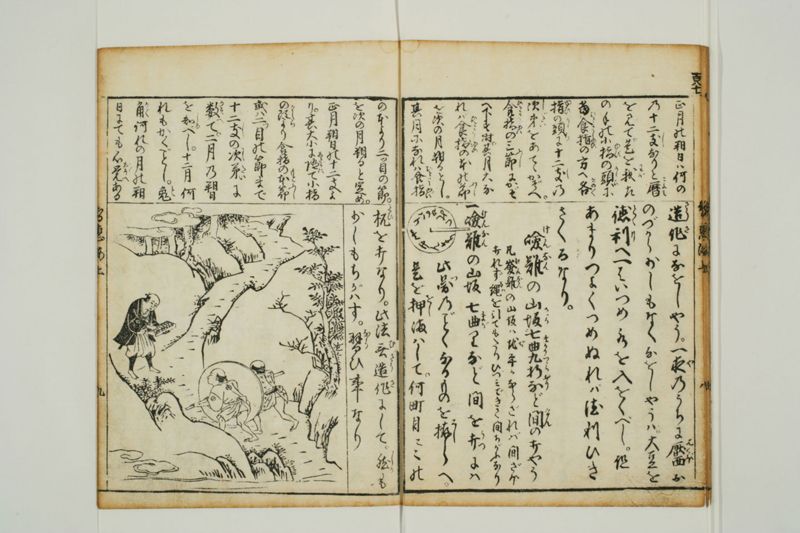
一 嶮難(けんなん)の山坂 七 曲(まが)りなど間を打(うつ)には
【図あり】此図(つ)のごとくなるものを拵(こし)らへ。
是を押(をし)まはして。何町目にこの
【左丁・下段】
杭(くひ)を打なり。此法 無造作(むざうさ)にして。然(しか)も
少しもちがはす。習(なら)ひ事なり
現代語訳
【右丁・上段】(ページ番号:百八十二)
*(前ページ「毎月朔日の十二支を覚える方法」の続き)*
正月の朔日(ついたち)が何の十二支であるかを暦で確認し、それを左手の小指の頭(先端の節)に当てる。人差し指の方へ向かって、各指の頭(先端の節)に十二支の順番を当てはめながら数えていく。人差し指の三つの節まで数え下した時、その月が大の月であれば、人差し指の根元の節を次の月の朔日とし、その月が小の月であれば人差し指の
【左丁・上段】
根元から二つ目の節を、次の月の朔日と定める。正月朔日の十二支から始めて、その月の大小に従い、小指の頭から人差し指の根元の節、あるいは二つ目の節まで、十二支の順番に数えることで、二月の朔日(の十二支)を知ることができる。十二月まで、どの月もこのようにして求めるとよい。とにかく、どの月の朔日であっても、心覚え(記憶の手がかり)の
---
【右丁・下段】
*(前ページより続く「錫の徳利のへこみを直す方法」の続き)*
造作なく直す方法:一晩のうちに、へこみが自然と少しも残らず直る方法は、大豆を徳利に一杯詰め、水を入れておくとよい。ただし、あまりきつく詰めすぎると徳利が割れてしまうので注意が必要である。
険難(けんなん)な山坂・七曲がり・九十九折りなどの間(けん)の打ち方
*(一般に、険難な山坂は地面が平らでないため、間竿(まざお)が折れたり、縄を引いてもたるんだり歪んだりして、間(距離)が狂ってしまう。)*
一、険難な山坂や七曲がりなどの距離を測るには、【図あり】この図のようなものを拵えて、これを押し回しながら、何町目にこの
【左丁・下段】
杭を打つかを(計測するので)ある。この方法は造作なく(手間いらずで)、しかも少しも狂わない。習い事(技術)である。
英語訳
**[Right Page — Upper Section]** (Page number: 182)
*(Continuation from the previous page — Method for Memorizing the Twelve Zodiac Signs of the First Day of Each Month)*
Look at the calendar to determine which of the twelve zodiac signs (*jūnishi*) corresponds to the first day (*tsuitachi*) of the first month (*Shōgatsu*), and assign it to the tip of the little finger of your left hand. Moving toward the index finger, assign the zodiac signs in sequence to the tips of each finger in turn. When you have counted down through the three joints of the index finger, if that month is a "long" month (*dai*), designate the base joint of the index finger as the first day of the following month. If that month is a "short" month (*shō*), designate
**[Left Page — Upper Section]**
the second joint from the base of the index finger as the first day of the following month. Starting from the zodiac sign of the first day of the first month, and following the long/short pattern of each month, count in zodiac order from the tip of the little finger to either the base joint or the second joint of the index finger, and thus you can determine the zodiac sign of the first day of the second month. The same method applies for all months through the twelfth. In any case, for the first day of any given month, as long as one has this mnemonic aid (*kokoroe*) —
---
**[Right Page — Lower Section]**
*(Continuation from previous page — Method for Fixing a Dent in a Tin Flask)*
— it can be repaired without difficulty. A method by which, overnight, a dent will naturally and completely disappear: stuff the flask completely full of soybeans (*daizu*), then add water and leave it. However, if the beans are packed in too tightly, they will split the flask open, so take care.
**Method for Measuring Distances (*ken*) on Treacherous Mountain Paths, Switchbacks (*nanakurari*), and Hairpin Turns (*tsuzuraori*)**
*Note: In general, on treacherous mountain terrain the ground is not flat, so measuring rods (*mazao*) may break, and even if a rope is stretched it will sag or distort, causing the measurement to be inaccurate.*
- To measure distances on treacherous mountain paths, switchbacks, and the like, construct the device shown in the diagram, and by rolling it along the path, you can determine at which point along the route (how many *chō* in) to
**[Left Page — Lower Section]**
drive the stake (*kui*). This method is simple and effortless, and produces measurements without the slightest error. It is a skill worth learning.